Software Development

7 Ways Enterprise Backend Teams Are Using MCP's Roots Specification to Enforce Filesystem and Repository Boundaries Across Multi-Agent Coding Workflows in 2026

Model Context Protocol

7 Ways Enterprise Backend Teams Are Using MCP's Roots Specification to Enforce Filesystem and Repository Boundaries Across Multi-Agent Coding Workflows in 2026

When Anthropic introduced the Model Context Protocol (MCP) as an open standard in late 2024, most of the early excitement centered on its Tools and Resources primitives. Engineers loved the idea of giving AI assistants structured, auditable access to external systems. But as enterprise adoption matured through 2025 and into

By Scott Miller
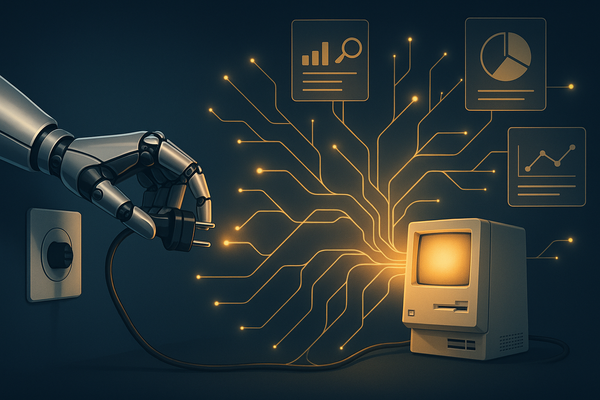
A Beginner's Guide to Agentic App Replacement: What Enterprise Backend Teams Need to Know Before Their First AI Agent Obsoletes an Internal Tool They Still Depend On

agentic AI

A Beginner's Guide to Agentic App Replacement: What Enterprise Backend Teams Need to Know Before Their First AI Agent Obsoletes an Internal Tool They Still Depend On

It happened quietly at a mid-sized logistics company earlier this year. A backend team deployed an AI agent to automate their freight reconciliation workflow. Within six weeks, the agent had effectively absorbed the functionality of three internal tools: a custom-built CSV parser, a rules-based approval router, and a legacy notification

By Scott Miller
5 Dangerous Myths Enterprise Backend Teams Believe About Agentic Rate Limit Handling Across Multi-Provider LLM Orchestration Layers

LLM Orchestration

5 Dangerous Myths Enterprise Backend Teams Believe About Agentic Rate Limit Handling Across Multi-Provider LLM Orchestration Layers

Your agentic pipeline looked bulletproof in staging. Then it hit production, and suddenly a single 429 from one provider cascaded into a full workflow collapse, silent retries ate your token budget, and three downstream agents stalled with zero telemetry to explain why. Sound familiar? As enterprise teams scaled their multi-agent,

By Scott Miller
7 Ways Enterprise Backend Teams Should Redesign Their Agentic Audit Trail Architecture to Satisfy Emerging SOC 2 Type II Auditor Expectations for Multi-Agent Workflow Accountability in 2026

SOC 2 Compliance

7 Ways Enterprise Backend Teams Should Redesign Their Agentic Audit Trail Architecture to Satisfy Emerging SOC 2 Type II Auditor Expectations for Multi-Agent Workflow Accountability in 2026

Something quietly seismic happened to SOC 2 Type II audits in 2026: auditors stopped treating AI agents like software features and started treating them like autonomous actors. That distinction changes everything about how your backend team needs to think about logging, traceability, and accountability. For years, enterprise backend teams designed

By Scott Miller
Agentic Memory Stores vs. Traditional Vector Databases: Which Persistence Layer Should Enterprise Backend Teams Choose?

agentic AI

Agentic Memory Stores vs. Traditional Vector Databases: Which Persistence Layer Should Enterprise Backend Teams Choose?

Picture this: your enterprise has deployed a sophisticated multi-agent workflow. One agent researches customer contracts, another drafts proposals, a third cross-references compliance rules, and a fourth orchestrates the whole operation. The pipeline runs beautifully. Then a session ends, a new one begins, and every agent starts from zero. The customer&

By Scott Miller
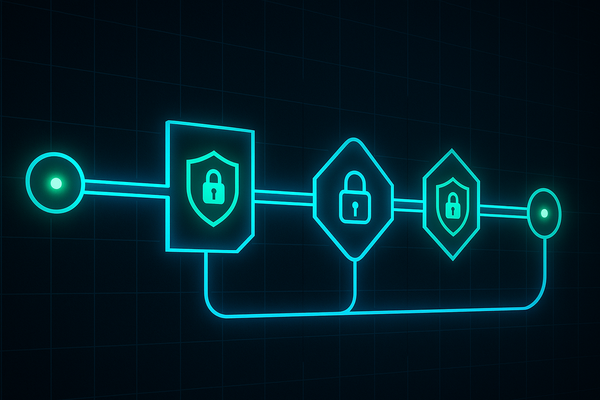
7 Ways Enterprise Backend Teams Should Restructure Their DevSecOps Pipelines in 2026 to Embed Security Gates Directly Into Platform Engineering Workflows

DevSecOps

7 Ways Enterprise Backend Teams Should Restructure Their DevSecOps Pipelines in 2026 to Embed Security Gates Directly Into Platform Engineering Workflows

There is a quiet crisis unfolding inside enterprise backend teams right now. Multi-agent AI systems are being pushed to production at a pace that most DevSecOps pipelines were simply never designed to handle. Autonomous agents are spawning subprocesses, calling external APIs, writing to shared memory stores, and making real-time decisions,

By Scott Miller