7 Ways Enterprise Backend Teams Should Restructure Their DevSecOps Pipelines in 2026 to Embed Security Gates Directly Into Platform Engineering Workflows
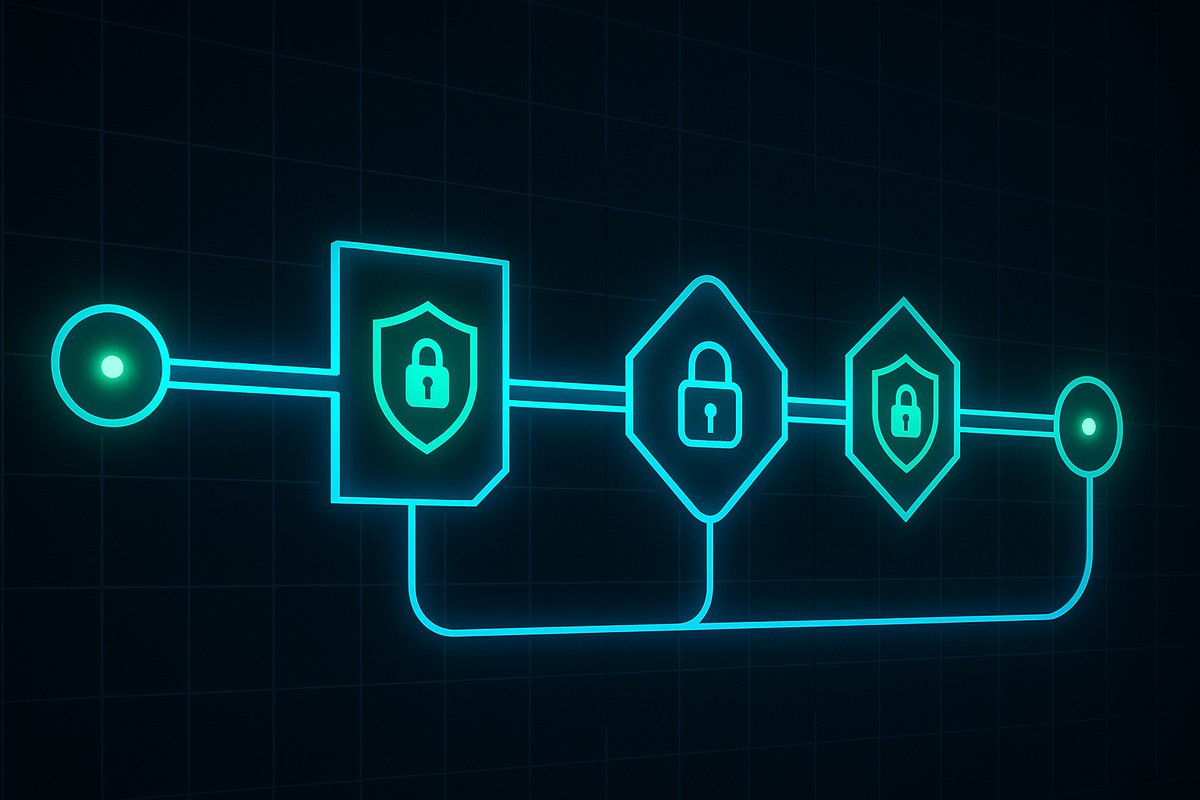
There is a quiet crisis unfolding inside enterprise backend teams right now. Multi-agent AI systems are being pushed to production at a pace that most DevSecOps pipelines were simply never designed to handle. Autonomous agents are spawning subprocesses, calling external APIs, writing to shared memory stores, and making real-time decisions, all inside infrastructure that was hardened for human-authored code deployments, not agentic runtime behavior.
The result? Security gates that were once "good enough" are now dangerously misaligned with the actual threat surface. A static SAST scan on a Python microservice tells you almost nothing about whether a LangGraph agent running in that same service can be manipulated into leaking credentials through a prompt injection buried three tool-calls deep.
This is not a future problem. It is a 2026 problem, and enterprise backend teams are the ones holding the bag.
Below are seven concrete, actionable ways to restructure your DevSecOps pipeline so that security gates are not bolted on at the end, but are woven directly into your platform engineering workflows, long before any vulnerability gets a chance to breathe in a multi-agent production environment.
1. Treat Your Internal Developer Platform (IDP) as a Security Policy Enforcement Layer, Not Just a Deployment Abstraction
Most platform engineering teams built their Internal Developer Platforms to improve developer experience: golden paths, self-service scaffolding, standardized templates. That is still valuable. But in 2026, the IDP has to pull double duty as the first and most authoritative security enforcement boundary in your organization.
This means every scaffold template, every service catalog entry, and every environment provisioning workflow your IDP exposes must have security policy baked in at the template level. Not suggested. Not documented. Enforced.
- Use policy-as-code engines (OPA/Rego, Kyverno, Crossplane compositions) to validate that no IDP-provisioned resource can be deployed without a corresponding security context, network policy, and secret management binding.
- Block non-compliant scaffolding at generation time, not at deployment time. If a developer generates a new backend service template without a defined secrets backend, the IDP should refuse to generate it, full stop.
- Version-lock your golden path templates to pinned, audited dependency manifests. Any deviation from the approved dependency graph should trigger an automatic policy review workflow, not a Slack message.
The philosophical shift here is significant: your platform team is no longer just an enablement team. They are a security team with a developer experience mandate. The sooner enterprise orgs internalize this, the fewer surprises arrive in production.
2. Introduce Agentic Behavior Contracts as a Pre-Merge Security Gate
Here is the uncomfortable truth about multi-agent systems: most enterprise CI/CD pipelines have no concept of what an agent is allowed to do at runtime. They scan the code. They run unit tests. They check CVEs in dependencies. But they do not ask: "Does this agent have a defined, bounded, auditable contract describing its permissible actions, tool calls, and data access patterns?"
In 2026, that omission is a critical gap. Introducing Agentic Behavior Contracts (ABCs) as a first-class artifact in your pipeline closes it.
An Agentic Behavior Contract is a machine-readable specification (YAML or JSON schema works fine) that declares:
- Which tools and external APIs the agent is permitted to invoke
- The maximum scope of data the agent can read or write (e.g., "read-only access to the orders schema, no PII fields")
- Permitted inter-agent communication patterns (which agents can call which, and under what conditions)
- Escalation and human-in-the-loop triggers
- Hard-coded denial rules (e.g., "this agent must never invoke a shell execution tool regardless of instruction source")
Your pre-merge pipeline gate then performs contract compliance validation: it compares the agent's declared behavior contract against its actual code, tool registrations, and dependency graph. Any divergence fails the gate. No merge. No exceptions.
Teams using this approach have reported catching prompt-injection-amplifying tool configurations weeks before they would have reached staging, let alone production.
3. Shift DAST Left Into Feature Branch Environments Using Ephemeral Security Sandboxes
Dynamic Application Security Testing (DAST) has historically been a late-stage activity, something you run against a staging environment the night before a release. In a world where multi-agent systems interact with live APIs, databases, and message queues, that timing is completely backwards.
The answer is ephemeral security sandboxes: short-lived, fully isolated environments that spin up automatically on every feature branch push, run a targeted DAST suite against the new code, and tear themselves down within minutes. Platform engineering teams can provision these using Kubernetes namespace isolation, Terraform workspace automation, or purpose-built tools like Signadot or Speedscale.
The key upgrades for multi-agent contexts specifically:
- Simulate adversarial agent inputs in the sandbox. Do not just probe HTTP endpoints. Inject malformed tool-call responses, simulate a compromised upstream agent sending unexpected payloads, and test how your agent handles conflicting instructions from two orchestrators simultaneously.
- Run OWASP LLM Top 10 checks as part of the sandbox test suite. Prompt injection, insecure output handling, and excessive agency are not hypothetical risks in enterprise deployments; they are documented attack vectors with real CVE-adjacent findings accumulating in the wild.
- Gate the feature branch merge on sandbox test pass/fail. If the DAST sandbox finds a new attack surface, the branch does not merge. Period. No "we'll fix it post-merge" exceptions in the pipeline configuration.
Shifting DAST this far left feels expensive until you price out a single credential-exfiltration incident in a multi-agent production cluster. The math resolves itself quickly.
4. Implement Supply Chain Security Controls Specifically for AI Model Artifacts and Agent Tooling Packages
The software supply chain security conversation has matured significantly since the SLSA framework gained enterprise traction. Most backend teams now have reasonable controls around their application dependencies: SBOMs, Sigstore signing, dependency pinning, and automated CVE scanning via tools like Grype or Trivy.
But here is the blind spot: AI model artifacts and agent tooling packages are supply chain assets too, and the vast majority of enterprise pipelines treat them as if they are exempt from supply chain scrutiny.
They are not. A fine-tuned model pulled from an internal registry without a verified provenance chain is a supply chain vulnerability. A LangChain-compatible tool package installed from a third-party index without signature verification is a supply chain vulnerability. An agent framework updated automatically to a new minor version without a diff-reviewed changelog is a supply chain vulnerability.
Restructure your pipeline to address this directly:
- Extend your SBOM generation to include model artifacts: model name, version hash, training data provenance (where available), fine-tuning lineage, and the registry it was pulled from.
- Sign and verify model artifacts using Sigstore's cosign or an equivalent. Any model artifact without a valid signature should be rejected at the pipeline gate, not flagged for review.
- Maintain an approved agent tooling registry inside your IDP. Developers should not be able to register arbitrary third-party tools into a production agent without that tool passing a security review and being listed in the internal registry.
- Pin agent framework versions (LangGraph, CrewAI, AutoGen, and their successors) with the same rigor you pin your application runtime dependencies. Treat a minor version bump in an agent orchestration framework as a potential behavioral change requiring security re-evaluation.
5. Build Runtime Behavioral Anomaly Detection Into Your Platform Observability Stack, Not Your Security Tooling Stack
This one challenges a deeply ingrained organizational assumption: that runtime security monitoring belongs to the security team's tooling stack (SIEMs, XDR platforms, cloud-native security posture tools). In a multi-agent production environment, that separation creates a detection latency that attackers can exploit.
The better architecture puts behavioral anomaly detection directly inside your platform observability stack, where your backend teams already live. When a developer is already looking at Grafana dashboards or OpenTelemetry traces, they should be seeing security-relevant behavioral signals in the same pane of glass, not in a separate tool that only the security team has access to.
Concretely, this means instrumenting your multi-agent runtime for the following signals and routing them through your existing observability pipeline:
- Tool call frequency anomalies: If an agent suddenly starts calling an external API at 40x its baseline rate, that is either a runaway loop or an exfiltration attempt. Your observability stack should alert on it in real time.
- Inter-agent message payload size spikes: Unexpectedly large messages between agents can indicate data staging before exfiltration. Baseline and alert.
- Unexpected permission escalation patterns: If an agent requests a capability it has never requested before in its operational history, that is an anomaly worth surfacing immediately.
- Token budget violations: Agents consuming significantly more LLM tokens than their operational baseline may be processing unexpectedly large or complex inputs, a potential indicator of prompt injection with a verbose payload.
The organizational win here is significant: when backend engineers own the detection signals, mean time to detection drops dramatically. Security teams can focus on investigation and response rather than being the sole owners of a detection pipeline that most developers never look at.
6. Enforce Zero-Trust Identity for Every Agent, Tool, and Inter-Service Call Using Short-Lived Workload Credentials
Zero-trust is not a new concept. But its application to multi-agent architectures remains poorly understood in most enterprise environments, and the gap is dangerous.
In a traditional microservices architecture, zero-trust meant mTLS between services, short-lived JWT tokens, and RBAC on API endpoints. In a multi-agent architecture, the attack surface is fundamentally different. An agent is not just a service calling another service. It is a dynamic, instruction-following entity that may receive instructions from multiple sources (orchestrators, users, tool responses, other agents) and act on them with real credentials.
Your DevSecOps pipeline needs to enforce zero-trust identity at the agent level, not just the service level:
- Every agent instance gets a unique, short-lived workload identity (SPIFFE/SPIRE is the mature standard here) that is cryptographically bound to the specific agent version, its declared behavior contract, and its deployment environment. Agents cannot inherit ambient credentials from the host service.
- Tool calls require explicit, scoped authorization tokens issued per-invocation, not per-session. If an agent's tool call token is stolen or replayed, it is useless outside the specific invocation context it was issued for.
- Inter-agent communication requires mutual attestation. Before Agent A sends a task to Agent B, both agents attest their current identity and behavioral contract to a trust broker. If either agent's identity or contract has drifted from its pipeline-verified state, the communication is rejected.
- Pipeline gates verify that every new agent deployment includes a SPIFFE identity binding before it is allowed to register in the service mesh. No identity binding, no deployment. This is enforced at the IDP level (see point 1) and double-checked at the CD gate.
7. Establish a "Security Chaos Engineering" Practice Targeting Multi-Agent Failure Modes Before Every Major Release
Chaos engineering for reliability is well understood in enterprise backend teams. Netflix's Chaos Monkey, Gremlin, and similar tools have normalized the idea that you should deliberately break your system in controlled ways to find weaknesses before production does it for you.
In 2026, the same discipline needs to be applied to security failure modes in multi-agent systems, and it needs to be a formal pipeline gate before every major release, not an optional exercise.
Security chaos engineering for multi-agent environments looks like this:
- Agent poisoning simulations: Deliberately inject a "compromised" agent into your staging multi-agent cluster. Does the rest of the system isolate it? Does your observability stack detect the anomalous behavior? Does the blast radius stay contained, or does the compromised agent successfully propagate bad instructions to downstream agents?
- Orchestrator spoofing attacks: Simulate a malicious orchestrator sending instructions to your agents. Do your agents' behavior contracts and identity attestation mechanisms correctly reject instructions from an unverified source?
- Credential rotation stress tests: Rotate all workload credentials mid-operation and verify that in-flight agent tasks fail safely (not silently, not with a fallback to long-lived credentials).
- Tool response manipulation: Inject malformed, adversarial, or unexpectedly large responses from tool calls and verify that agents handle them within their declared behavioral bounds without escalating privileges or leaking state.
The pipeline gate here is a formal security chaos report that must be reviewed and signed off by both the platform engineering lead and a security engineer before a major release proceeds. Not as a bureaucratic checkbox, but as a structured conversation about what the chaos run revealed and what the residual risk posture looks like.
The Underlying Principle: Security Gates Are Platform Features, Not Pipeline Interruptions
Every item on this list shares a common thread. They all treat security as something that is built into the platform rather than imposed on top of it. The old model, where security was a gate that developers had to pass through before deployment, created friction, resentment, and workarounds. The 2026 model embeds security so deeply into the platform engineering workflow that bypassing it is harder than complying with it.
That is the real restructuring challenge for enterprise backend teams. It is not primarily a tooling challenge. It is an organizational and architectural one. Platform engineers need to accept security ownership. Security engineers need to accept that they cannot be the sole gatekeepers of a pipeline that moves at the speed modern multi-agent deployments demand. And backend developers need tooling that makes the secure path the obvious path.
Multi-agent production environments are not forgiving. They amplify both capability and consequence. A vulnerability that might have been contained in a monolithic service can cascade across an entire agent mesh in seconds. The teams that restructure their DevSecOps pipelines now, before that cascade happens, are the ones that will still have their production clusters intact in 2027.
Start with one gate. Harden one template. Sign one model artifact. The compounding effect of these changes, applied consistently across your platform, is the difference between a security posture and a security theater.



