Multi-Agent Systems

A Beginner's Guide to Agent Graceful Degradation: What Enterprise Backend Developers Need to Know Before Their Multi-Agent Pipelines Encounter Partial Tool Failure in Production

Multi-Agent Systems

A Beginner's Guide to Agent Graceful Degradation: What Enterprise Backend Developers Need to Know Before Their Multi-Agent Pipelines Encounter Partial Tool Failure in Production

You've built your first multi-agent pipeline. The demo went flawlessly. Your orchestrator agent dispatched tasks to five specialized sub-agents, each one calling its own set of tools: a database lookup here, a third-party API call there, a vector search, a code executor, and a notification service. Everything worked

By Scott Miller
A Beginner's Guide to Agent Sandboxing: What Enterprise Backend Developers Need to Know Before Granting Multi-Agent Pipelines Write Access

AI Security

A Beginner's Guide to Agent Sandboxing: What Enterprise Backend Developers Need to Know Before Granting Multi-Agent Pipelines Write Access

Picture this: your team has just deployed a cutting-edge multi-agent pipeline. One agent reads customer records, another summarizes them, a third drafts follow-up actions, and a fourth writes those actions back to your production database. It works brilliantly in staging. Then, three days into production, a misrouted instruction causes one

By Scott Miller
FAQ: What Enterprise Backend Teams Keep Getting Wrong About Agent-to-Agent Authentication and Trust Boundary Enforcement When Scaling Multi-Agent Pipelines Across Internal Service Meshes in 2026

Multi-Agent Systems

FAQ: What Enterprise Backend Teams Keep Getting Wrong About Agent-to-Agent Authentication and Trust Boundary Enforcement When Scaling Multi-Agent Pipelines Across Internal Service Meshes in 2026

Multi-agent AI pipelines have moved from research curiosity to production backbone faster than most enterprise security teams were prepared for. In 2026, it is common to find dozens of specialized AI agents, each owning a slice of a business workflow, communicating across internal service meshes that were originally designed for

By Scott Miller
7 Agent Tool-Calling Governance Mistakes Enterprise Backend Teams Are Making That Will Trigger Unauthorized External API Actions in Production Multi-Agent Pipelines Before Q4 2026

AI Agents

7 Agent Tool-Calling Governance Mistakes Enterprise Backend Teams Are Making That Will Trigger Unauthorized External API Actions in Production Multi-Agent Pipelines Before Q4 2026

The shift to agentic AI architectures has been the defining backend engineering story of the past 18 months. Enterprises are no longer simply querying large language models for answers; they are deploying autonomous, multi-agent pipelines where AI systems plan, reason, and take actions on behalf of the business. Those actions

By Scott Miller
FAQ: What Enterprise Backend Teams Keep Getting Wrong About Cross-Tenant Agent Isolation in Multi-Agent Pipelines

AI

FAQ: What Enterprise Backend Teams Keep Getting Wrong About Cross-Tenant Agent Isolation in Multi-Agent Pipelines

By 2026, the majority of enterprise AI deployments are no longer simple chatbot wrappers sitting on top of a foundation model API. They are sophisticated multi-agent pipelines: orchestrators spinning up sub-agents, retrieval-augmented generation (RAG) workers pulling from proprietary data stores, tool-calling agents executing code, and summarizer agents writing back to

By Scott Miller
5 Dangerous Myths Enterprise Backend Teams Still Believe About Stateless Agent Design That Are Quietly Corrupting Long-Running Multi-Agent Pipeline Workflows in 2026

Multi-Agent Systems

5 Dangerous Myths Enterprise Backend Teams Still Believe About Stateless Agent Design That Are Quietly Corrupting Long-Running Multi-Agent Pipeline Workflows in 2026

There is a quiet crisis unfolding inside enterprise backend teams right now. Agentic AI pipelines that looked perfectly clean on a whiteboard are failing in production in ways that are frustratingly hard to reproduce and even harder to debug. Timeouts are cascading. Context is silently lost. Agents confidently act on

By Scott Miller
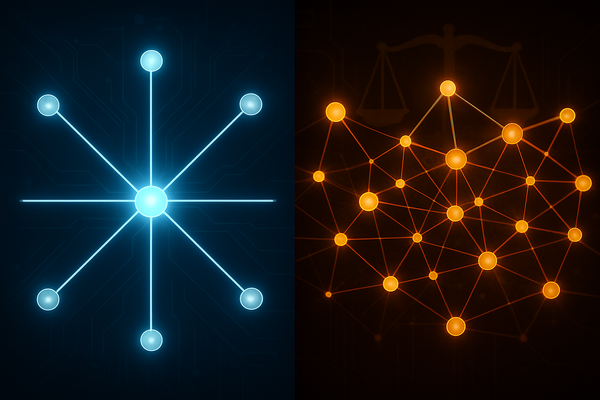
Synchronous vs. Asynchronous Agent Orchestration: What Enterprise Backend Teams Must Get Right Before H2 2026

Multi-Agent Systems

Synchronous vs. Asynchronous Agent Orchestration: What Enterprise Backend Teams Must Get Right Before H2 2026

Multi-agent pipelines are no longer a research curiosity. In 2026, they are production infrastructure. Enterprise backend teams are deploying orchestrated networks of specialized AI agents to handle everything from automated financial reconciliation to real-time customer journey management. And as these systems graduate from proof-of-concept to revenue-critical workloads, one architectural decision

By Scott Miller