multi-agent AI

How to Migrate Your Enterprise Multi-Agent Pipeline's Hardcoded Model Version Pins to a Dynamic Model Routing Layer Before H2 2026 Deprecation Deadlines

multi-agent AI

How to Migrate Your Enterprise Multi-Agent Pipeline's Hardcoded Model Version Pins to a Dynamic Model Routing Layer Before H2 2026 Deprecation Deadlines

If your enterprise multi-agent pipeline is still littered with hardcoded strings like "gpt-4-0613", "claude-3-opus-20240229", or "gemini-1.5-pro-001", you are sitting on a ticking clock. Foundation model providers including OpenAI, Anthropic, Google, and Mistral are all accelerating their legacy endpoint deprecation cycles, with the bulk

By Scott Miller
5 Dangerous Myths Enterprise Backend Teams Believe About Multi-Agent Pipeline Memory Architecture That Will Cause Silent Data Poisoning Across Long-Running Agentic Workflows in 2026

multi-agent AI

5 Dangerous Myths Enterprise Backend Teams Believe About Multi-Agent Pipeline Memory Architecture That Will Cause Silent Data Poisoning Across Long-Running Agentic Workflows in 2026

Your production agentic system has been running for six weeks. The orchestrator agent is coordinating three specialized sub-agents. Logs look clean. Latency is nominal. Stakeholders are happy. And somewhere deep inside your shared vector memory store, a corrupted context fragment from Week Two is quietly warping every downstream decision your

By Scott Miller
The Clock Is Ticking: How Enterprise Backend Teams Must Redesign API Key Lifecycle Management for Multi-Agent AI Pipelines Before Short-Lived Credentials Become the Default

multi-agent AI

The Clock Is Ticking: How Enterprise Backend Teams Must Redesign API Key Lifecycle Management for Multi-Agent AI Pipelines Before Short-Lived Credentials Become the Default

There is a quiet deadline approaching that most enterprise backend teams are not ready for. Sometime in late 2026, the major foundation model providers, including the hyperscaler-hosted model APIs and the leading independent LLM platforms, are expected to converge on short-lived, time-bound credential standards as the default authentication mechanism for

By Scott Miller
The Silent Regression Crisis: How Enterprise Backend Teams Must Redesign Multi-Agent Pipeline Testing for Foundation Model Behavioral Drift in 2026

multi-agent AI

The Silent Regression Crisis: How Enterprise Backend Teams Must Redesign Multi-Agent Pipeline Testing for Foundation Model Behavioral Drift in 2026

Imagine your Q3 board presentation is two weeks away. Your AI-powered underwriting pipeline has processed 40,000 contracts without a production incident. Then, quietly, without a changelog entry your team ever saw, your foundation model provider pushes a weight update. No version bump. No deprecation notice. Just a slightly different

By Scott Miller
Synchronous Human Review vs. Asynchronous Audit Trails: Which Multi-Agent Pipeline Accountability Model Satisfies EU AI Act High-Risk Requirements Without Destroying Throughput

EU AI Act

Synchronous Human Review vs. Asynchronous Audit Trails: Which Multi-Agent Pipeline Accountability Model Satisfies EU AI Act High-Risk Requirements Without Destroying Throughput

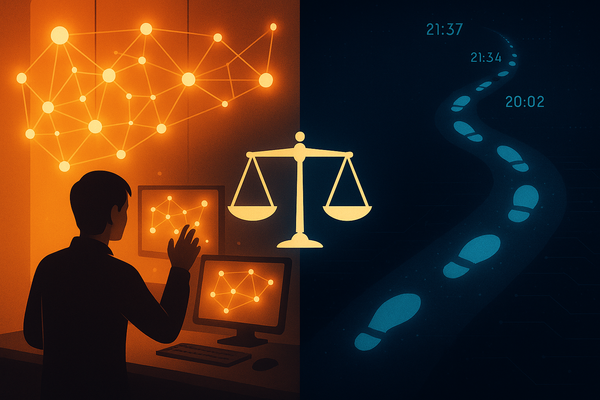
The clock is ticking. With the EU AI Act's August 2026 deadline for high-risk system registration rapidly approaching, engineering teams building multi-agent AI pipelines are facing a dilemma that sits squarely at the intersection of legal compliance and operational reality: how do you maintain meaningful human accountability over

By Scott Miller
Synchronous RPC vs. Async Event Streaming for Enterprise Multi-Agent Pipelines: Which Architecture Survives Unpredictable Foundation Model Latency?

multi-agent AI

Synchronous RPC vs. Async Event Streaming for Enterprise Multi-Agent Pipelines: Which Architecture Survives Unpredictable Foundation Model Latency?

There is a quiet crisis unfolding inside enterprise AI infrastructure teams right now. As Q3 2026 consumption-based pricing models from major foundation model providers continue to reshape budget planning, a latency problem that was once academic has become brutally operational: your inter-agent communication architecture is either absorbing the shock of

By Scott Miller
How Enterprise Backend Teams Should Instrument Multi-Agent Pipeline Prompt Versioning and Rollback Workflows to Prevent Silent Regression When Foundation Model Fine-Tunes Are Pushed Without Changelog Notifications

multi-agent AI

How Enterprise Backend Teams Should Instrument Multi-Agent Pipeline Prompt Versioning and Rollback Workflows to Prevent Silent Regression When Foundation Model Fine-Tunes Are Pushed Without Changelog Notifications

Picture this: your enterprise's customer support multi-agent pipeline has been running flawlessly for three months. Accuracy is high, escalation rates are low, and the business is happy. Then, on a quiet Tuesday morning, a foundation model provider silently pushes a fine-tuned checkpoint to their API. No email. No

By Scott Miller