multi-agent AI

How a Regional Healthcare Network Rebuilt Its Multi-Agent AI Audit Trail From Scratch After a HIPAA Wake-Up Call

HIPAA Compliance

How a Regional Healthcare Network Rebuilt Its Multi-Agent AI Audit Trail From Scratch After a HIPAA Wake-Up Call

In the spring of 2026, the compliance team at Meridian Health Partners, a seven-hospital regional network operating across the mid-Atlantic United States, received a letter that most healthcare IT leaders had been quietly dreading. During a routine preparedness review, their internal privacy counsel flagged a critical gap: the logging architecture

By Scott Miller
RAG vs. Fine-Tuning for Enterprise Multi-Agent Pipelines in 2026: Which Approach Actually Wins When Your Domain Knowledge Changes Faster Than Your Retraining Budget?

RAG

RAG vs. Fine-Tuning for Enterprise Multi-Agent Pipelines in 2026: Which Approach Actually Wins When Your Domain Knowledge Changes Faster Than Your Retraining Budget?

Here is a scenario that should sound familiar to any enterprise AI architect working in 2026: your legal team updates compliance policies every six weeks, your product catalog turns over 30% of its SKUs each quarter, and your internal knowledge base grows by hundreds of documents a month. Meanwhile, your

By Scott Miller
A Beginner's Guide to AI-Driven Data Center Power Management: What Enterprise Backend Developers Need to Know Before Their Multi-Agent Pipelines Trigger an Infrastructure Energy Crisis

AI

A Beginner's Guide to AI-Driven Data Center Power Management: What Enterprise Backend Developers Need to Know Before Their Multi-Agent Pipelines Trigger an Infrastructure Energy Crisis

Here is a scenario that is becoming increasingly common in 2026: a backend engineering team ships a sleek new multi-agent AI pipeline. It handles customer queries, orchestrates microservices, runs continuous inference loops, and spawns sub-agents on demand. The product team is thrilled. The platform team is not. Within weeks, cloud

By Scott Miller
The Apple Intelligence Developer Tax: Why Enterprise Backend Teams Building Multi-Agent Pipelines Must Rethink Their On-Device vs. Cloud Inference Split After WWDC 2026's Siri Overhaul

Apple Intelligence

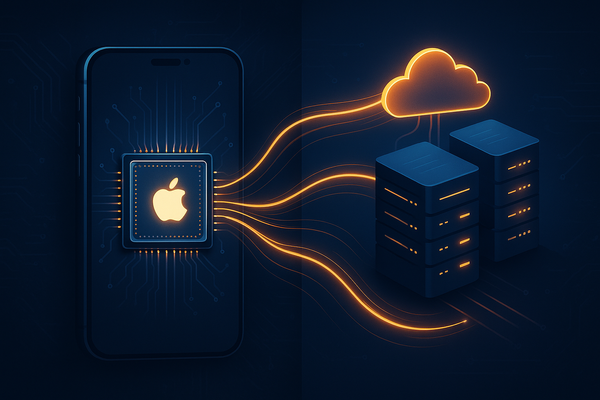
The Apple Intelligence Developer Tax: Why Enterprise Backend Teams Building Multi-Agent Pipelines Must Rethink Their On-Device vs. Cloud Inference Split After WWDC 2026's Siri Overhaul

Let me say something that will make a certain type of senior iOS engineer deeply uncomfortable: the architectural decisions your backend team made about on-device versus cloud inference in late 2024 are now wrong. Not slightly miscalibrated. Structurally, economically, and operationally wrong. WWDC 2026 did not just ship a Siri

By Scott Miller
How to Migrate Your Enterprise Multi-Agent Pipeline's Embedding Strategy When Your Vector Database Vendor Announces Deprecation of Legacy Index Formats Mid-Production Cycle

vector database

How to Migrate Your Enterprise Multi-Agent Pipeline's Embedding Strategy When Your Vector Database Vendor Announces Deprecation of Legacy Index Formats Mid-Production Cycle

It always seems to happen at the worst possible time. Your enterprise multi-agent pipeline is humming along in production, serving thousands of requests per day, and then the email arrives: your vector database vendor is deprecating its legacy index format. You have a migration window. The clock is ticking. And

By Scott Miller
5 Dangerous Myths Enterprise Backend Teams Still Believe About Multi-Agent Pipeline Disaster Recovery ,  And Why the Q1 2026 Foundation Model Outages Proved Every One of Them Wrong

multi-agent AI

5 Dangerous Myths Enterprise Backend Teams Still Believe About Multi-Agent Pipeline Disaster Recovery , And Why the Q1 2026 Foundation Model Outages Proved Every One of Them Wrong

In the first quarter of 2026, something quietly catastrophic happened across dozens of enterprise engineering floors. Orchestration pipelines froze. Autonomous agents entered infinite retry loops. Customer-facing workflows that had been humming along for months suddenly returned nothing but timeout errors. The culprit? A series of rolling degradations and partial outages

By Scott Miller