multi-agent AI

Shared AI Agent State Store vs. Isolated Per-Agent Memory Silos: Which Context Persistence Architecture Should Enterprise Backend Teams Choose in H2 2026?

multi-agent AI

Shared AI Agent State Store vs. Isolated Per-Agent Memory Silos: Which Context Persistence Architecture Should Enterprise Backend Teams Choose in H2 2026?

Picture this: your enterprise has deployed a fleet of specialized AI agents. One handles customer intent classification, another manages order fulfillment logic, a third coordinates with your ERP, and a fourth synthesizes compliance checks in real time. They all need to "talk" to each other, share context, and

By Scott Miller
How a Logistics SaaS Company Discovered Its Multi-Agent Pipeline Was Silently Corrupting Shared Tool State Between Concurrent Agents ,  and the Mutex Locking Strategy That Finally Stopped It

multi-agent AI

How a Logistics SaaS Company Discovered Its Multi-Agent Pipeline Was Silently Corrupting Shared Tool State Between Concurrent Agents , and the Mutex Locking Strategy That Finally Stopped It

In the spring of 2026, the engineering team at FreightMind, a mid-sized logistics SaaS company headquartered in Austin, Texas, started noticing something deeply unsettling: their AI-powered shipment orchestration platform was occasionally booking the same cargo slot twice, skipping rate confirmations, and producing route plans that flatly contradicted each other. The

By Scott Miller
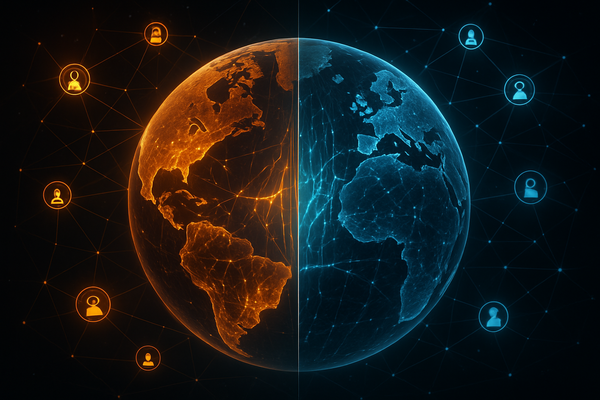
7 Ways Enterprise Backend Teams Must Redesign Multi-Agent Pipeline Data Residency Controls Now That EU-US Data Privacy Framework Enforcement Is Reshaping Cross-Border AI Inference in Q3 2026

data residency

7 Ways Enterprise Backend Teams Must Redesign Multi-Agent Pipeline Data Residency Controls Now That EU-US Data Privacy Framework Enforcement Is Reshaping Cross-Border AI Inference in Q3 2026

The ground shifted quietly but decisively in early Q2 2026. The EU-US Data Privacy Framework (DPF), which replaced the battered Privacy Shield mechanism back in 2023, finally graduated from "promising policy" to "enforcement reality." The first wave of significant DPF enforcement actions, issued by EU data

By Scott Miller
5 Ways Enterprise Backend Teams Must Redesign Multi-Agent Pipeline Failover Strategies Now That Multi-Cloud Redundancy Mandates Are Being Written Into Q4 2026 Vendor Contracts

multi-agent AI

5 Ways Enterprise Backend Teams Must Redesign Multi-Agent Pipeline Failover Strategies Now That Multi-Cloud Redundancy Mandates Are Being Written Into Q4 2026 Vendor Contracts

Something significant is happening in enterprise procurement right now, and most backend engineering teams are not ready for it. As Q4 2026 vendor contracts are being drafted and finalized across Fortune 500 organizations, legal and compliance teams are quietly inserting a new class of requirement: multi-cloud redundancy mandates for AI-driven

By Scott Miller
7 Ways Enterprise Backend Teams Must Redesign Multi-Agent Pipeline Rate Limiting Strategies Before Cloud Provider Inference API Throttling Policies Tighten in Q4 2026

multi-agent AI

7 Ways Enterprise Backend Teams Must Redesign Multi-Agent Pipeline Rate Limiting Strategies Before Cloud Provider Inference API Throttling Policies Tighten in Q4 2026

If your enterprise backend team is still treating inference API rate limiting the same way you handled REST API quotas in 2022, you are already behind. The landscape has shifted dramatically. As of mid-2026, the three dominant cloud AI providers (Azure AI Foundry, AWS Bedrock, and Google Cloud Vertex AI)

By Scott Miller
How to Build a Multi-Agent Pipeline Autonomous Threat Containment Protocol: A Step-by-Step Guide for Enterprise Security Teams Facing AI-Native Ransomware in 2026

multi-agent AI

How to Build a Multi-Agent Pipeline Autonomous Threat Containment Protocol: A Step-by-Step Guide for Enterprise Security Teams Facing AI-Native Ransomware in 2026

The threat landscape shifted dramatically in mid-2026. AI-native ransomware, a new class of attack that leverages autonomous agentic systems to self-propagate, adapt to defenses in real time, and laterally compromise AI pipelines from the inside, has moved from theoretical warning to active enterprise crisis. Unlike legacy ransomware that targets file

By Scott Miller