Backend Engineering

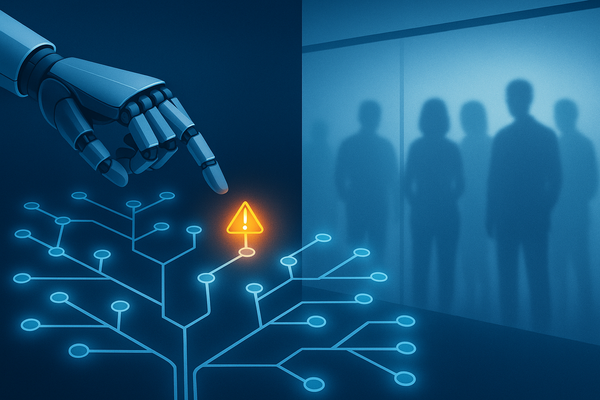
Why Enterprise Backend Teams Must Build an AI Vendor Concentration Risk Framework Before the Foundation Model Market Consolidates Into a Single-Point-of-Failure Crisis

AI risk management

Why Enterprise Backend Teams Must Build an AI Vendor Concentration Risk Framework Before the Foundation Model Market Consolidates Into a Single-Point-of-Failure Crisis

There is a quiet assumption baked into most enterprise AI roadmaps right now, and it is dangerously wrong. The assumption goes something like this: "We can afford to standardize on one or two foundation model providers because the market is competitive enough to keep them honest." In early

By Scott Miller
Synchronous vs. Asynchronous LLM Inference for Enterprise Agentic Workloads: Standardize Now Before Q3 2026 Scale Makes It Too Costly to Pivot

LLM Inference

Synchronous vs. Asynchronous LLM Inference for Enterprise Agentic Workloads: Standardize Now Before Q3 2026 Scale Makes It Too Costly to Pivot

There is a quiet architectural debt accumulating inside enterprise backend teams right now, and most engineering leads haven't fully priced it in yet. As agentic AI workloads move from proof-of-concept into production pipelines, a deceptively foundational decision is being deferred week after week: should your team standardize on

By Scott Miller
Centralized Agentic Policy Engine vs. Distributed Per-Agent Guardrail Enforcement: Which Governance Architecture Should Enterprise Backend Teams Standardize On?

AI Governance

Centralized Agentic Policy Engine vs. Distributed Per-Agent Guardrail Enforcement: Which Governance Architecture Should Enterprise Backend Teams Standardize On?

Something significant is happening in enterprise backend infrastructure right now, and most teams are not ready for it. Autonomous multi-agent systems are no longer a roadmap item; they are live in production, making decisions that touch financial records, customer data, supply chains, and operational workflows. As Q3 2026 approaches, industry

By Scott Miller
Why Enterprise Backend Teams Must Establish Agentic Audit Log Immutability Standards Before Regulatory Scrutiny Intensifies in Q3 2026

Agentic AI

Why Enterprise Backend Teams Must Establish Agentic Audit Log Immutability Standards Before Regulatory Scrutiny Intensifies in Q3 2026

There is a quiet crisis forming inside enterprise backend infrastructure, and most engineering leaders have not yet looked it in the eye. Agentic AI systems, those multi-step autonomous pipelines that plan, execute, and self-correct without constant human intervention, are now deeply embedded in production environments across finance, healthcare, logistics, and

By Scott Miller
Centralized AI Gateway vs. Decentralized Sidecar Proxy: Which Agentic Traffic Architecture Should Enterprise Teams Standardize On Before Q3 2026?

AI Gateway

Centralized AI Gateway vs. Decentralized Sidecar Proxy: Which Agentic Traffic Architecture Should Enterprise Teams Standardize On Before Q3 2026?

There is a quiet architectural crisis building inside enterprise backend teams right now, and most engineering leaders have not yet named it. Multi-agent AI systems, once a research curiosity, are rapidly becoming production workloads. Orchestrators are spawning sub-agents. Sub-agents are calling tools. Tools are invoking APIs. APIs are hitting databases.

By Scott Miller
Vector Databases vs. Graph Databases for Agentic Memory Persistence: Which Architecture Should Enterprise Backend Teams Standardize On Before Q3 2026?

Vector Databases

Vector Databases vs. Graph Databases for Agentic Memory Persistence: Which Architecture Should Enterprise Backend Teams Standardize On Before Q3 2026?

There is a quiet architectural crisis unfolding inside enterprise backend teams right now. As agentic AI workloads accelerate into production, the question of how agents remember things has gone from a theoretical design concern to a live infrastructure emergency. According to recent benchmarks published by mem0.ai in early 2026,

By Scott Miller