AI Agents

Why Enterprise Backend Teams Are Wrong to Treat AI Agent Compute Scheduling as an Infrastructure Problem ,  It's a Multi-Agent Deadline Propagation Crisis That Will Collapse Time-Sensitive Workflow SLAs in H2 2026

AI Agents

Why Enterprise Backend Teams Are Wrong to Treat AI Agent Compute Scheduling as an Infrastructure Problem , It's a Multi-Agent Deadline Propagation Crisis That Will Collapse Time-Sensitive Workflow SLAs in H2 2026

There is a quiet assumption spreading through enterprise backend teams right now, and it is going to be expensive. The assumption is this: AI agent compute scheduling is fundamentally an infrastructure problem. Spin up more GPU nodes, tune your Kubernetes autoscaler, add a priority queue in front of your inference

By Scott Miller
Why Enterprise Backend Teams Are Wrong to Treat AI Agent Workflow Versioning as a DevOps Problem ,  It's a Multi-Agent Behavioral Drift Crisis That Will Define Production Reliability in H2 2026

AI Agents

Why Enterprise Backend Teams Are Wrong to Treat AI Agent Workflow Versioning as a DevOps Problem , It's a Multi-Agent Behavioral Drift Crisis That Will Define Production Reliability in H2 2026

Here is the uncomfortable truth that most engineering leaders are not ready to hear: your CI/CD pipeline cannot save you from what is coming. The versioning strategies your backend teams carefully inherited from microservices architecture, the semantic versioning contracts your platform engineers are so proud of, the rollback playbooks

By Scott Miller
Synchronous AI Agent Tool Execution vs. Deferred Job Queue Architecture: Which Invocation Pattern Should Enterprise Backend Teams Choose in H2 2026?

AI Agents

Synchronous AI Agent Tool Execution vs. Deferred Job Queue Architecture: Which Invocation Pattern Should Enterprise Backend Teams Choose in H2 2026?

If you've been running multi-agent AI workflows in production this year, you already know the pain: a foundation model inference call that normally completes in 800 milliseconds suddenly spikes to 14 seconds during peak demand, and that single latency event cascades like dominoes through every downstream agent in

By Scott Miller
5 Dangerous Myths Enterprise Backend Teams Still Believe About AI Agent Memory Architecture That Are Silently Corrupting Retrieval-Augmented Context Windows Across Long-Running Multi-Agent Workflows in H2 2026

AI Agents

5 Dangerous Myths Enterprise Backend Teams Still Believe About AI Agent Memory Architecture That Are Silently Corrupting Retrieval-Augmented Context Windows Across Long-Running Multi-Agent Workflows in H2 2026

Your agentic AI pipeline looked bulletproof on day one. Clean retrieval, coherent context, agents handing off tasks like a well-rehearsed relay team. Then, somewhere around week three of a long-running workflow, the outputs started drifting. Subtle at first: a misattributed fact here, a stale document chunk there. By month two,

By Scott Miller
FAQ: What Enterprise Backend Teams Must Know About AI Agent Audit Trail Immutability as Regulators Begin Demanding Tamper-Proof Multi-Agent Decision Logs in H2 2026

AI Agents

FAQ: What Enterprise Backend Teams Must Know About AI Agent Audit Trail Immutability as Regulators Begin Demanding Tamper-Proof Multi-Agent Decision Logs in H2 2026

It crept up quietly. For the past two years, enterprise teams have been deploying AI agents to automate workflows, orchestrate decisions, and chain together complex multi-step reasoning pipelines. The productivity gains have been real. But now, in the second half of 2026, the regulatory bill is coming due. Auditors, compliance

By Scott Miller
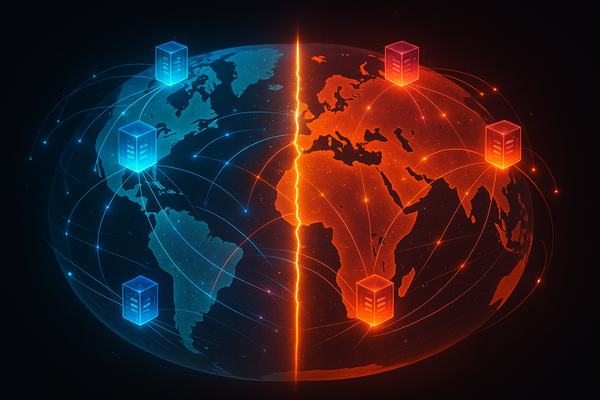
The Sovereignty Reckoning: How Enterprise Backend Teams Must Rebuild AI Agent Infrastructure for the Multi-Jurisdictional Compute Era

AI Infrastructure

The Sovereignty Reckoning: How Enterprise Backend Teams Must Rebuild AI Agent Infrastructure for the Multi-Jurisdictional Compute Era

Something significant shifted in the first half of 2026. What enterprise backend architects once treated as a legal team problem quietly became a deeply technical one. Compute sovereignty mandates, once vague policy ambitions scattered across Brussels, Singapore, Riyadh, and Ottawa, have crystallized into enforceable, operationally disruptive regulations that now sit

By Scott Miller