agentic AI

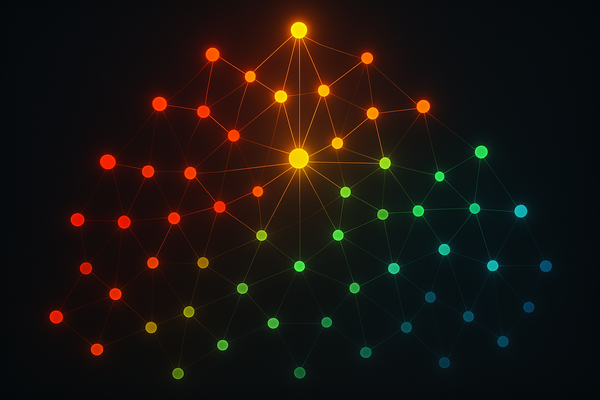
5 Agentic AI and Physical AI Convergence Trends Enterprise Infrastructure Teams Must Prepare For Before Q4 2026

agentic AI

5 Agentic AI and Physical AI Convergence Trends Enterprise Infrastructure Teams Must Prepare For Before Q4 2026

Something quietly seismic happened in the first half of 2026. The AI workloads that enterprise infrastructure teams spent the last two years optimizing for, the GPU-hungry, datacenter-bound, multi-agent pipelines running LLM orchestration frameworks, stopped being the most demanding thing on the network. The new contender? A Waymo robotaxi negotiating a

By Scott Miller
How Multi-Agent Pipeline Inter-Agent Trust Escalation Actually Works: Designing Least-Privilege Authorization Boundaries That Prevent Runaway Permission Inheritance

Multi-Agent Systems

How Multi-Agent Pipeline Inter-Agent Trust Escalation Actually Works: Designing Least-Privilege Authorization Boundaries That Prevent Runaway Permission Inheritance

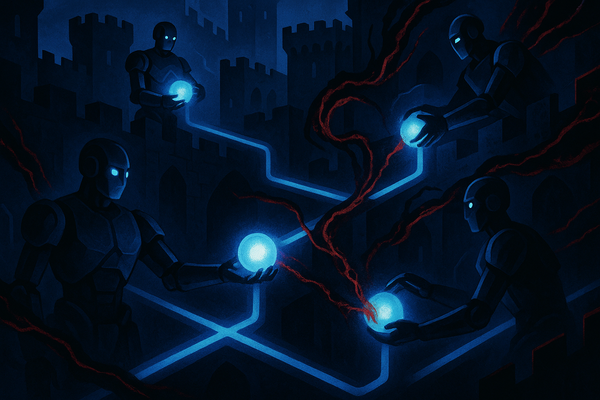
There is a quiet architectural crisis unfolding inside the most sophisticated AI deployments of H2 2026. As organizations graduate from single-agent workflows to sprawling multi-agent pipelines, where orchestrator agents dynamically spawn subagents at runtime to parallelize tasks, a dangerous assumption has crept into system design: that trust should flow downward

By Scott Miller
7 Multi-Agent Pipeline Prompt Injection Attack Vectors Enterprise Backend Teams Are Ignoring in H2 2026 ,  And the Hardening Strategies That Close Each Gap

AI Security

7 Multi-Agent Pipeline Prompt Injection Attack Vectors Enterprise Backend Teams Are Ignoring in H2 2026 , And the Hardening Strategies That Close Each Gap

Your multi-agent pipeline just became your largest attack surface. And most enterprise backend teams have no idea. As of mid-2026, the majority of serious AI deployments are no longer single-model, single-prompt affairs. They are orchestrated networks of specialized agents: a planner agent, tool-calling agents, retrieval-augmented generation (RAG) agents, code execution

By Scott Miller
5 Dangerous Myths Enterprise Backend Teams Believe About Multi-Agent Pipeline Security Boundaries When Deploying Shared Foundation Model Inference Endpoints Across Tenant-Isolated SaaS Environments

multi-agent AI security

5 Dangerous Myths Enterprise Backend Teams Believe About Multi-Agent Pipeline Security Boundaries When Deploying Shared Foundation Model Inference Endpoints Across Tenant-Isolated SaaS Environments

Here is a scenario that should make any enterprise platform architect uncomfortable: your SaaS product runs a beautifully orchestrated multi-agent pipeline. Tenant A's billing agent, Tenant B's document summarizer, and Tenant C's customer support bot all route through the same shared foundation model inference

By Scott Miller
The Rollback Problem Nobody Is Talking About: How to Redesign Multi-Agent Pipeline Architecture Before Agentic Autonomy Outpaces Your Undo Button

agentic AI

The Rollback Problem Nobody Is Talking About: How to Redesign Multi-Agent Pipeline Architecture Before Agentic Autonomy Outpaces Your Undo Button

Imagine your enterprise's AI orchestration layer just completed a 47-step agentic pipeline. It sent 3,200 personalized emails, charged 800 customer accounts, updated downstream CRM records, and triggered a cascade of webhook notifications to third-party partners. Then your monitoring system flags a data corruption event that originated at

By Scott Miller
The Agentic AI Workforce Forecast: 7 Predictions for How Enterprise Backend Teams Must Restructure in 2026

agentic AI

The Agentic AI Workforce Forecast: 7 Predictions for How Enterprise Backend Teams Must Restructure in 2026

Something quietly seismic happened in the last 18 months of enterprise software operations. Multi-agent AI pipelines stopped being a proof-of-concept curiosity and became production infrastructure. By early 2026, organizations running on platforms like LangGraph, AutoGen, and proprietary orchestration frameworks are reporting that agentic systems now handle anywhere from 30 to

By Scott Miller