How Multi-Agent Pipeline Inter-Agent Trust Escalation Actually Works: Designing Least-Privilege Authorization Boundaries That Prevent Runaway Permission Inheritance
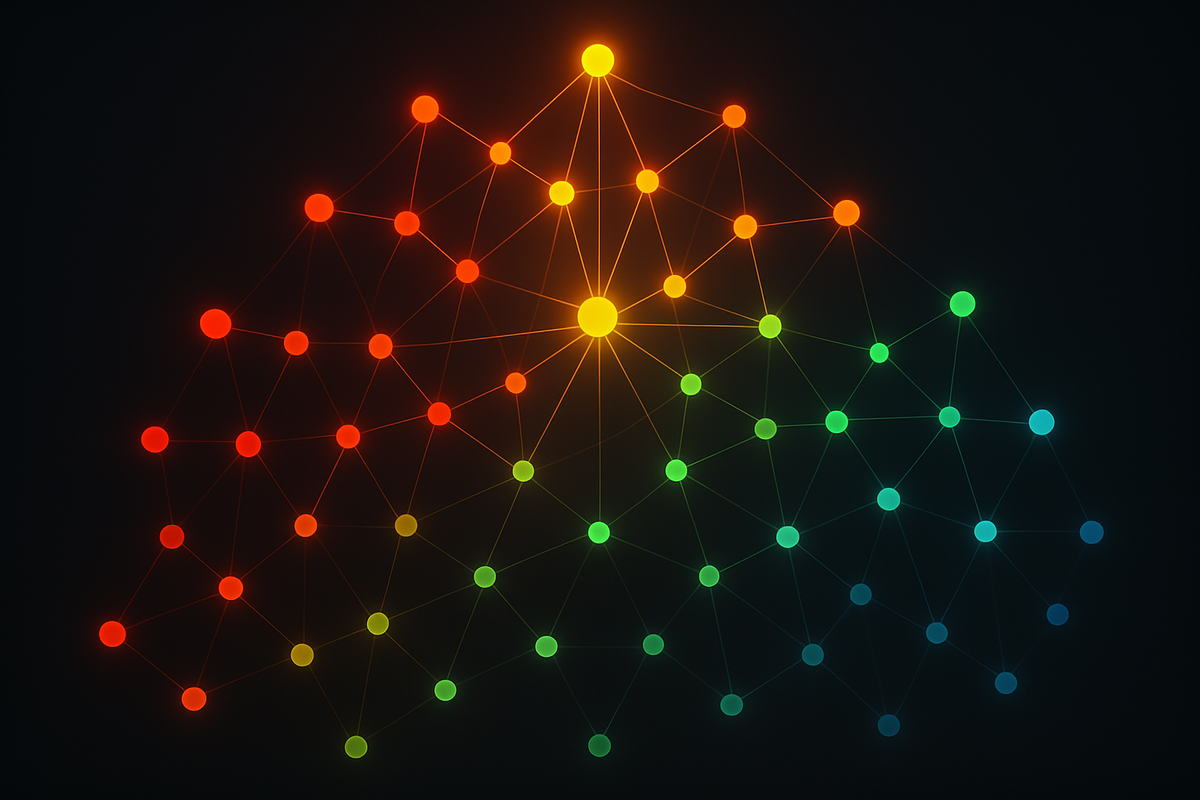
There is a quiet architectural crisis unfolding inside the most sophisticated AI deployments of H2 2026. As organizations graduate from single-agent workflows to sprawling multi-agent pipelines, where orchestrator agents dynamically spawn subagents at runtime to parallelize tasks, a dangerous assumption has crept into system design: that trust should flow downward through an agent hierarchy the way water flows downhill, naturally and without resistance.
It should not. And in many production systems right now, it does exactly that, creating what security researchers are calling runaway permission inheritance: a condition where a subagent spawned three levels deep in a pipeline ends up operating with nearly the same authorization surface as the root orchestrator that indirectly created it.
This post is a deep dive into the mechanics of inter-agent trust escalation, why it happens, what it costs you when it goes wrong, and how to architect authorization boundaries that actually hold under the pressure of dynamic, runtime agent spawning.
First, Let's Define the Problem Precisely
In a modern agentic pipeline, you typically have a layered structure. A root orchestrator receives a high-level goal, decomposes it into subtasks, and spawns specialized subagents to handle each subtask. Those subagents may themselves spawn further subagents. The result is a runtime agent graph that nobody fully designed in advance, because the whole point of dynamic spawning is adaptability.
The authorization problem lives in that phrase: nobody fully designed in advance.
When an orchestrator is initialized, it is granted a capability set: access to certain APIs, databases, file systems, external services, and tool invocations. When it spawns a subagent, the spawning mechanism has to answer a question that most current frameworks answer lazily: what permissions does this new agent get?
The lazy answer, baked into many popular agentic frameworks today, is some variation of: "inherit from parent, maybe with a scope hint." That scope hint is usually a natural language description of the subagent's task, not a formally specified permission boundary. The result is that the subagent's actual authorization surface is determined at runtime by whatever tool-calling logic the underlying model applies, constrained only by the parent's full permission set.
This is not least-privilege. This is ambient authority propagation, and it is exactly the failure mode that classical systems security spent decades learning to eliminate in operating systems and microservice architectures.
The Three Vectors of Trust Escalation in Agent Pipelines
Before you can defend against inter-agent trust escalation, you need to understand the distinct mechanisms through which it happens. There are three primary vectors.
1. Implicit Capability Inheritance
This is the most common vector. The orchestrator holds a credential bundle: API keys, OAuth tokens, database connection strings, and tool manifests. When it spawns a subagent using a framework like a tool-calling loop or a planner-executor pattern, it passes context to that subagent. If that context includes the full credential bundle (or a reference to it), the subagent inherits the full capability set without any scoping.
The subagent never asked for write access to the production database. It only needed to read three rows. But because the credential bundle was passed wholesale, it has write access, and if the subagent is compromised via prompt injection or a malicious tool response, that write access is exploitable.
2. Re-Delegation Without Attenuation
In capability-based security theory, a fundamental rule is that a principal can only delegate authority it actually holds, and that delegation should be attenuated: the delegate receives no more authority than the delegator, and ideally less. In practice, many agentic frameworks allow re-delegation without enforcing attenuation.
A subagent that was spawned with a scoped credential can, in some architectures, invoke a tool that itself creates another agent context, passing along its own (already scoped) credentials plus additional credentials it acquired during its task execution. The net result is that a third-level subagent accumulates permissions that no single ancestor explicitly granted it in one shot, but that it assembled by combining delegations across its lineage.
3. Tool-Mediated Privilege Escalation
This vector is the most subtle and the most dangerous. A subagent with limited permissions calls a tool, such as a web search tool, a code execution sandbox, or an external API wrapper. The tool's response contains content that, when processed by the subagent's model, causes the subagent to invoke a different tool it was not intended to use, or to request elevated permissions from the orchestrator using a legitimate inter-agent messaging channel.
This is prompt injection weaponized against the authorization layer. The injected content does not need to break any cryptographic boundary. It just needs to convince the model that escalating its own permissions is the right next step for the task. In systems where the orchestrator grants permission escalation requests based on the requesting subagent's task description (another natural-language, not formally-verified mechanism), this attack closes the loop.
Why Least-Privilege Is Structurally Hard in Dynamic Agent Graphs
If you come from a microservices background, you might be thinking: "Just apply the same principles we use for service accounts." And you would be right in principle. But the structural properties of dynamic agent graphs create challenges that static service meshes do not face.
- Unknown spawn topology at design time: In a microservice mesh, you know every service at deployment time and can pre-configure its permissions. In a dynamic agent graph, the orchestrator decides at runtime which subagents to spawn, based on the goal decomposition the model produces. You cannot pre-configure permissions for agents that do not exist until runtime.
- Task-dependent permission requirements: A subagent spawned to "summarize a document" needs read access to one file. The same subagent type spawned to "update a document based on user feedback" needs write access. The required permission set is a function of the task, not just the agent type, and the task is determined dynamically.
- Model opacity: The model driving an agent does not expose a deterministic, inspectable permission request surface. It calls tools based on its internal reasoning, which means the set of tools it will call for a given task is not fully predictable in advance. You cannot write a static allowlist that is both correct and complete for all possible task variants.
- Latency constraints: A synchronous permission approval gate for every tool call in a high-throughput pipeline is operationally unacceptable. The authorization mechanism has to be low-latency, which pushes design toward pre-granted capability sets rather than just-in-time approvals, reintroducing the ambient authority problem.
The Architecture That Actually Works: Scoped Capability Tokens with Hierarchical Attenuation
The solution that is emerging as a practical standard in well-architected multi-agent systems in 2026 combines ideas from object-capability security, OAuth 2.0 token scoping, and zero-trust network architecture into a coherent pattern. Here is how it works in concrete terms.
Step 1: Define a Capability Vocabulary at System Bootstrap
Before any agent runs, the system defines a finite vocabulary of named capabilities. These are not free-form strings. They are enumerated, versioned identifiers like files:read:project-alpha, db:read:customers:readonly-view, or api:github:repo-x:pull-requests:write. Every tool in the system is annotated with the capabilities it requires to invoke.
This vocabulary is the foundation. Without it, you cannot do scoped delegation because you have no formal language in which to express scopes.
Step 2: Issue a Root Capability Token to the Orchestrator
The orchestrator receives a signed capability token at initialization. This token contains the exact set of capabilities granted for the current pipeline run, scoped to the specific job context. It is not a master key. It is a job-specific grant, time-bounded and audience-restricted to this orchestrator instance.
Critically, the token includes a delegation depth limit and a monotonic attenuation constraint: any token derived from it can only contain a subset of its capabilities, and the derivation chain is recorded in the token's lineage field.
Step 3: Orchestrator Derives Attenuated Child Tokens at Spawn Time
When the orchestrator decides to spawn a subagent, it performs a capability analysis step before spawning. This step is the architectural keystone. The orchestrator (or, more precisely, a sidecar authorization service the orchestrator calls) takes the subagent's task description and maps it to the minimum required capability subset from the vocabulary.
This mapping can be implemented in several ways:
- Rule-based mapping: A deterministic policy engine (think Open Policy Agent or a custom DSL) maps task type identifiers to capability sets. Fast, auditable, but requires the orchestrator to classify the task into a known type before spawning.
- Model-assisted mapping with human-defined bounds: A small, fast classifier model proposes the capability set, but it can only propose subsets of a human-defined maximum for each task category. The model cannot invent new capabilities; it can only select from the pre-approved menu.
- Declarative subagent manifests: Subagent types are pre-declared with their maximum capability requirements, similar to Kubernetes pod security contexts. The orchestrator selects a subagent type, and the authorization system issues a token scoped to that type's declared maximum, further restricted by the current job context.
The derived child token is cryptographically bound to the parent token's lineage. It cannot be used to request capabilities outside the parent's set. It cannot be further delegated beyond the remaining delegation depth. And it expires sooner than the parent token, enforcing temporal attenuation as well.
Step 4: Tool Invocations Are Validated Against the Invoking Agent's Token
Every tool in the system is fronted by a capability enforcement layer. When a subagent calls a tool, it presents its capability token. The tool's enforcement layer checks that the token contains the required capability for that tool invocation, that the token is not expired, that the lineage is valid, and that the invocation is within any rate or volume limits encoded in the token.
This check is synchronous but extremely fast (sub-millisecond for a local token validation, low single-digit milliseconds for a remote policy check). It adds negligible latency to the pipeline while providing a hard authorization boundary that no amount of prompt injection can cross, because the token is cryptographic, not linguistic.
Step 5: Escalation Requests Are Routed to a Human-in-the-Loop Gate or a Policy Engine
When a subagent determines it needs a capability it was not granted, it emits a structured escalation request through a dedicated, authenticated channel. This request goes to either a human approval interface (for high-stakes pipelines) or a policy engine that can auto-approve based on pre-defined rules (for lower-stakes, high-throughput pipelines).
The critical design requirement is that this channel is separate from the task execution channel. A subagent cannot escalate its own permissions by embedding an escalation request inside a tool call response or a message to the orchestrator that the orchestrator's model will process. The escalation channel is out-of-band and structurally inaccessible to prompt injection.
Handling the Dynamic Topology Problem
The architecture above works well when subagent types are pre-declared. But what about truly emergent spawning, where the orchestrator invents a new kind of subagent on the fly to handle an unanticipated task?
The answer is a capability ceiling policy. Any dynamically typed subagent (one that does not match a pre-declared manifest) is automatically issued a token that contains only the capabilities in a predefined "dynamic agent default" set. This set is intentionally minimal: read-only access to a sandboxed data context, access to a curated set of safe tools, and no delegation rights (delegation depth set to zero, meaning it cannot spawn further subagents).
If the task genuinely requires more than the default set, the orchestrator's capability analysis step will have identified this before spawning, and it will either match the task to a pre-declared subagent type or route the escalation request before spawning begins. The dynamic agent default is a safe fallback, not a workaround.
This approach does sacrifice some flexibility. An orchestrator cannot spontaneously create a highly privileged novel subagent type at runtime without a human or policy engine approving the capability grant first. In 2026, that is a feature, not a bug.
Observability: You Cannot Secure What You Cannot See
No authorization architecture is complete without a robust observability layer. In multi-agent pipelines, this means maintaining a live agent lineage graph that tracks, for every active agent instance: its parent, its token lineage, its currently held capabilities, every tool call it has made, and every subagent it has spawned.
This graph should be queryable in real time. When a pipeline run completes (or fails), the lineage graph should be archived as an immutable audit log. Post-incident analysis of a compromised pipeline is nearly impossible without this data, because the dynamic nature of the agent graph means there is no static code path to trace.
Practically, this means your agentic framework needs to emit structured telemetry events for every agent lifecycle event: spawn, tool call, escalation request, token derivation, and termination. OpenTelemetry-compatible tracing with agent-specific semantic conventions is becoming the de facto standard for this in 2026, with several major cloud providers offering managed agentic observability services that ingest this telemetry natively.
Common Anti-Patterns to Avoid Right Now
Before closing, it is worth naming the specific anti-patterns that are most prevalent in production multi-agent systems today, so you can audit your own architecture against them.
- Passing the full system prompt as the subagent's context: The system prompt often contains tool descriptions, credentials, and operational context that the subagent does not need. Subagents should receive a minimal, task-scoped context, not a copy of the orchestrator's full operational state.
- Using natural language to express permission boundaries: "Only access files related to the current project" is not an authorization boundary. It is a suggestion that a model may or may not follow, depending on how it interprets its task. Authorization boundaries must be formally specified and cryptographically enforced.
- Allowing subagents to communicate directly with each other without going through the orchestrator: Peer-to-peer inter-agent communication creates trust channels that bypass the hierarchical authorization model. All inter-agent communication should be mediated by an authenticated message bus that enforces sender and receiver identity.
- Treating tool outputs as trusted input: Tool outputs, especially from external APIs and web-connected tools, are untrusted data. They should be processed by the agent model but should not be able to trigger authorization decisions directly. The authorization layer must be isolated from the data plane.
- Setting delegation depth limits to unlimited or very high values: A delegation depth of two or three is sufficient for the vast majority of real-world multi-agent pipelines. A depth of ten or unlimited is an indicator that the pipeline architecture needs to be redesigned, not that the depth limit needs to be raised.
Conclusion: Trust Is an Engineering Problem, Not a Prompt Problem
The deepest mistake teams make when approaching inter-agent trust in multi-agent pipelines is treating it as a problem to be solved in the prompt layer. They write careful instructions telling the orchestrator not to give subagents too many permissions, or telling subagents not to exceed their intended scope. These instructions are not authorization controls. They are politeness suggestions directed at a probabilistic system.
Real authorization in dynamic agent graphs requires the same ingredients that real authorization has always required in distributed systems: a formal capability vocabulary, cryptographically enforced token scoping, monotonic attenuation on delegation, out-of-band escalation channels, and comprehensive audit telemetry.
The good news is that the patterns are well-understood. Object-capability security, zero-trust networking, and OAuth token scoping have been solving these problems in other domains for years. The work in H2 2026 is to apply these proven patterns rigorously to the new topology of dynamic agent graphs, before the pipelines get any larger and the blast radius of a trust escalation failure gets any wider.
The teams that get this right will build agentic systems that can be trusted with genuinely high-stakes tasks. The teams that do not will eventually discover, in the worst possible way, that "the orchestrator told it not to" is not a security boundary.



