Stateful Agent Orchestration vs. Stateless Function-Chaining: A 2026 Enterprise Evaluation Guide for Backend Teams
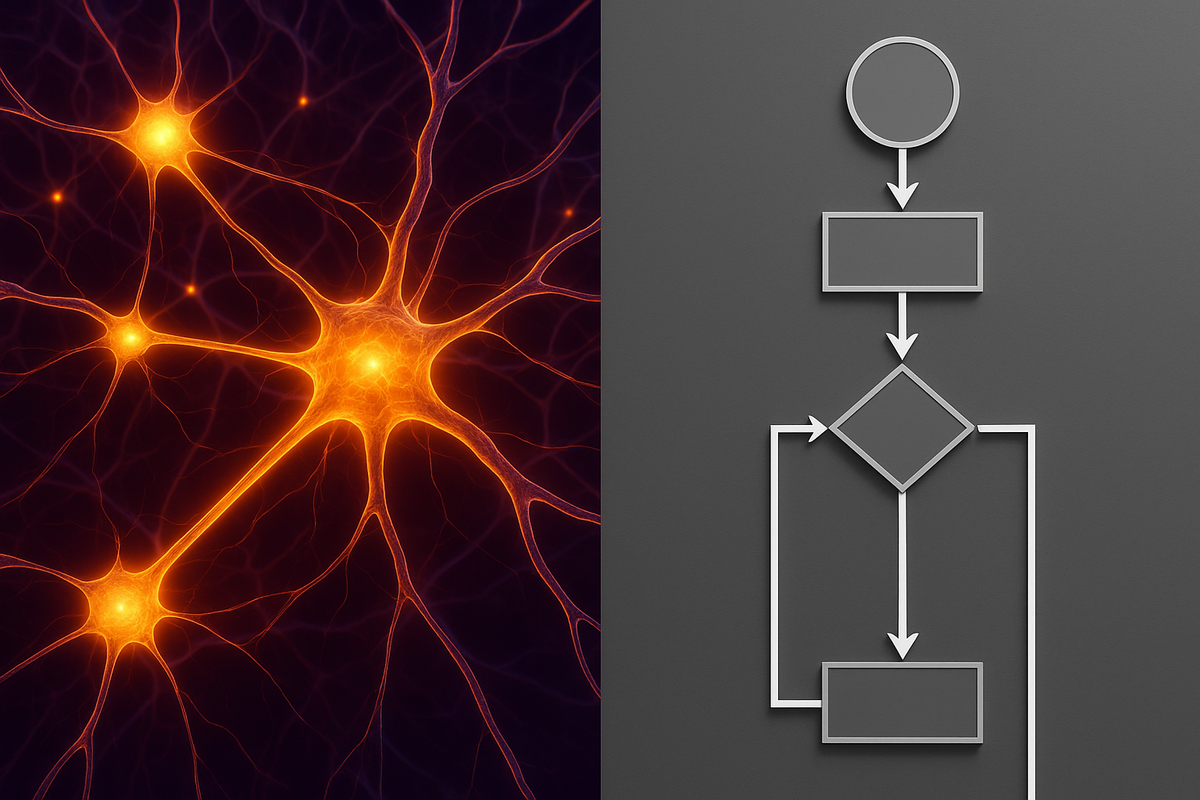
Two backend teams at competing fintech firms each deploy a multi-agent workflow to handle complex loan underwriting decisions. One team ships in six weeks and scales effortlessly. The other spends four months debugging mysterious context loss, runaway retry loops, and agents that contradict decisions made three steps earlier. The difference? One team chose the right architecture for long-horizon, stateful work. The other treated their agent pipeline like a REST API.
In 2026, this scenario plays out daily across enterprise engineering orgs. The explosion of production-grade agentic systems has forced a genuinely hard architectural question to the surface: should your multi-agent backend be built on stateful orchestration, or on stateless function-chaining? And the answer is rarely obvious, because both approaches have serious, legitimate engineering tradeoffs.
This guide is written for backend engineers and platform architects who are past the "hello world agent" phase and are now designing systems that must run reliably at enterprise scale, across long-horizon tasks, with multiple cooperating agents. We will break down both paradigms, compare them across the dimensions that actually matter in production, and give you a decision framework you can use today.
Defining the Two Paradigms
Before comparing them, we need to be precise about what each architecture actually means, because both terms get used loosely in the industry.
Stateful Agent Orchestration
In a stateful orchestration model, a central orchestrator (or a graph of agents) maintains a persistent, mutable context object across the entire lifetime of a workflow. Each agent node reads from and writes to this shared state. The orchestrator tracks where in the workflow execution currently sits, what decisions have already been made, what tools have been called, and what intermediate results have been produced.
Frameworks like LangGraph, Microsoft's AutoGen 0.4+, and CrewAI's enterprise runtime lean heavily into this model. State is typically stored in a durable backend (Redis, Postgres, or a purpose-built agent state store), and the orchestrator can pause, resume, branch, and even roll back execution. The workflow is a first-class, long-lived object.
Stateless Function-Chaining
In a stateless function-chaining model, each agent or processing step is an independent, side-effect-free function. Context is passed explicitly as input and returned as output. There is no shared mutable state. The "workflow" is really just a composition of functions: the output of step N becomes the input of step N+1.
This model maps naturally onto serverless platforms (AWS Lambda, Google Cloud Functions, Azure Durable Functions in their simplest form) and event-driven pipelines. Tools like Apache Airflow's TaskFlow API, Prefect, and simple LLM chain libraries encourage this pattern. Each function is independently testable, independently deployable, and carries no hidden dependencies on external state objects.
The Core Tension: Context vs. Composability
The fundamental tradeoff is this: stateful systems are better at maintaining context; stateless systems are better at maintaining composability. These two properties are genuinely in tension for long-horizon agentic tasks, and understanding why is the key to making the right architectural choice.
Long-horizon tasks, meaning workflows that span dozens of agent steps, multiple tool calls, conditional branches, and potentially hours or days of wall-clock time, accumulate context. An agent researching a legal contract needs to remember not just the last paragraph it read, but the full set of clauses it has already flagged, the client's stated risk tolerance, and the decisions made by earlier agents in the chain. Passing all of that as function input and output becomes unwieldy fast. The context blob grows, serialization costs rise, and the cognitive overhead of reasoning about data flow becomes enormous.
Stateless systems, on the other hand, are extraordinarily composable. You can swap out step 3 without touching steps 1 through 2 or 4 through 10. You can run steps in parallel trivially. You can test each function in isolation with a mock input. You can scale individual steps independently based on their load profile. These are not minor benefits; they are the foundation of maintainable software at scale.
Head-to-Head Comparison Across 7 Critical Dimensions
1. Long-Horizon Task Management
Stateful wins decisively. When a workflow must maintain coherent context across 50+ agent steps, hours of execution, or asynchronous human-in-the-loop interruptions, stateful orchestration is the natural fit. The orchestrator knows exactly where execution paused, what state it was in, and how to resume cleanly. Stateless chains require you to externalize and re-inject this context at every step, which is both a performance cost and a significant source of bugs when context serialization is imperfect.
Consider a multi-agent system performing due diligence on an acquisition target. The workflow might run for 48 hours, involve 12 specialized agents, require human approval at three checkpoints, and branch based on findings. A stateful orchestrator handles this natively. A stateless chain requires you to essentially rebuild state management yourself, at which point you have reinvented stateful orchestration with extra steps.
2. Fault Tolerance and Recovery
Stateful wins, with caveats. Stateful orchestrators with durable state backends can resume from exactly the point of failure. If agent 7 of 15 throws an unhandled exception, the orchestrator can retry from step 7 without re-running steps 1 through 6. This is invaluable when early steps involve expensive LLM calls, external API interactions, or irreversible side effects.
Stateless chains, however, have a structural advantage in failure isolation. Because each function has no shared mutable state, a failure in one function cannot corrupt the state of another. Debugging is cleaner. The failure surface is bounded. The caveat for stateful systems is that a corrupted state object can poison the entire workflow in ways that are genuinely difficult to diagnose. Teams running stateful orchestration in 2026 must invest in state validation schemas, state versioning, and rollback mechanisms.
3. Horizontal Scalability
Stateless wins decisively. This is the classic argument for stateless architecture, and it holds just as true for agent pipelines as it does for web services. Stateless functions can be scaled horizontally without any coordination overhead. Spin up 1,000 parallel instances of step 3 if your load demands it. There is no shared mutable state to synchronize, no distributed locking to manage, no risk of two instances writing conflicting updates to a shared context object.
Stateful orchestration at scale requires careful engineering around state store performance, distributed locking, and concurrent workflow execution. Frameworks like LangGraph have made significant progress here with their "checkpointing" model, but the operational complexity is real. Enterprise teams running thousands of concurrent long-horizon workflows need to treat their state store as a first-class infrastructure concern, with the same reliability engineering they would apply to a production database.
4. Testability and Local Development
Stateless wins clearly. Unit testing a stateless function is trivial: provide an input, assert on the output. There is no setup of state objects, no mocking of state stores, no need to simulate a partially-completed workflow. This leads to faster development cycles, higher test coverage, and more confident refactoring.
Stateful orchestration testing is a genuine pain point that the industry has not fully solved as of 2026. Testing a stateful workflow requires either running the full orchestrator locally (with all its infrastructure dependencies) or building elaborate mock state objects that may not reflect real production state. Teams that have invested in stateful orchestration typically report that their test suites are slower, more brittle, and harder to maintain than equivalent stateless pipelines.
5. Observability and Debugging in Production
Stateful wins, with the right tooling. A stateful orchestrator knows the complete history of a workflow execution. You can inspect every state transition, every agent decision, every tool call, and every intermediate output. This is enormously valuable for debugging production issues in complex multi-agent systems. Tools like LangSmith, Arize AI's agent tracing, and Weights and Biases' new agent observability suite integrate directly with stateful orchestration frameworks to provide this kind of deep execution visibility.
Stateless function chains can achieve similar observability through distributed tracing (OpenTelemetry is the standard here in 2026), but reconstructing the full logical workflow from a trace of independent function executions requires more tooling investment. The context that ties steps together is implicit in the data flow, not explicit in the system's own model of itself.
6. Agent Coordination and Communication
Stateful wins for complex coordination. Multi-agent systems where agents need to negotiate, share findings, resolve conflicts, or make joint decisions are fundamentally stateful problems. A shared context object that all agents can read and write (with appropriate coordination primitives) is a natural model for this kind of collaborative intelligence. Patterns like "blackboard architecture," where agents post findings to a shared workspace that other agents monitor and respond to, require shared mutable state almost by definition.
Stateless function chains support agent coordination only through explicit message passing, which works well for simple sequential or parallel pipelines but becomes awkward for more complex coordination topologies. If agent A needs to wait for agents B and C to reach a conclusion before proceeding, and B and C are themselves reacting to A's earlier output, you are modeling a graph, not a chain, and the stateless model starts to fight you.
7. Operational Complexity and Infrastructure Cost
Stateless wins clearly. Stateless function chains map directly onto commodity serverless infrastructure. You pay for what you use, you get automatic scaling, and you have no persistent infrastructure to manage between workflow executions. For teams that are not running thousands of concurrent long-horizon workflows, this is a compelling operational profile.
Stateful orchestration requires a durable state store (and its associated availability, backup, and scaling concerns), an orchestrator process (which is itself a stateful service that must be operated carefully), and typically a more complex deployment model. The infrastructure cost is real, and so is the operational expertise required to run it well.
The Hybrid Pattern: Where Most Enterprise Teams End Up
Here is the architectural insight that most comparison articles miss: the most effective enterprise multi-agent systems in 2026 are neither purely stateful nor purely stateless. They are hybrid architectures that apply each model at the appropriate layer.
The pattern looks like this:
- Macro-level orchestration is stateful. The top-level workflow, spanning multiple agent "phases" and potentially running for hours, is managed by a stateful orchestrator with durable checkpoints. This layer handles resumability, human-in-the-loop interruptions, and high-level workflow branching.
- Micro-level agent execution is stateless. Within each phase, individual agent tasks are implemented as stateless functions. Each agent receives its required context as explicit input, performs its work, and returns its output. No shared mutable state exists at this level.
- Context is explicitly scoped. The stateful orchestrator owns the "source of truth" for workflow state. Individual agents receive a read-only snapshot of the relevant context for their task, not a reference to the live mutable state object. This prevents agents from accidentally corrupting shared state while still giving them the context they need.
This hybrid approach gives you the long-horizon resilience of stateful orchestration at the workflow level, combined with the testability and composability of stateless functions at the agent level. It is more complex to design upfront, but it pays dividends in maintainability as the system grows.
Decision Framework: Which Architecture Should You Choose?
Use the following criteria to guide your architectural decision:
Choose Stateful Orchestration if:
- Your workflows span more than 15 to 20 agent steps, or run for more than a few minutes of wall-clock time
- You require human-in-the-loop checkpoints where execution must pause and resume
- Your agents need to maintain and reference a growing body of shared findings across the workflow
- You need fine-grained retry and recovery at the step level, not just at the workflow level
- Agent coordination involves negotiation, conflict resolution, or reactive behavior between agents
- Your team has the infrastructure maturity to operate a durable state store reliably
Choose Stateless Function-Chaining if:
- Your workflows are relatively short (under 10 to 15 steps) and complete in seconds to a few minutes
- Each step's required context can be cleanly derived from the previous step's output without significant accumulation
- You need to scale individual steps independently and predictably
- Your team prioritizes fast iteration, high test coverage, and low operational overhead
- You are in an early stage of agentic system development and want to avoid premature architectural complexity
- Your workflows are embarrassingly parallel and benefit from serverless scaling economics
Choose the Hybrid Pattern if:
- You are building a production enterprise system with a mix of long-horizon coordination and parallelizable agent tasks
- You need both operational resilience and developer ergonomics
- Your system will evolve significantly over time and you need architectural flexibility at each layer independently
What the Best Teams Are Doing in 2026
The most sophisticated enterprise backend teams deploying multi-agent systems in 2026 share a few common practices that transcend the stateful vs. stateless debate:
They treat agent state as a first-class schema. Whether using stateful or stateless architectures, the best teams define their workflow context as a typed, versioned schema. State is not an amorphous dictionary; it is a contract. This enables validation, migration, and debugging at every point in the workflow.
They invest in workflow-level observability before they need it. Distributed tracing with OpenTelemetry, agent-specific observability platforms, and structured logging of agent decisions are non-negotiable from day one in production. The teams that retrofit observability after a production incident always pay more than the teams that build it in upfront.
They design for idempotency at every step. Whether the architecture is stateful or stateless, every agent action that has an external side effect (writing to a database, calling an external API, sending a notification) is designed to be safely retried. This is the single most important property for building resilient agentic systems, and it is architecture-agnostic.
They set explicit context windows and summarization policies. In long-horizon stateful workflows, context objects grow. The teams that avoid performance cliffs and LLM context window overflows build explicit policies for when to summarize, compress, or evict older context. This is an application-level concern that no framework handles automatically.
Conclusion: The Architecture Should Serve the Workflow, Not the Other Way Around
The stateful vs. stateless debate in multi-agent orchestration is not a question with a universal right answer. It is a question about the nature of your specific workflows, the maturity of your team, and the operational tradeoffs you are willing to accept. The worst outcome is choosing an architecture because it is fashionable or because a popular framework defaults to it, rather than because it fits your actual requirements.
If your workflows are long, contextually rich, and require deep coordination between agents, stateful orchestration is not optional; it is the correct tool. If your workflows are short, parallel, and compositional, stateless function-chaining will serve you better and cost you less to operate. And if you are building a serious enterprise system that needs to grow, the hybrid pattern gives you the best of both worlds at the cost of upfront design discipline.
The teams winning with multi-agent systems in 2026 are not the ones who picked the hottest framework. They are the ones who understood their workflow requirements deeply enough to make an intentional architectural choice, and then built the observability and operational discipline to back it up. That is the standard your backend team should be holding itself to.



