Stateful vs. Stateless AI Agent Orchestration: Why Enterprise Backend Teams Choosing the Wrong Model Are Silently Compounding Workflow Recovery Costs Every Time a Long-Running Job Fails Mid-Execution
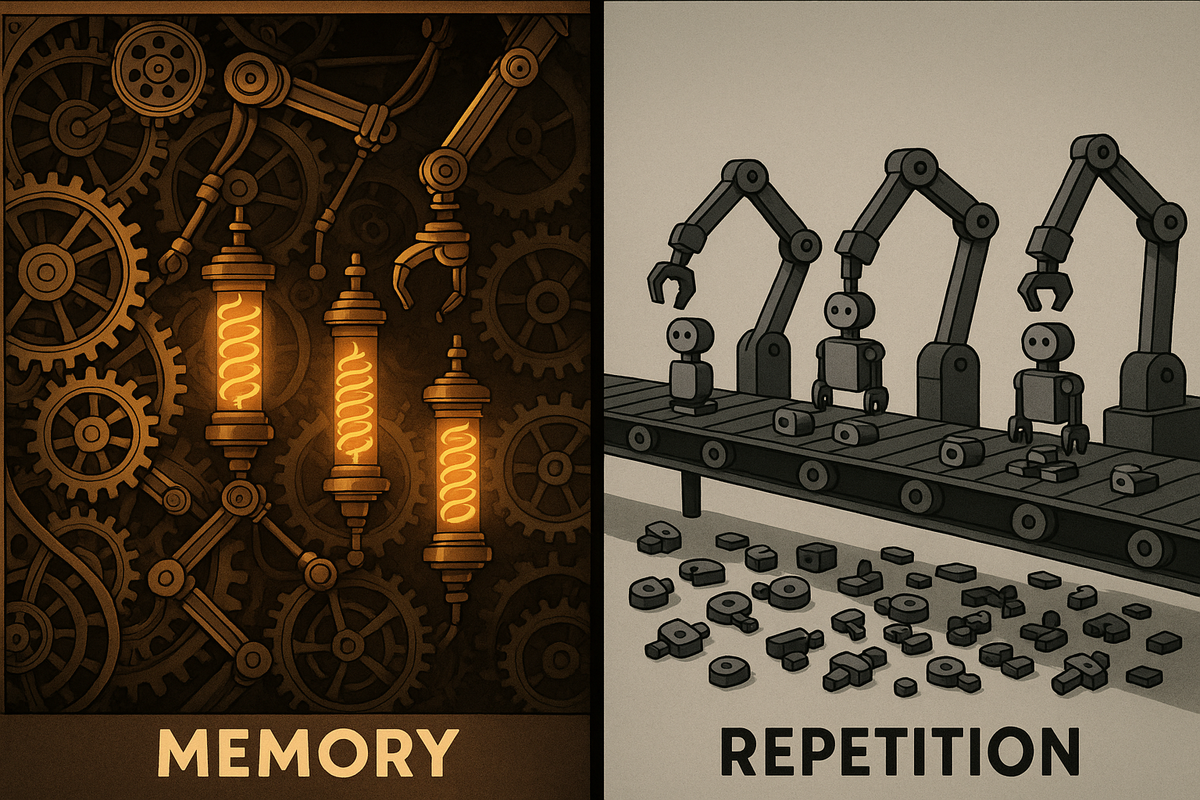
There is a quiet crisis unfolding inside enterprise backend teams in H2 2026. It does not show up loudly on incident dashboards. It does not trigger a single, catastrophic outage that forces a postmortem. Instead, it bleeds out slowly: a failed multi-step AI agent job here, a restarted pipeline there, a support ticket about a data reconciliation issue somewhere else. The culprit, in a surprising number of cases, is a fundamental architectural mismatch between the orchestration model a team chose and the actual runtime behavior of their AI agents.
That mismatch is the stateful vs. stateless orchestration decision, and most teams are getting it wrong in ways that compound recovery costs invisibly over time.
This article breaks down exactly what each model means in the context of modern AI agent orchestration, where each one genuinely excels, and why the wrong choice for long-running agentic workflows does not just cause inconvenience. It silently inflates engineering hours, LLM token spend, downstream data integrity risk, and customer-facing SLA exposure every single time a job fails mid-execution.
Setting the Stage: What "Orchestration" Actually Means for AI Agents in 2026
By mid-2026, the term "AI agent" has expanded well beyond the narrow chatbot definition of earlier years. Enterprise AI agents today are multi-step, tool-using, decision-making processes that can span minutes, hours, or even days. A single agentic workflow might involve:
- Querying a live database and reasoning over the results
- Calling external APIs (payment processors, ERP systems, data warehouses)
- Spawning sub-agents to handle parallelized subtasks
- Writing intermediate results to storage or triggering downstream services
- Waiting on human approval gates before proceeding
Orchestrating this kind of workflow is nothing like orchestrating a simple HTTP request-response cycle. The orchestration layer is the system that coordinates when each step runs, what context is passed between steps, what happens when a step fails, and how the overall job recovers. The choice between stateful and stateless orchestration determines the answers to all four of those questions, and the consequences play out at scale.
Stateless Orchestration: What It Is and Where It Shines
Stateless orchestration treats each step in a workflow as an independent, self-contained unit of execution. The orchestrator does not retain memory of prior steps between invocations. Instead, any context needed by a step must be passed in explicitly at execution time, typically retrieved from an external store such as a cache, a message queue payload, or a database row.
The canonical architecture here looks like this: a trigger fires a function (a Lambda, a Cloud Run job, a Kubernetes pod), that function does its work, writes its output to shared storage, and exits. The next function is triggered separately, reads from that shared storage, does its work, and exits. The "state" of the workflow lives entirely in external systems, not in the orchestrator itself.
Where Stateless Orchestration Is the Right Choice
Stateless orchestration is genuinely excellent for specific use cases, and teams should not abandon it wholesale. It excels when:
- Steps are short-lived and idempotent. If each step completes in under 30 seconds and can safely be re-run without side effects, stateless is simple, cheap, and horizontally scalable.
- Failure recovery is trivial. When a failed step can simply be retried from the beginning with no meaningful cost, the overhead of tracking state is unnecessary complexity.
- Throughput and parallelism are the primary concerns. Stateless architectures scale horizontally with almost no coordination overhead, making them ideal for high-volume, short-duration fan-out workloads.
- Each step is logically independent. When steps do not need rich context from prior steps beyond a simple identifier or payload, stateless keeps the architecture clean.
Classic examples include image resizing pipelines, webhook processing, simple classification jobs, and single-turn LLM inference endpoints. These are not the workflows breaking enterprise teams in 2026.
Stateful Orchestration: What It Is and Why It Matters for Agentic Workloads
Stateful orchestration means the orchestrator itself maintains a durable, persistent record of workflow progress. It knows which steps have completed, what outputs they produced, what the current execution context is, and exactly where to resume if a failure occurs. The workflow's "memory" lives inside the orchestration layer, not scattered across external stores that must be manually stitched together.
Modern stateful orchestration frameworks, including Temporal, Conductor, Azure Durable Functions, and a growing class of AI-native orchestration platforms that emerged through 2025 and 2026, implement this through a concept often called durable execution. The core idea is that the workflow's execution history is replayed deterministically on recovery, meaning a job interrupted at step 7 of 20 resumes at step 8 with full context intact, not at step 1 with a blank slate.
The Durable Execution Guarantee: Why It Changes Everything for AI Agents
For AI agent workflows specifically, durable execution provides guarantees that stateless architectures simply cannot replicate without massive custom engineering. Consider what "resuming at step 8" actually means for an agentic job:
- The agent's accumulated reasoning context and tool call history are preserved
- External API calls that already completed are not re-executed (no duplicate payments, no duplicate writes)
- Human approval decisions made at earlier gates are not lost
- Sub-agent results that were already collected do not need to be re-fetched or re-generated
- LLM calls that already returned results are not re-billed
Each of these points is a direct cost center. When a stateless system fails mid-execution on a 20-step agentic workflow, recovery typically means restarting from a checkpoint (if one was manually implemented) or from the very beginning. The cost of that restart is not just engineering time. It is real money.
The Hidden Cost Compounding Problem: A Concrete Breakdown
Let's make the cost compounding concrete, because this is where the argument becomes undeniable for engineering leaders and CTOs reviewing infrastructure spend in H2 2026.
Scenario: A Stateless-Orchestrated AI Agent Workflow Fails at Step 12 of 20
Assume a long-running enterprise AI agent workflow: an automated contract review and approval pipeline. It ingests a contract document, extracts clauses, cross-references a regulatory knowledge base via RAG, flags anomalies, routes to a legal sub-agent for deeper analysis, generates a summary report, and posts the result to a document management system before notifying stakeholders.
In a stateless architecture, a transient infrastructure failure at step 12 (say, a timeout on the document management system write) triggers the following recovery costs:
- LLM re-inference cost: Steps 1 through 11 involved multiple LLM calls for clause extraction, anomaly detection, and sub-agent analysis. Without durable execution, those calls must be re-run. At enterprise token pricing in 2026, a complex multi-step agent workflow can consume tens of thousands of tokens per execution. Restarting from scratch doubles that spend.
- RAG retrieval re-cost: Vector database queries and embedding lookups for the regulatory cross-reference (step 6) must be repeated. At scale, this is non-trivial compute and latency.
- Idempotency risk: If the failure occurred after a partial write to the document management system, restarting may produce a duplicate record or a corrupted intermediate state that requires manual remediation.
- Human gate re-engagement: If a legal reviewer approved a routing decision at step 9, that approval is not stored in the orchestrator. The reviewer must be re-notified and re-engaged, introducing human time cost and SLA delay.
- Engineering triage time: Someone has to investigate why step 12 failed, determine whether upstream steps produced side effects, and decide whether a full restart is safe. In a stateless system, this forensic work is expensive because execution history is not natively preserved.
Now multiply this by the failure rate of long-running jobs at enterprise scale. Even a modest 2 to 3 percent transient failure rate across hundreds of daily agentic workflow executions produces a compounding cost burden that is invisible in any single incident but catastrophic in aggregate over a quarter.
The Same Scenario Under Stateful Orchestration
Under a stateful orchestration model with durable execution, the step 12 timeout triggers an automatic retry of only step 12. Steps 1 through 11 are not re-executed because their results are already recorded in the workflow history. The LLM calls are not re-billed. The RAG queries are not re-run. The legal reviewer's approval is intact. The document management system write is retried cleanly with idempotency keys managed by the orchestrator. Total additional cost: the compute for one retry of one step, plus a few milliseconds of history replay.
The difference in recovery cost between these two models, at scale, is not marginal. It is often an order of magnitude.
Why Enterprise Teams Keep Choosing the Wrong Model
If stateful orchestration is so clearly superior for long-running agentic workloads, why do so many enterprise backend teams default to stateless architectures? The reasons are understandable, even if the outcomes are costly.
1. Familiarity and Ecosystem Inertia
Most backend engineers in 2026 grew up with serverless and microservices patterns that are inherently stateless. Lambda functions, Cloud Run jobs, and Kubernetes-native job queues are the default tools in most cloud-native toolkits. When an AI agent use case arrives, the natural instinct is to wire it into the existing stateless infrastructure. The mismatch is not obvious until the workflow grows complex enough to fail in expensive ways.
2. Underestimating Workflow Duration and Complexity
Many teams start with simple, short-duration agent workflows where stateless is perfectly adequate. The problem emerges as workflows evolve. A contract review agent that started as a 3-step, 10-second job in early 2025 might be a 20-step, 40-minute job by mid-2026 as capabilities expand. The orchestration architecture rarely gets revisited as the workflow grows, even as the risk profile changes dramatically.
3. The "We'll Handle It in the Application Layer" Trap
Some teams recognize the statefulness problem and attempt to solve it by building custom checkpointing logic into their application code. They write workflow progress to Redis, DynamoDB, or a Postgres table at each step and build custom recovery logic to read those checkpoints on restart. This works, but it is expensive to build correctly, expensive to maintain, and almost always incomplete. Edge cases in failure recovery are notoriously hard to get right without a purpose-built orchestration framework doing the heavy lifting.
4. Misreading Orchestration Tool Marketing
Many modern workflow and pipeline tools market themselves with language that implies statefulness without actually delivering durable execution semantics. A tool that "tracks job status" in a database is not the same as a tool that provides deterministic workflow replay with exactly-once execution guarantees. Enterprise teams frequently conflate the two, discovering the difference only when a critical production workflow fails in a way the tool cannot cleanly recover from.
Stateful vs. Stateless: A Direct Comparison for AI Agent Workloads
The table below summarizes the key architectural differences and their practical implications for enterprise AI agent orchestration:
- Failure Recovery: Stateless requires restart from last manual checkpoint (or from scratch). Stateful resumes from the exact point of failure with full context.
- LLM Cost on Failure: Stateless re-runs all upstream LLM calls. Stateful replays history without re-billing completed calls.
- Idempotency Management: Stateless requires manual idempotency logic at every step. Stateful orchestrators manage idempotency natively.
- Human-in-the-Loop Support: Stateless requires external systems to persist human decisions. Stateful persists human gate outcomes as first-class workflow history.
- Debugging and Observability: Stateless requires reconstructing execution history from logs. Stateful provides native execution history and step-level visibility.
- Scalability for Short Jobs: Stateless wins clearly. Stateful adds coordination overhead that is unnecessary for sub-minute, idempotent tasks.
- Operational Complexity: Stateless is simpler to deploy initially. Stateful requires a more sophisticated orchestration runtime but pays dividends at scale.
- Long-Running Workflow Suitability: Stateless is a poor fit. Stateful is purpose-built for this use case.
The Right Decision Framework: How to Choose in H2 2026
The choice between stateful and stateless orchestration for AI agent workflows should not be made based on team familiarity or existing infrastructure defaults. It should be made based on a clear assessment of workflow characteristics. Use the following decision criteria:
Choose Stateless Orchestration When:
- Individual steps complete in under 60 seconds with high reliability
- Each step is genuinely idempotent and safe to re-run without side effects
- Workflow depth is shallow (3 to 5 steps maximum)
- There are no human approval gates or long wait states
- Throughput and horizontal scale are the dominant architectural concerns
- Failure recovery cost (in tokens, compute, and human time) is negligible
Choose Stateful Orchestration When:
- Workflows involve more than 5 to 7 sequential or conditional steps
- Any step involves an LLM call that is expensive to re-run
- Workflows include human-in-the-loop approval or review gates
- Any step has external side effects (writes to databases, triggers payments, sends notifications)
- Workflow duration can exceed a few minutes under normal conditions
- Sub-agents are spawned and their results must be reliably aggregated
- Compliance or audit requirements mandate a verifiable execution history
In practice, most enterprise AI agent workflows in 2026 that are driving real business value will check multiple boxes in the stateful column. The default assumption for any non-trivial agentic workload should be stateful orchestration unless there is a compelling specific reason to choose otherwise.
Tooling Landscape: What Enterprise Teams Are Actually Using
The good news is that the tooling ecosystem for stateful AI agent orchestration has matured significantly through 2025 and into 2026. Enterprise teams are no longer forced to build durable execution infrastructure from scratch. The leading options include:
- Temporal: The most battle-tested durable execution platform in enterprise production. Strong ecosystem, excellent visibility tooling, and growing native integrations with LLM providers and agent frameworks.
- Azure Durable Functions: A strong choice for teams already committed to the Azure ecosystem. Provides stateful orchestration semantics on top of a serverless runtime, reducing infrastructure management overhead.
- AWS Step Functions (Express vs. Standard): Standard Step Functions provide stateful execution history with long-running workflow support. Express Workflows are stateless and should not be used for complex agentic pipelines without careful checkpointing.
- AI-native orchestration platforms: A new class of platforms purpose-built for agentic workflows has matured through 2025 and 2026, offering stateful execution with native LLM context management, agent memory persistence, and built-in observability for multi-agent systems.
- LangGraph and similar graph-based agent frameworks: When paired with a durable execution backend, graph-based agent orchestration provides fine-grained control over state transitions and recovery behavior in complex multi-agent topologies.
The Audit Every Enterprise Backend Team Should Run Right Now
If your team is running AI agent workflows in production today, the following audit is worth conducting before the end of Q3 2026:
- Map every agentic workflow by step count and duration. Any workflow with more than 5 steps or a P95 duration over 2 minutes is a stateful orchestration candidate.
- Identify all LLM calls within each workflow. Calculate the approximate token cost of re-running all upstream LLM calls in the event of a mid-workflow failure. If that number is non-trivial, stateless is costing you money on every failure.
- Audit your human-in-the-loop touchpoints. If human decisions are being made inside workflows that use stateless orchestration, you have a reliability and auditability gap that is a compliance risk, not just a cost risk.
- Review your incident history for workflow-related failures. Look specifically for incidents where the resolution involved manually restarting a workflow, reconciling duplicate records, or re-engaging human reviewers. Each of those is a stateless orchestration tax.
- Assess your current tooling's actual execution guarantees. Read the documentation carefully. Distinguish between tools that track job status and tools that provide durable execution with deterministic replay. They are not the same thing.
Conclusion: The Architecture Decision That Compounds Quietly
The stateful vs. stateless orchestration decision is one of the most consequential architectural choices an enterprise backend team makes when deploying AI agents at scale, and it is one of the least visible. The costs of choosing the wrong model do not arrive as a single catastrophic event. They accumulate quietly: in LLM token re-spend, in engineering triage hours, in manual data reconciliation work, in re-engaged human reviewers, and in SLA exposure on workflows that fail and restart from scratch when they should have resumed from where they left off.
In H2 2026, as enterprise AI agent workflows grow longer, more complex, and more deeply integrated with business-critical systems, the gap between these two models is widening. Stateless orchestration remains excellent for what it was designed for: short, idempotent, high-throughput jobs. But for the multi-step, long-running, human-in-the-loop agentic workflows that are now driving real enterprise value, stateful orchestration with durable execution is not a nice-to-have. It is the foundational requirement for running AI agents reliably and economically at scale.
The teams that recognize this early and make the architectural investment now will carry significantly lower operational debt into 2027. The teams that do not will keep paying the stateless tax on every failure, one quietly compounding recovery cost at a time.