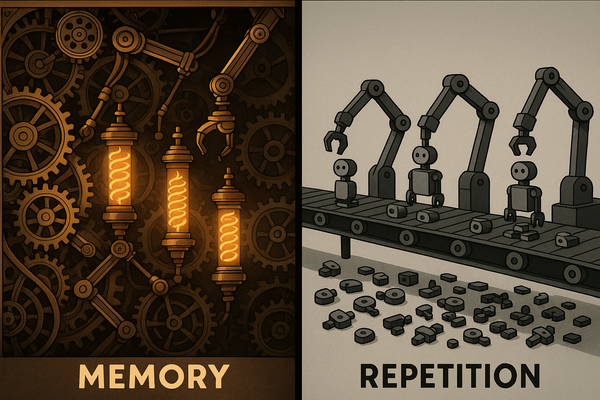
Reactive Circuit Breaker Patterns vs. Proactive Capacity Reservation: Which AI Agent Throttling Architecture Actually Protects Enterprise Backend Teams in H2 2026?
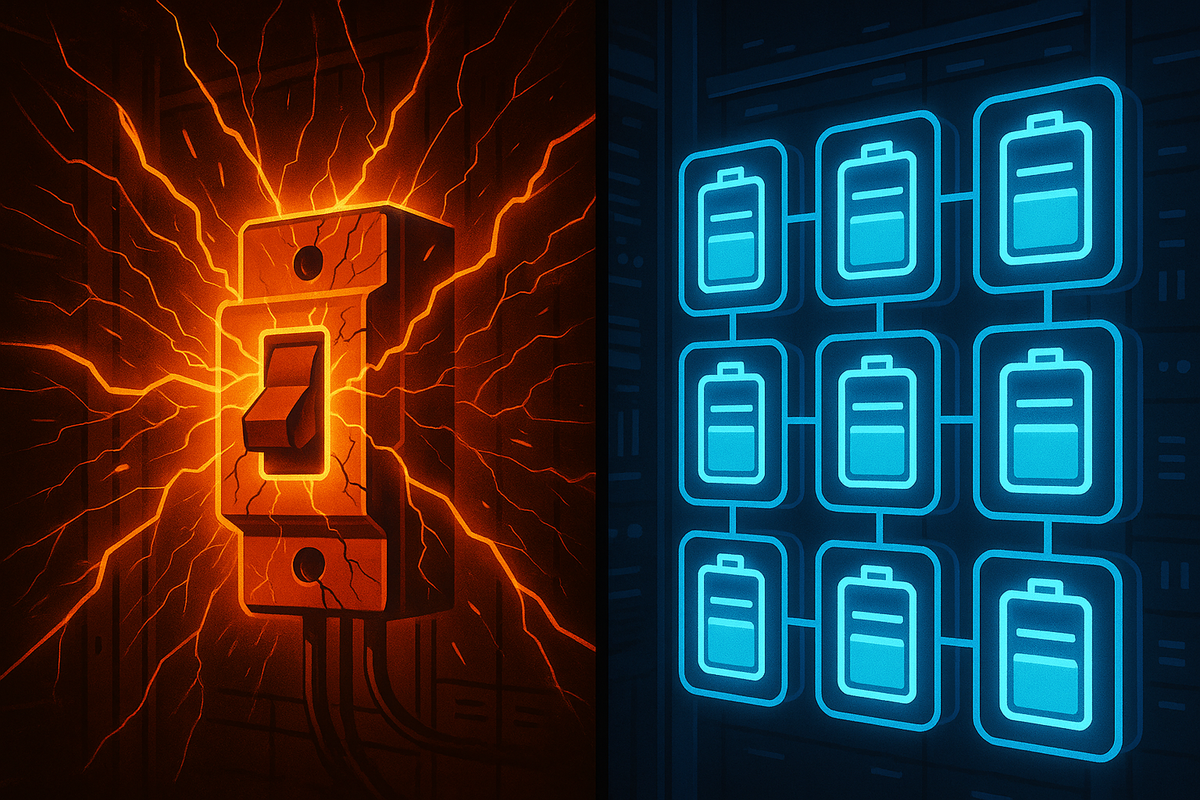
It starts with a Slack alert at 2:47 PM on a Tuesday. Your orchestration layer is hammering a shared inference pool, token queues are backing up, and three downstream agent workflows have stalled mid-execution. By the time your on-call engineer acknowledges the page, the blast radius has already spread to two other business units sharing the same GPU cluster. Sound familiar? If you are running multi-agent workloads in the second half of 2026, it probably does.
The explosion of agentic AI frameworks, from AutoGen and LangGraph to proprietary enterprise orchestrators, has fundamentally changed the pressure profile that backend teams must design for. Inference pools are no longer hit by simple, predictable request-response cycles. They are hit by cascading, interdependent agent chains, each spawning sub-tasks, tool calls, and reflection loops that can multiply token throughput demand by an order of magnitude within seconds. The question is no longer whether your shared inference infrastructure will saturate during peak orchestration load. The question is: what architectural strategy do you have in place when it does?
Two schools of thought have emerged as dominant answers to that question: Reactive Circuit Breaker Patterns and Proactive Capacity Reservation. Both are legitimate. Both have passionate advocates in platform engineering circles. And both will fail you if you apply them without understanding their fundamental tradeoffs. This article breaks down exactly where each approach shines, where it cracks, and what a hybrid posture looks like for enterprise teams navigating H2 2026 inference saturation realities.
The Problem Space: Why Shared Inference Pools Are a Different Beast in 2026
Before comparing the two strategies, it is worth grounding the conversation in what makes the current moment uniquely challenging. Several forces have converged to make inference pool saturation a tier-one infrastructure concern for enterprise backend teams this year.
Multi-Agent Orchestration Has Changed the Load Shape
Traditional API load is relatively smooth and stateless. A user submits a request, the backend processes it, and a response is returned. The load curve is roughly proportional to the number of concurrent users. Multi-agent orchestration breaks this model entirely. A single user-initiated workflow might spawn a planning agent, three specialist sub-agents, a reflection loop, and a synthesis step, each making independent inference calls, some of them in parallel. A single "request" from a user perspective can translate into 15 to 40 inference calls from the infrastructure perspective, many of them occurring in tight temporal bursts.
Shared Pools Are the Economic Reality
Enterprise AI platforms in 2026 are not typically provisioning dedicated GPU clusters per team or per application. Cost pressure, GPU scarcity, and the operational complexity of managing isolated inference endpoints have pushed most organizations toward shared inference pools, often built on top of managed services like Azure AI Foundry, AWS Bedrock, or Google Vertex AI Agent Builder. These shared pools introduce the classic noisy neighbor problem at the inference layer: one team's batch re-ranking job can starve another team's customer-facing agent of tokens at exactly the wrong moment.
Peak Load Is Increasingly Correlated, Not Random
In a world where AI agents are embedded in business workflows, peak load is tied to business rhythms. End-of-quarter reporting triggers financial analysis agents simultaneously across departments. A product launch fires off marketing content agents, competitive intelligence agents, and customer support agents all at once. Unlike web traffic, which has some natural distribution across geographies and time zones, enterprise agent workflows tend to cluster around the same business events. This correlation makes saturation events more severe and more predictable, which is exactly the insight that separates the two throttling philosophies.
Reactive Circuit Breaker Patterns: The Defensive Wall
The circuit breaker pattern is borrowed directly from electrical engineering and was popularized in distributed systems by Michael Nygard's "Release It!" and later by Netflix's Hystrix library. The core idea is elegant: wrap calls to a downstream dependency in a "breaker" that monitors failure rates. When failures exceed a threshold, the breaker "trips" to an open state, short-circuiting subsequent calls and returning a fallback response immediately rather than allowing cascading failures to propagate.
Applied to AI inference throttling, the reactive circuit breaker monitors signals like HTTP 429 responses (rate limit exceeded), latency spikes above a configured threshold, token queue depth, and error rates from the inference endpoint. When these signals breach configured thresholds, the breaker opens and the orchestration layer stops sending new inference requests, instead returning cached responses, degraded outputs, or graceful error states to upstream callers.
How Modern AI-Aware Circuit Breakers Work
The circuit breakers used in 2026 AI orchestration stacks are considerably more sophisticated than the original HTTP-layer implementations. Key characteristics include:
- Token-aware trip thresholds: Rather than tripping purely on request count or error rate, modern breakers track estimated token consumption per time window and open when projected throughput would exceed pool capacity.
- Half-open probing with synthetic requests: Instead of relying on real traffic to test recovery, the breaker sends lightweight synthetic "canary" inference requests during the half-open state to validate that the pool has recovered before resuming full traffic.
- Per-agent-chain isolation: Circuit breakers are scoped not just to the inference endpoint but to individual agent chains or workflow types, preventing a single failing workflow from tripping the breaker for unrelated workflows sharing the same pool.
- Exponential backoff with jitter: When the breaker resets, traffic is reintroduced gradually with randomized timing to prevent the thundering herd problem that would immediately re-saturate a pool that just recovered.
Where Reactive Circuit Breakers Excel
Reactive circuit breakers are genuinely excellent at one thing: containing blast radius when something unexpected happens. They are the architectural equivalent of a fire door. When a novel load pattern emerges that no one anticipated, when a model update causes latency regressions, or when a dependency upstream of the inference pool fails in a strange way, circuit breakers prevent that localized problem from cascading into a system-wide outage. For enterprise teams that operate in complex, multi-tenant environments with many unpredictable variables, this defensive capability is not optional.
They are also operationally lightweight to implement. Most modern service mesh frameworks (Istio, Linkerd), API gateways (Kong, Apigee), and AI orchestration frameworks (LangGraph, Semantic Kernel) have circuit breaker primitives either built in or available as first-class plugins. A backend team can implement a functional circuit breaker in a day and have meaningful protection almost immediately.
Where Reactive Circuit Breakers Fall Short
Here is the uncomfortable truth about reactive circuit breakers: they are, by definition, a response to failure that has already begun. The breaker trips after errors accumulate. That means some number of requests have already failed, some agent workflows have already received degraded or no responses, and some user-facing experience has already been compromised before the protection mechanism engages.
In the context of long-running agent chains, this is particularly painful. If an agent is five steps into a twelve-step reasoning chain when the circuit breaker trips, the work done in those first five steps is often wasted. The agent either fails entirely or must restart from scratch when the breaker resets, which doubles the eventual load on the inference pool during recovery. Reactive patterns can actually worsen the saturation cycle they are designed to interrupt.
Additionally, reactive circuit breakers provide no mechanism for prioritization. When the breaker opens, it opens for everyone. A critical customer-facing workflow gets the same treatment as a low-priority background enrichment job. In enterprise environments where not all agent workloads carry equal business value, this bluntness is a significant operational liability.
Proactive Capacity Reservation: The Strategic Allocation
Proactive capacity reservation takes the opposite philosophical stance. Rather than waiting for saturation to manifest and then reacting, this approach pre-allocates inference capacity to specific workflows, teams, or priority tiers before requests are ever made. Think of it as the difference between a hospital triage system (reactive, sorting patients as they arrive in crisis) and a surgical scheduling system (proactive, allocating operating rooms in advance based on known demand).
In practice, proactive capacity reservation for AI inference involves several distinct mechanisms working in concert.
Core Mechanisms of Proactive Capacity Reservation
- Token Budget Allocation: Each workflow, team, or application is assigned a token budget per time window (for example, 2 million tokens per minute). The orchestration layer enforces this budget at the client side before requests reach the inference pool, ensuring that no single consumer can monopolize shared capacity even during burst scenarios.
- Priority Queuing with Preemption: Inference requests are classified by business priority tier at submission time. High-priority requests (customer-facing, revenue-critical) are guaranteed capacity slots. Lower-priority requests are queued and processed only when reserved capacity remains unused, and can be preempted if higher-priority demand spikes.
- Predictive Scaling Triggers: Using historical workflow patterns and calendar-aware heuristics, the capacity reservation system pre-scales inference pool resources before anticipated peak windows. If every quarter-end triggers a 3x surge in financial agent workloads, the system provisions additional capacity starting 30 minutes before that window, not 10 minutes after the alerts fire.
- Admission Control at the Orchestration Gateway: New agent workflow executions are evaluated against current and projected capacity before being admitted. If current reservations are 85% utilized and a new high-token workflow is submitted, the admission controller either queues it, routes it to an overflow pool, or rejects it with a meaningful response that allows the calling application to handle the deferral gracefully.
Where Proactive Capacity Reservation Excels
Proactive reservation fundamentally changes the user experience during saturation events. Because capacity is allocated before the fact, a critical workflow that holds a reservation is guaranteed its slice of the inference pool regardless of what other workloads are doing. There is no degradation, no partial failure, no circuit breaker trip for that workflow. It simply executes as expected because the capacity was already set aside.
This approach also enables intelligent prioritization that reactive systems cannot provide. An enterprise can codify its business logic directly into the capacity allocation model: customer-facing agents get Tier 1 reservations, internal productivity agents get Tier 2, and batch analytics agents get Tier 3 with best-effort allocation. During saturation, Tier 3 workloads gracefully defer while Tier 1 and Tier 2 workloads execute without interruption. This is exactly the kind of business-aligned infrastructure behavior that enterprise platform teams need to deliver.
Furthermore, proactive reservation surfaces capacity planning data as a natural byproduct. Because the system tracks reservation utilization, unused capacity, and admission rejections over time, platform teams gain rich visibility into actual vs. projected demand. This data directly informs GPU procurement decisions, contract negotiations with managed inference providers, and capacity planning for the next quarter.
Where Proactive Capacity Reservation Falls Short
The Achilles heel of proactive reservation is its dependence on accurate demand forecasting. If your reservation model is wrong, you pay a real cost. Over-reservation means expensive inference capacity sits idle while other workloads are starved. Under-reservation means your "guaranteed" capacity is insufficient and you are back to saturation problems. Building and maintaining accurate demand models for novel, fast-evolving agentic workloads is genuinely hard, especially in organizations that are still discovering what their AI agents will actually do in production.
Proactive reservation systems are also significantly more complex to implement than circuit breakers. You need a centralized capacity management plane, an admission controller, a priority classification system, and integration points into every orchestration framework your teams use. This is weeks to months of platform engineering investment, not a single afternoon. For smaller teams or organizations in the early stages of AI infrastructure maturity, this complexity can be prohibitive.
Finally, proactive reservation can create perverse incentives in multi-team environments. Teams quickly learn to over-request reservations to protect themselves, a "capacity hoarding" behavior that defeats the purpose of shared pool efficiency and can be politically contentious to govern.
Head-to-Head Comparison: Key Decision Dimensions
Rather than declaring a winner, the more useful frame is understanding which approach wins on each dimension that matters to enterprise backend teams.
Response to Novel Failure Modes
Winner: Reactive Circuit Breakers. When something genuinely unexpected happens, a well-tuned circuit breaker will catch it regardless of whether it was anticipated in the capacity model. Proactive reservation has no mechanism for handling failure modes it was not designed to anticipate.
Protection of High-Priority Workloads During Saturation
Winner: Proactive Capacity Reservation. By a wide margin. Reactive breakers treat all workloads equally when they trip. Proactive reservation can guarantee that Tier 1 workloads are never affected by lower-priority saturation events.
Implementation Speed and Operational Simplicity
Winner: Reactive Circuit Breakers. A functional circuit breaker can be implemented in hours. A robust proactive reservation system requires weeks of platform engineering and ongoing governance overhead.
User Experience During Saturation Events
Winner: Proactive Capacity Reservation. Users of reserved-capacity workflows experience no degradation. Users of circuit-breaker-protected workflows experience degraded or failed responses during the trip window, however brief.
Cost Efficiency of Inference Infrastructure
Winner: Reactive Circuit Breakers (narrowly). Proactive reservation carries the risk of idle reserved capacity. Reactive approaches use capacity opportunistically, which can improve overall utilization, though at the cost of predictability.
Capacity Planning and Observability
Winner: Proactive Capacity Reservation. Reservation utilization data is inherently rich and actionable. Circuit breaker telemetry tells you when things broke, not how to prevent them from breaking next time.
The H2 2026 Reality: You Need Both
Here is the thesis that experienced platform engineers have converged on through the first half of 2026: framing this as an either-or choice is the wrong question. The two patterns are not competing alternatives. They operate at different layers of the resilience stack and address different failure modes. The teams that are handling inference saturation most effectively are running both, in a layered architecture that looks roughly like this:
Layer 1: Proactive Capacity Reservation at the Orchestration Gateway
Implement token budget allocation and priority queuing at the orchestration layer, before requests ever reach the inference pool. This is your primary defense mechanism for predictable peak load scenarios. It ensures that critical workloads are protected and that capacity is allocated according to business priority. This layer handles the 80% of saturation scenarios that are predictable and recurring.
Layer 2: Reactive Circuit Breakers at the Inference Client
Implement circuit breakers at the inference client within each agent chain as your secondary defense mechanism. This layer catches the 20% of saturation scenarios that are novel, unexpected, or caused by failures in the capacity reservation model itself. It is your safety net when Layer 1 is wrong or incomplete. It also protects against failure modes that are not capacity-related at all, such as model endpoint errors, network partitions, or provider-side outages.
Layer 3: Adaptive Feedback Between Layers
The most sophisticated implementations in 2026 are closing the loop between these two layers. When circuit breakers trip frequently for a particular workflow, that signal feeds back into the capacity reservation model, automatically adjusting reservations upward for that workflow type in future windows. When reservation utilization data shows consistently low usage for a tier, reservations are automatically scaled down to free capacity for other consumers. This adaptive feedback transforms a static two-layer system into a self-tuning resilience architecture.
Practical Implementation Guidance for Enterprise Backend Teams
If you are a backend platform team evaluating where to start in H2 2026, here is a pragmatic sequencing recommendation:
- Start with circuit breakers (Week 1-2): Implement basic circuit breakers with token-aware thresholds on all inference clients. This gives you immediate protection and, critically, generates the telemetry data you will need to design your reservation model. Do not skip this step even if your ultimate goal is proactive reservation.
- Analyze circuit breaker telemetry to identify patterns (Week 3-4): Look at which workflows trip breakers most frequently, at what times of day, and with what token volumes. This data is the foundation of your capacity model.
- Implement priority classification and token budgets (Month 2): Work with product and business stakeholders to classify your agent workflows into priority tiers. Implement token budgets per tier as a first, lightweight form of proactive reservation. This alone will significantly reduce saturation impact on critical workloads.
- Build admission control and predictive scaling (Month 3+): Once priority budgets are stable, invest in more sophisticated admission control and calendar-aware predictive scaling. This is where the real protection for peak orchestration load events comes from.
- Close the adaptive feedback loop (Ongoing): Instrument both layers to feed telemetry into a shared capacity model that continuously refines reservations based on observed behavior.
Conclusion: Resilience Is a Layered Discipline, Not a Single Pattern
The debate between reactive circuit breakers and proactive capacity reservation reveals something important about how enterprise AI infrastructure thinking has matured in 2026. The organizations that struggled most with inference saturation this year were not the ones that chose the "wrong" pattern. They were the ones that treated throttling architecture as a single-solution problem rather than a layered discipline.
Reactive circuit breakers are indispensable as a safety net. They are fast to implement, operationally simple, and catch the failure modes you did not see coming. But they are inherently reactive, which means some failure has already occurred before they engage. For enterprise backend teams accountable for the reliability of customer-facing and revenue-critical AI agent workflows, "some failure has already occurred" is not an acceptable steady state.
Proactive capacity reservation is the architectural expression of treating AI inference as a first-class infrastructure resource that requires deliberate allocation, governance, and planning. It is harder to build and harder to maintain, but it is the only approach that can guarantee protection for high-priority workloads during peak orchestration load without any degradation.
The teams that will navigate H2 2026 most effectively are the ones building both layers now, using circuit breaker telemetry to continuously improve their reservation models, and treating the adaptive feedback loop between those layers as a core platform capability rather than a nice-to-have. The shared inference pool will saturate. The only question is whether your architecture was designed for that moment or merely surprised by it.