Push-Based vs. Pull-Based AI Agent Event Consumption: Which Architecture Prevents Workflow Starvation in Enterprise Multi-Agent Pipelines?
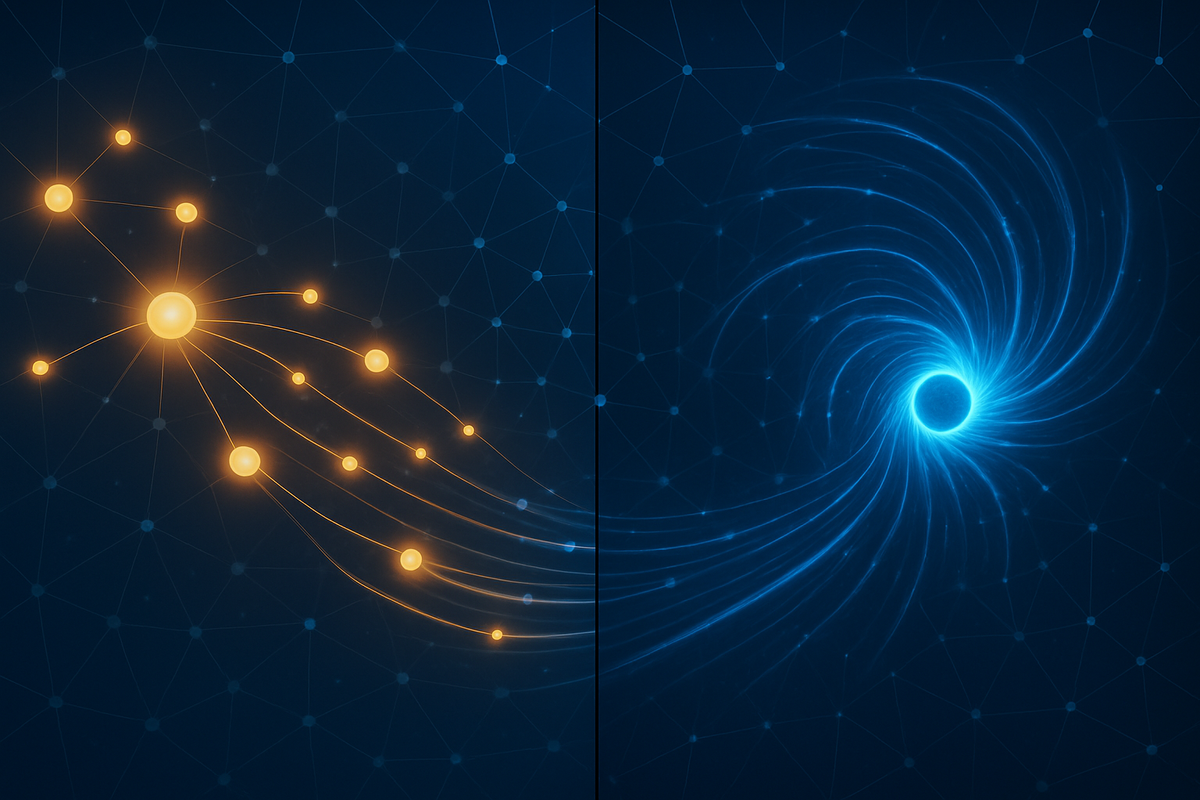
There is a quiet crisis unfolding inside enterprise AI pipelines in H2 2026, and most engineering teams are only discovering it after the damage is done. Agents stall. Queues back up. Foundation model provider rate limits collide with polling schedules. And somewhere in the middle of a ten-agent orchestration chain, a workflow simply stops moving forward. Nobody calls it "starvation" in the post-mortem. They call it a "timeout" or a "degraded run." But the root cause is almost always the same: the wrong event consumption architecture for the job.
This article cuts through the noise and gives you a direct, technical comparison of push-based and pull-based event consumption for AI agent pipelines, with a specific focus on the failure modes that emerge when foundation model provider webhooks and polling rate limits collide in large-scale, enterprise multi-agent deployments.
Why Event Consumption Architecture Suddenly Matters More Than Ever
A year ago, most teams running multi-agent AI systems were operating with relatively small orchestration graphs: a planner agent, one or two specialist agents, and a synthesizer. The event throughput was manageable, and whether you polled an API or received a webhook callback was largely a matter of developer preference.
That calculus has changed dramatically. In H2 2026, enterprise multi-agent pipelines routinely span 10 to 50 agents in a single workflow graph. Agents invoke foundation models from multiple providers simultaneously: OpenAI, Anthropic, Google DeepMind, Mistral, and a growing roster of domain-specific model providers. Each of those providers has its own rate limit profile, its own webhook delivery guarantees (or lack thereof), and its own retry semantics. The event consumption layer is no longer a plumbing detail. It is the architectural backbone that determines whether your pipeline runs reliably or collapses under its own complexity.
Defining the Two Architectures
Pull-Based Event Consumption
In a pull-based model, each AI agent (or an orchestrator acting on behalf of agents) periodically queries a source to check whether new events, task completions, or model responses are available. This is the classic polling pattern. The agent owns the timing of its own activation. Common implementations include:
- Long-polling against a task queue (SQS, Azure Service Bus, Google Pub/Sub in pull mode)
- Scheduled polling of foundation model provider status endpoints
- Cursor-based event log reads (Kafka consumer groups, Kinesis shard iterators)
- Database polling using timestamp or sequence watermarks
Push-Based Event Consumption
In a push-based model, the event source notifies the agent when something actionable has occurred. The agent is passive until an inbound signal arrives. Common implementations include:
- Webhooks delivered by foundation model providers upon async completion
- Server-Sent Events (SSE) or WebSocket streams for streaming model outputs
- Message broker push delivery (Kafka consumer with push semantics via frameworks like Flink or Spark Streaming)
- Event Grid or EventBridge fan-out to agent endpoints
- gRPC server-side streaming from orchestration layers
The Starvation Problem: What It Actually Looks Like
Workflow starvation in a multi-agent pipeline occurs when one or more agents are indefinitely deprived of the events they need to make progress. It is distinct from a simple error or timeout. The pipeline does not crash. It simply does not advance. Understanding the two primary starvation vectors is essential before choosing an architecture.
Starvation Vector 1: Poll Interval Misalignment
Imagine a ten-agent pipeline where Agent 3 is waiting for a long-running reasoning task from a foundation model. Agent 3 polls the provider's status endpoint every 15 seconds. The provider's result is ready at second 16. Agent 3 picks it up at second 30. It then emits an event for Agent 4, which is polling a shared queue every 20 seconds. Agent 4 picks up the event at second 50. This cascading latency compounds through every agent in the chain. By the time the event reaches Agent 10, the originating context window has expired, the upstream provider's async job ID has been garbage-collected, and the workflow is effectively dead. This is poll interval misalignment starvation, and it is endemic in pipelines built without deliberate timing design.
Starvation Vector 2: Webhook Delivery Collision
Push-based architectures face their own starvation risk. Foundation model providers, particularly under high load, may batch or delay webhook deliveries. Worse, enterprise firewalls, API gateways, and load balancers sitting in front of agent endpoints introduce their own delivery uncertainty. When two providers fire webhooks simultaneously to the same agent endpoint and the receiving service is at capacity, one webhook is dropped or queued externally. The agent waits for a callback that has already been lost. Without an idempotent retry mechanism and a reconciliation loop, the pipeline stalls. This is webhook delivery collision starvation, and it is the push-based equivalent of the polling problem.
Head-to-Head Comparison: Eight Critical Dimensions
1. Latency Profile
Pull wins for predictability; Push wins for raw speed. Pull-based polling introduces a minimum latency equal to the poll interval. Even with aggressive 1-second polling, you are adding latency at every agent hop. Push-based delivery, when it works correctly, achieves near-zero propagation latency. For pipelines where time-to-completion is a business SLA (financial trading agents, real-time customer service agents), push is the clear winner on latency. For pipelines where predictable, bounded latency matters more than minimal latency (batch analytics agents, overnight report generation), pull's determinism is actually an advantage.
2. Rate Limit Interaction
Pull loses badly here. This is the dimension that bites enterprise teams hardest in H2 2026. When you have 30 agents each polling a foundation model provider's status endpoint, you are generating a massive volume of read requests that count against your API quota. OpenAI, Anthropic, and Google all enforce rate limits on status-check endpoints, not just on inference endpoints. A naive polling architecture can consume 40 to 60 percent of an enterprise's available API quota on status checks alone, leaving insufficient headroom for actual inference calls. Push-based architectures, where the provider calls you, generate zero outbound polling traffic and preserve your quota for productive work.
3. Resilience to Provider Outages
Pull is more resilient. When a foundation model provider's webhook delivery infrastructure goes down (and it does, with regularity), push-based agents go dark with no self-healing mechanism. Pull-based agents, by contrast, simply keep polling. When the provider recovers, the next poll cycle picks up the result. Pull architectures have a natural heartbeat that doubles as a recovery mechanism. Push architectures require explicit dead-letter queues, webhook replay APIs, and reconciliation jobs to achieve equivalent resilience.
4. Backpressure Handling
Pull has a structural advantage. In a pull model, the consumer controls the rate of consumption. If an agent is overwhelmed, it simply stops polling until it has capacity. This is natural backpressure. In a push model, the event source does not know or care about the consumer's current load. A burst of webhook deliveries to an overloaded agent endpoint results in dropped events, queue buildup at the ingress layer, or cascading failures. Implementing backpressure in push-based systems requires explicit flow control mechanisms: token buckets at the gateway, circuit breakers at the agent, and capacity signals sent back to the orchestrator.
5. Operational Observability
Pull is significantly easier to observe. Every poll cycle is a discrete, logged operation with a clear timestamp, a known source, and a measurable response. Debugging a stalled pipeline means reading the poll log. Push-based pipelines are harder to observe because events arrive asynchronously from multiple sources. Correlating a missing webhook delivery with a downstream agent stall requires distributed tracing infrastructure (OpenTelemetry with AI-specific semantic conventions is now the de facto standard in 2026), and even then, the root cause can be ambiguous. Teams underestimate this operational cost until they are debugging a production incident at 2 a.m.
6. Multi-Provider Complexity
Push becomes exponentially harder at scale. Each foundation model provider has a different webhook schema, different authentication mechanisms (HMAC signatures, bearer tokens, mTLS), different retry policies, and different payload size limits. A pipeline consuming events from five providers in push mode requires five separate webhook handler implementations, five separate validation pipelines, and five separate dead-letter handling strategies. Pull-based architectures, particularly those using a unified internal task queue as an intermediary, normalize provider differences behind a single polling interface. The provider's async result is written to the internal queue by a thin adapter layer, and agents never know which provider produced it.
7. Cost Profile
Push is cheaper at scale, Pull is cheaper at low volume. At low agent counts and low event volumes, the infrastructure cost of maintaining persistent webhook endpoints (always-on compute, TLS termination, ingress bandwidth) exceeds the marginal cost of API polling. At enterprise scale, the math inverts. Polling 40 agents against five providers at 10-second intervals generates millions of API calls per day that carry both financial cost and quota cost. Push-based architectures, once the infrastructure is in place, have a much flatter cost curve as agent count grows.
8. Workflow Starvation Prevention
Neither architecture wins outright. The hybrid approach wins. This is the central thesis of this article. Pure pull starvation is prevented by reducing poll intervals, but that accelerates rate limit exhaustion. Pure push starvation is prevented by adding reconciliation loops, but those loops are themselves polling mechanisms. The architectures are not opposites. They are complements, and the most resilient enterprise pipelines in H2 2026 use both simultaneously.
The Hybrid Architecture: How Leading Enterprise Teams Are Solving This
The pattern that has emerged among sophisticated enterprise AI engineering teams is what practitioners are calling the "Push-Primary, Pull-Reconcile" architecture. It works as follows:
- Primary path (push): Foundation model provider webhooks deliver completion events directly to a durable ingress queue (not directly to agent endpoints). The queue acts as a shock absorber, decoupling provider delivery timing from agent consumption timing.
- Agent consumption (push from queue): Agents subscribe to the internal queue using push delivery semantics. The queue, not the provider, is responsible for reliable delivery, retry, and dead-lettering. This isolates agents from provider-specific webhook unreliability.
- Reconciliation loop (pull): A background reconciliation process polls for "orphaned" workflow steps: tasks that were dispatched to a provider but for which no completion event has arrived within a configurable SLA window. This loop is the safety net. It detects starvation before it becomes permanent and either re-queues the task or triggers an alert.
- Rate limit budget allocation: The reconciliation loop's polling quota is explicitly budgeted as a fraction of the total API quota, typically 5 to 10 percent. This prevents the reconciliation mechanism from itself becoming a starvation source.
This architecture eliminates both primary starvation vectors. Poll interval misalignment starvation is prevented because the primary delivery path is push-based and near-instantaneous. Webhook delivery collision starvation is prevented because the reconciliation loop catches any events that the push path missed.
Implementation Considerations for H2 2026
Durable Ingress Queue Selection
The choice of ingress queue is critical. In 2026, the leading options for enterprise multi-agent pipelines are Apache Kafka (with Kafka Connect for provider adapters), AWS EventBridge Pipes (for teams already in the AWS ecosystem), and Azure Event Grid with Service Bus integration (for Microsoft-centric shops). All three provide the durability, ordering guarantees, and replay capabilities needed for the Push-Primary, Pull-Reconcile pattern. Google Pub/Sub with BigTable-backed acknowledgment is gaining traction for teams running on GCP with Vertex AI agent workloads.
Idempotency Is Non-Negotiable
In a hybrid architecture, the same completion event may arrive via both the push path (webhook) and the pull path (reconciliation loop detecting a "missing" event that was actually delivered but not acknowledged). Every agent's event handler must be idempotent. Processing the same event twice must produce the same result as processing it once. This is not optional. Without idempotency, the reconciliation loop designed to prevent starvation will instead cause duplicate processing, data corruption, and billing anomalies from redundant model invocations.
Semantic Versioning for Event Schemas
Foundation model providers update their webhook payload schemas with frustrating regularity. A pipeline that worked perfectly in Q1 2026 may break silently in Q3 2026 when a provider adds a new required field or deprecates an existing one. Treat every provider's webhook schema as an external dependency with semantic versioning. Use a schema registry (Confluent Schema Registry or AWS Glue Schema Registry) to validate inbound events and route schema-breaking changes to a dead-letter queue for human review rather than allowing them to poison the pipeline.
Decision Framework: Which Architecture Is Right for Your Pipeline?
Use the following criteria to guide your architectural choice:
- Choose pure pull if: Your pipeline has fewer than 5 agents, your event volume is low (under 1,000 events per hour), your providers do not offer reliable webhook delivery, and operational simplicity is the top priority.
- Choose push-primary if: Latency is a hard SLA, you have more than 10 agents, your providers offer webhook delivery with replay APIs, and you have the engineering bandwidth to implement proper ingress infrastructure.
- Choose Push-Primary, Pull-Reconcile (hybrid) if: You are operating an enterprise multi-agent pipeline at scale, you consume events from multiple foundation model providers, workflow starvation is a production risk you cannot tolerate, and you need to preserve API quota for inference rather than status polling.
Conclusion: The Architecture That Survives the Collision
The collision between foundation model provider webhooks and polling rate limits is not a theoretical concern. It is a production reality for every enterprise team running multi-agent AI pipelines at scale in H2 2026. Neither push nor pull alone survives this collision gracefully. Push architectures are fast but fragile. Pull architectures are resilient but expensive and slow.
The Push-Primary, Pull-Reconcile hybrid architecture is not a compromise. It is a deliberate design that uses each pattern where it is strongest: push for speed and efficiency on the happy path, pull for resilience and starvation prevention on the recovery path. The teams that adopt this pattern will run pipelines that are both faster and more reliable than those built on either pure architecture.
The teams that do not will keep calling starvation a "timeout" in their post-mortems, and they will keep being wrong about the root cause.



