Push-Based Event Streaming vs. Pull-Based Polling for AI Agent Pipelines: The H2 2026 Enterprise Decision Guide
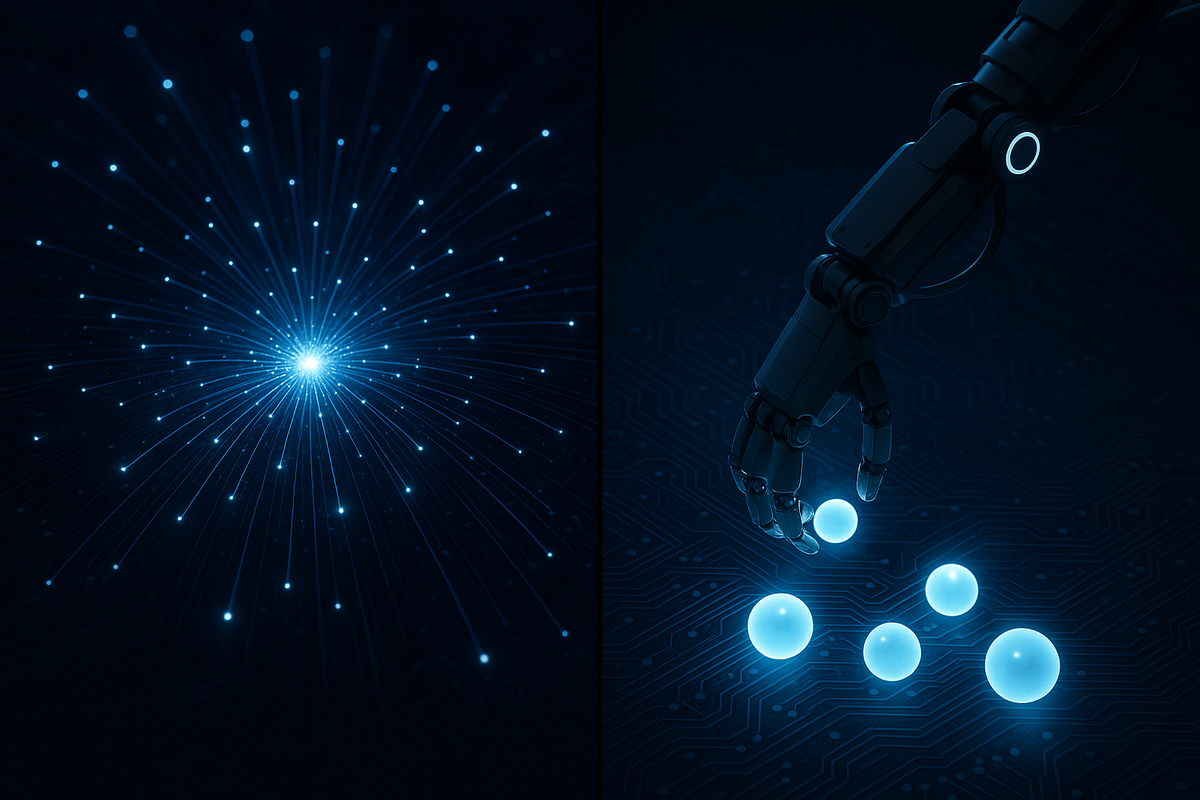
Enterprise backend teams are facing a deceptively familiar architectural fork in the road. The question of push versus pull has been debated for decades in distributed systems design. But in H2 2026, the stakes have changed dramatically. AI agents are no longer passive query responders; they are autonomous, multi-step orchestrators that invoke external tools, call APIs, trigger workflows, and react to live data streams. The architecture you choose for how your agents receive signals and dispatch tool calls is now a first-class engineering decision, not an afterthought.
This guide breaks down push-based event streaming and pull-based polling architectures head-to-head, with a specific focus on real-time tool invocation pipelines in production enterprise environments. By the end, you will have a clear framework for choosing the right model, or the right hybrid, for your team's needs in the second half of 2026.
Why This Decision Matters More Than Ever in 2026
The proliferation of agentic AI frameworks, from OpenAI's Assistants and tool-calling APIs to Anthropic's Claude agent tooling, Google's Gemini function-calling integrations, and the open-source ecosystem around LangGraph, AutoGen, and CrewAI, has pushed tool invocation to the center of backend AI design. Agents are now expected to:
- Invoke dozens of tools per session, often in parallel
- React to real-time events from upstream data sources
- Maintain stateful context across long-running pipelines
- Operate within strict latency budgets, especially in customer-facing applications
In this environment, the mechanism by which an agent learns that something has happened and decides to act is not a trivial implementation detail. It is the heartbeat of your pipeline. Get it wrong and you will face wasted compute, ballooning infrastructure costs, brittle integrations, or agents that are perpetually a few seconds behind reality.
Defining the Two Models
Pull-Based Polling: The Familiar Workhorse
In a pull-based architecture, the AI agent (or the orchestration layer managing it) periodically queries a data source, message queue, or task registry to check whether new work is available. Think of it as the agent raising its hand every few seconds and asking: "Is there anything for me to do?"
Common implementations in enterprise AI pipelines include:
- Scheduled polling loops that query a database or REST API endpoint at a fixed interval
- Long-polling HTTP connections where the server holds the connection open until data is available
- Queue-based polling against systems like Amazon SQS, Azure Service Bus, or Google Cloud Tasks
- Agent orchestrators that tick through a task graph on a timer, checking which nodes are ready to execute
Polling is well-understood, easy to reason about, and trivial to implement. It also fits naturally into retry logic and backoff strategies. But in high-frequency, event-dense AI agent pipelines, its limitations become significant.
Push-Based Event Streaming: The Real-Time Contender
In a push-based architecture, the AI agent subscribes to an event stream and receives signals the moment something relevant occurs. The data source, message broker, or orchestration plane takes responsibility for notifying the agent. The agent does not ask; it listens and reacts.
Common implementations in enterprise AI pipelines include:
- Apache Kafka or Confluent Cloud topics consumed by agent microservices
- Server-Sent Events (SSE) or WebSockets for streaming LLM responses and tool call signals to frontend-adjacent agents
- gRPC bidirectional streaming for low-latency, high-throughput agent-to-tool communication
- Event-driven orchestration platforms such as AWS EventBridge, Temporal with Kafka triggers, or Dapr's pub/sub building block
- Model Context Protocol (MCP) server implementations using streaming transports, which have become a dominant integration pattern in 2026
Push architectures shine when agents must respond to the world in milliseconds, not seconds. But they introduce their own complexity: backpressure management, consumer group coordination, exactly-once delivery guarantees, and the operational overhead of maintaining streaming infrastructure.
Head-to-Head Comparison: 8 Critical Dimensions
1. Latency
Winner: Push-based streaming
This is the most obvious advantage of push architectures. When a tool returns a result or an upstream event fires, a subscribed agent receives the signal within single-digit milliseconds on a well-tuned Kafka cluster or gRPC stream. Polling introduces inherent lag equal to at minimum half the polling interval. Even aggressive polling at 500ms intervals means average latency of 250ms per event, which compounds across multi-step tool invocation chains. In an agent pipeline with five sequential tool calls, that is over a second of avoidable dead time.
For customer-facing agents (think: real-time financial advisory bots, live logistics tracking agents, or AI-driven incident response systems), this latency gap is not acceptable.
2. Infrastructure Cost and Compute Efficiency
Winner: Push-based streaming (at scale), Pull-based polling (at low volume)
Polling is notoriously wasteful at scale. If you have 500 agent instances each polling an endpoint every second, and 90% of those polls return empty results, you are burning significant compute and network bandwidth on noise. This is the classic "thundering herd" problem, and it gets worse as you scale horizontally.
Push architectures are event-driven by nature: compute is consumed only when there is actual work to do. However, the fixed operational cost of running Kafka clusters, managing schema registries, and maintaining consumer group offsets is non-trivial. For small teams or low-volume pipelines, this overhead can actually make polling the more cost-effective choice.
The crossover point in 2026, based on typical cloud pricing for managed streaming services like Confluent Cloud or Amazon MSK versus API call costs, generally falls around 50 to 100 concurrent agent sessions with more than 10 tool invocations per minute per agent. Below that threshold, polling is often cheaper to run and maintain.
3. Simplicity and Developer Experience
Winner: Pull-based polling
A polling loop is a while True with a sleep and an HTTP call. Every backend developer understands it immediately. Debugging is straightforward: you can add a log line and watch what comes back. There is no consumer group lag to monitor, no partition rebalancing to handle, and no need to understand stream processing semantics.
Push-based streaming, while powerful, carries a steep learning curve. Teams need to understand offset management, consumer group coordination, dead-letter queues, and backpressure strategies. When a Kafka consumer falls behind, the consequences can be severe: agents processing stale tool results, out-of-order event handling, or cascading failures during rebalancing events. This complexity is manageable, but it requires dedicated expertise and robust observability tooling.
4. Scalability and Throughput
Winner: Push-based streaming
Kafka, Pulsar, and similar distributed log systems were built for horizontal scale. Partitioned topics allow you to parallelize agent consumption across dozens or hundreds of instances with strong ordering guarantees within a partition. As your pipeline grows, you add partitions and consumers. The architecture scales with your workload almost linearly.
Polling architectures struggle at high throughput. Coordinating many polling agents against a shared data source requires careful rate limiting, distributed locking, or queue-based coordination to avoid duplicate processing. These problems are solvable, but they require you to essentially re-implement the guarantees that streaming platforms provide natively.
5. Reliability and Exactly-Once Semantics
Winner: Push-based streaming (with caveats)
Modern streaming platforms offer configurable delivery guarantees: at-least-once, at-most-once, and exactly-once semantics (EOS). Kafka's EOS support, combined with idempotent producers and transactional consumers, makes it possible to build AI agent pipelines where every tool invocation event is processed exactly once, even in the face of consumer crashes or network partitions.
Polling architectures can achieve similar guarantees, but they require explicit idempotency logic in the agent layer (typically via idempotency keys or database-level deduplication). This is not impossible, but it is additional application-level work that streaming platforms handle at the infrastructure level.
The caveat: exactly-once in Kafka has real performance costs. Many enterprise teams in 2026 are running at-least-once with idempotent tool call handlers, which is a pragmatic middle ground that works well in practice.
6. Stateful Agent Context Management
Winner: Depends on orchestration layer
This is where the comparison gets nuanced. AI agents are inherently stateful: they maintain conversation history, tool call results, and intermediate reasoning steps across multiple turns. Neither push nor pull architectures inherently solve state management; that responsibility falls on the orchestration layer (Temporal workflows, LangGraph state graphs, custom Redis-backed state machines, etc.).
However, push architectures can complicate state management because events can arrive out of order, especially across multiple Kafka partitions. If an agent is waiting for two parallel tool calls to complete and the results arrive on different partitions with different consumer lag, the agent must buffer and correlate results before proceeding. This requires a scatter-gather or fan-in pattern that adds architectural complexity.
Pull-based polling, paradoxically, can simplify stateful agent workflows because the agent controls the timing of its own checks. It polls for tool results only when it is ready to process them, naturally serializing its own state transitions.
7. Observability and Debugging in Production
Winner: Pull-based polling (for simplicity), Push-based streaming (for depth)
Debugging a polling loop is simple: add structured logs, trace the request IDs, and inspect your database or queue state. The linear, synchronous nature of polling makes traces easy to follow in tools like Datadog, Honeycomb, or OpenTelemetry-instrumented backends.
Streaming pipelines offer richer observability primitives: consumer lag metrics, partition-level throughput, offset tracking, and end-to-end latency histograms. Platforms like Confluent Control Center or Grafana with Kafka exporters give you a detailed real-time view of pipeline health. However, correlating a distributed trace across an event-driven agent pipeline requires careful span propagation through message headers, and debugging out-of-order processing or consumer group rebalancing issues can take hours even for experienced engineers.
8. Integration with Modern AI Tool Ecosystems
Winner: Push-based streaming (trending strongly in 2026)
The AI tooling ecosystem in 2026 has moved decisively toward streaming-native interfaces. The Model Context Protocol (MCP), which has become a near-universal standard for connecting LLM agents to external tools and data sources, supports both stdio and HTTP with SSE as its primary transports. The SSE transport is a push-based mechanism by design. Major AI platforms, including OpenAI's real-time API, Anthropic's streaming tool use API, and Google's Gemini Live API, all use streaming as their primary interaction model.
Building a polling layer on top of inherently streaming APIs is an antipattern: you are adding buffering, latency, and complexity to a system that was designed to push events to you. For teams integrating with modern AI provider APIs in 2026, push-based architectures are the path of least resistance.
The Hybrid Architecture: When You Need Both
The most sophisticated enterprise AI pipelines in production today do not choose one model exclusively. They use a hybrid approach that applies each model where it fits best:
- Push for inbound signals: External events (user messages, IoT sensor readings, financial market ticks, incident alerts) arrive via Kafka topics or WebSocket streams and trigger agent activation immediately.
- Push for streaming LLM output: Token-by-token streaming from the LLM is delivered via SSE or gRPC to downstream consumers, enabling progressive rendering and early tool call detection.
- Pull for tool result aggregation: When an agent fans out to multiple parallel tool calls, it polls a correlated result store (backed by Redis or a purpose-built state machine) to check for completion, using exponential backoff to avoid hammering the store.
- Pull for low-priority background tasks: Non-latency-sensitive agent tasks (batch summarization, scheduled report generation, overnight data enrichment) use queue-based polling against SQS or similar, keeping streaming infrastructure free for real-time workloads.
This hybrid model is not a compromise; it is an architectural principle. Use the right communication pattern for the right job, and design your agent orchestration layer to abstract over both so that individual agents do not need to care which transport is delivering their signals.
Decision Framework for H2 2026 Enterprise Teams
Use the following criteria to guide your architectural decision:
Choose Push-Based Event Streaming if:
- Your agents must respond to events in under 500ms
- You are running more than 50 concurrent agent sessions with high tool invocation frequency
- Your primary AI provider APIs are streaming-native (they almost certainly are in 2026)
- You have or are building a dedicated platform engineering team with streaming expertise
- Your use case involves customer-facing real-time interactions, live monitoring, or financial/operational data feeds
- You are building on MCP-compatible tool servers and want to leverage SSE transport natively
Choose Pull-Based Polling if:
- Your agent workloads are low-volume or batch-oriented
- Your team is small and streaming infrastructure expertise is limited
- Latency requirements are loose (seconds, not milliseconds)
- You are in an early prototyping or MVP phase and need to ship fast
- Your existing infrastructure is REST-API-centric and you want to minimize new dependencies
Choose a Hybrid Model if:
- You have mixed workloads: some real-time, some batch
- You are migrating from a polling-based system and need a gradual transition path
- Your agents perform parallel tool fan-out where result correlation is complex
- You want to optimize streaming infrastructure costs by offloading non-critical work to queues
Common Pitfalls to Avoid
Polling too aggressively: Setting polling intervals below 100ms against shared data stores is a recipe for self-inflicted DDoS. Always implement exponential backoff and jitter, especially during error conditions.
Ignoring consumer lag in streaming pipelines: Consumer lag is the silent killer of real-time agent pipelines. Set up lag monitoring and alerting from day one. An agent pipeline with 50,000 messages of consumer lag is not a real-time system, regardless of how it was designed.
Conflating transport protocol with delivery semantics: Using Kafka does not automatically give you exactly-once delivery. Using HTTP polling does not automatically give you at-least-once. Delivery guarantees must be explicitly configured and tested at both the infrastructure and application layers.
Skipping backpressure design: In push-based pipelines, a slow agent consumer can cause upstream event producers to back up. Design explicit backpressure mechanisms (bounded queues, flow control, circuit breakers) before you hit production load.
Conclusion: Push Is the Direction of Travel, But Polling Still Has a Place
If you are designing a greenfield AI agent tool invocation pipeline in H2 2026, the weight of evidence points toward push-based event streaming as the foundational architecture. The modern AI tooling ecosystem is streaming-native, your latency requirements will only get tighter as user expectations rise, and the operational maturity of managed streaming platforms has never been higher. Kafka, Pulsar, and cloud-native event bus services are production-proven and increasingly accessible to teams without deep distributed systems expertise.
But do not dismiss polling as legacy. It remains the right tool for low-volume workloads, early-stage pipelines, batch-oriented agents, and any scenario where simplicity and debuggability outweigh raw performance. And in the real world, the most resilient enterprise AI pipelines use both, applying each where it genuinely fits rather than forcing a single paradigm across every layer of the stack.
The teams that will win in H2 2026 are not the ones who pick the trendiest architecture. They are the ones who understand the tradeoffs deeply enough to make the right call for their specific workload, and build the observability and operational discipline to back it up.



