Latest

5 Dangerous Myths Enterprise Backend Teams Still Believe About Multi-Agent Pipeline Disaster Recovery ,  And Why the Q1 2026 Foundation Model Outages Proved Every One of Them Wrong

multi-agent AI

5 Dangerous Myths Enterprise Backend Teams Still Believe About Multi-Agent Pipeline Disaster Recovery , And Why the Q1 2026 Foundation Model Outages Proved Every One of Them Wrong

In the first quarter of 2026, something quietly catastrophic happened across dozens of enterprise engineering floors. Orchestration pipelines froze. Autonomous agents entered infinite retry loops. Customer-facing workflows that had been humming along for months suddenly returned nothing but timeout errors. The culprit? A series of rolling degradations and partial outages

By Scott Miller
FAQ: What Enterprise Backend Teams Keep Getting Wrong About Secrets Management and Credential Rotation for Non-Human Agent Identities When Multi-Agent Pipelines Scale Beyond a Single Orchestration Boundary

Secrets Management

FAQ: What Enterprise Backend Teams Keep Getting Wrong About Secrets Management and Credential Rotation for Non-Human Agent Identities When Multi-Agent Pipelines Scale Beyond a Single Orchestration Boundary

If your engineering team is running a single orchestrator talking to a handful of tools, secrets management feels manageable. You drop credentials into a vault, wire up an environment variable, and call it a day. But the moment your architecture grows into a multi-agent pipeline where sub-agents spawn across different

By Scott Miller
Synchronous vs. Asynchronous Orchestration in Enterprise Multi-Agent Pipelines: Which Model Survives a Foundation Model Latency Crisis?

multi-agent AI

Synchronous vs. Asynchronous Orchestration in Enterprise Multi-Agent Pipelines: Which Model Survives a Foundation Model Latency Crisis?

It is mid-2026, and the enterprise AI landscape has fundamentally shifted. Multi-agent pipelines are no longer experimental curiosities living in research notebooks; they are the operational backbone of customer service platforms, financial decisioning systems, supply chain controllers, and real-time compliance engines. And with that shift has come an uncomfortable truth

By Scott Miller
How to Architect Enterprise Multi-Agent Pipeline Governance Frameworks That Satisfy Both Internal Risk Committees and External Auditors When Human-in-the-Loop Intervention Points Are Ambiguous, Asynchronous, or Deliberately Bypassed at Scale

AI Governance

How to Architect Enterprise Multi-Agent Pipeline Governance Frameworks That Satisfy Both Internal Risk Committees and External Auditors When Human-in-the-Loop Intervention Points Are Ambiguous, Asynchronous, or Deliberately Bypassed at Scale

Here is the uncomfortable truth that most enterprise AI teams are sitting with right now: your multi-agent pipelines have already outpaced your governance model. Somewhere between the third autonomous sub-agent handoff and the asynchronous approval queue that nobody checks on weekends, your human-in-the-loop (HITL) controls became a polite fiction. Your

By Scott Miller
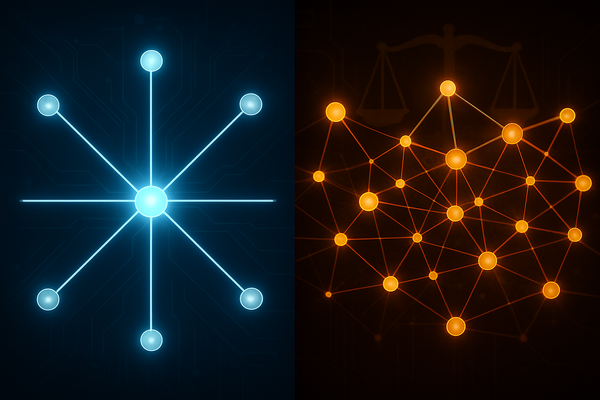
How to Redesign Enterprise Multi-Agent Observability Pipelines When Distributed Tracing Breaks Down Across Heterogeneous Tool-Call Graphs

Multi-Agent Systems

How to Redesign Enterprise Multi-Agent Observability Pipelines When Distributed Tracing Breaks Down Across Heterogeneous Tool-Call Graphs

Here is the scenario that no one warns you about when you first wire together a multi-agent system: everything looks fine until it absolutely does not. Your orchestrator dispatches a task, three sub-agents fan out across a retrieval pipeline, a code-execution sandbox, and a third-party API broker, and somewhere in

By Scott Miller