Event-Driven vs. Polling-Based AI Agent Health Checks: Which Architecture Catches Silent Foundation Model Degradation Before It Breaks Your Enterprise Multi-Agent Workflows in H2 2026?
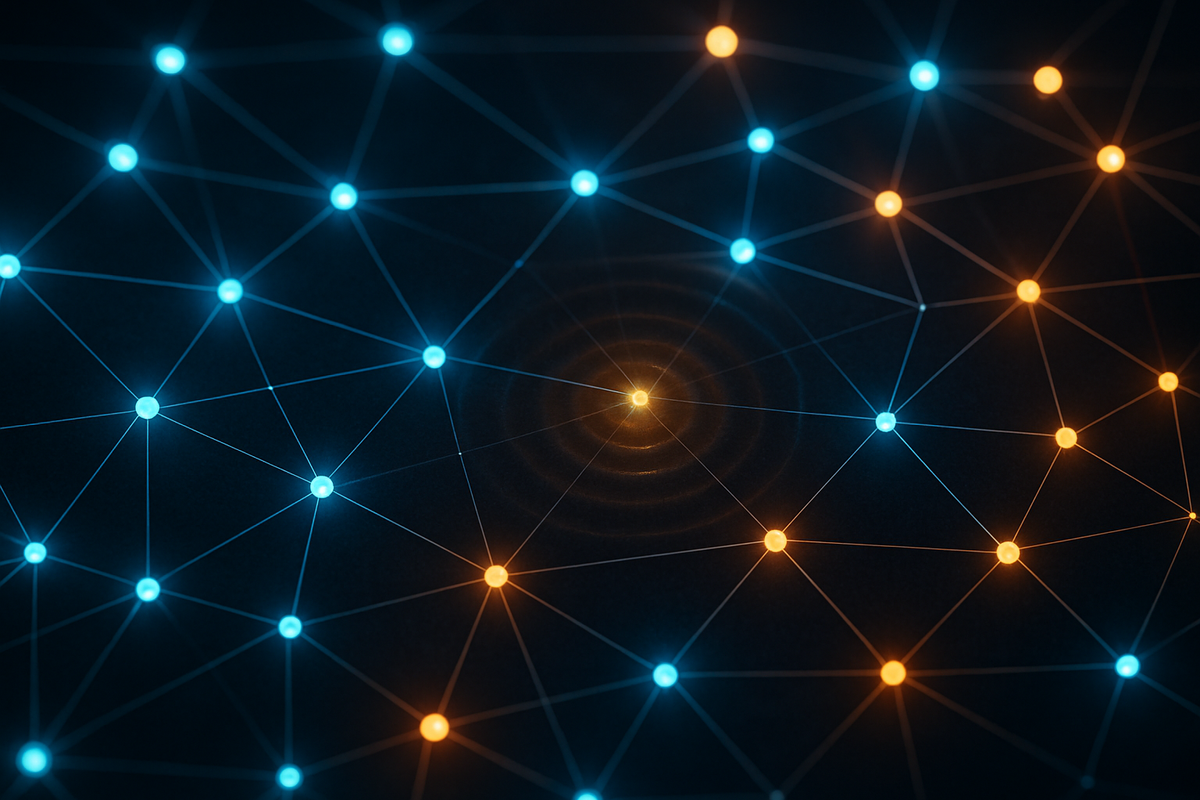
Imagine your enterprise's multi-agent sales pipeline quietly producing subtly wrong answers for three days before anyone notices. No alarms. No errors. Just a foundation model that drifted, and a chain of downstream agents dutifully propagating that drift into customer-facing outputs, financial reports, and automated decisions. By the time a human catches it, the damage is done.
This is the defining operational risk of H2 2026: silent foundation model degradation. As enterprises have scaled from single-agent experiments to deeply interconnected multi-agent workflows, the blast radius of an undetected model health issue has grown from an inconvenience to a business-critical threat. The question is no longer whether to monitor your AI agents, but how to monitor them in a way that catches degradation before it propagates.
Two architectural strategies dominate the conversation: event-driven health checks and polling-based health checks. They represent fundamentally different philosophies about when and how your infrastructure should ask "is this model still working correctly?" Getting this choice right in 2026 is the difference between a resilient AI platform and a liability.
This article breaks down both architectures head-to-head, examines their specific strengths and failure modes against the unique threat of silent degradation, and gives you a clear framework for deciding which strategy (or hybrid combination) belongs in your enterprise stack.
Understanding the Threat: What Is Silent Foundation Model Degradation?
Before comparing architectures, it is worth being precise about the enemy. Silent foundation model degradation is not a crash. It is not a timeout. It is not a 500-error that your existing infrastructure monitoring will catch. It is a category of failure where the model continues to respond, but the quality, accuracy, calibration, or behavioral alignment of those responses has meaningfully declined.
In H2 2026, this manifests in several distinct patterns:
- Semantic drift: A model's outputs shift in tone, framing, or factual grounding without any change to the model version. This is increasingly common as hosted foundation model providers apply continuous fine-tuning and RLHF updates on rolling schedules.
- Confidence miscalibration: The model begins expressing high certainty on outputs where it previously expressed appropriate uncertainty, or vice versa. Downstream agents that use confidence scores for routing decisions inherit this miscalibration silently.
- Context window saturation effects: As agents are given longer, richer system prompts and tool-use histories, foundation models in production can exhibit subtle reasoning degradation on the tail end of long contexts. This is not a bug; it is an emergent behavior that can appear and disappear with infrastructure-side changes.
- Throughput-induced latency creep: Gradual increases in inference latency that individually fall under alert thresholds but cumulatively break time-sensitive orchestration contracts between agents.
- Tool-call schema adherence drift: Models that previously returned perfectly structured JSON for tool invocations begin introducing minor formatting deviations. Each deviation is small; their aggregate effect on downstream parsers is catastrophic.
The reason this class of failure is so dangerous in multi-agent systems is dependency amplification. In a linear workflow, a degraded agent affects one output. In a graph-topology multi-agent system, a degraded foundation model powering a root or hub agent contaminates every downstream agent that consumes its outputs, often within seconds. By the time degradation is visible at the workflow boundary, the root cause is buried under layers of agent-to-agent transformations.
Architecture One: Polling-Based Health Checks
How It Works
Polling-based health checks operate on a scheduled cadence. An orchestrator, sidecar service, or external monitoring system sends a predefined probe request to each agent (or directly to the underlying foundation model endpoint) at regular intervals, evaluates the response against expected criteria, and records a health status. Think of it as a heartbeat: every N seconds, you check if the heart is beating.
In practice, polling health checks for AI agents in 2026 typically layer three probe types:
- Liveness probes: Is the endpoint reachable and returning a response within a timeout threshold? This is the traditional infrastructure-level check borrowed from Kubernetes.
- Readiness probes: Is the agent ready to handle production traffic? This often includes a lightweight inference call with a known-good prompt.
- Quality probes: The AI-specific layer. A curated set of "golden prompts" with expected output characteristics (semantic similarity score, structured output schema compliance, latency percentile) is evaluated on a schedule. Deviation beyond a threshold triggers an alert.
Strengths of Polling for Degradation Detection
Polling's greatest strength is its predictability and simplicity. The health check schedule is explicit, auditable, and easy to reason about. Engineering teams can define exactly what a healthy response looks like, encode it as a test fixture, and run it on a cron. This makes polling exceptionally well-suited for compliance-heavy enterprise environments where every monitoring decision needs to be documented and reproducible.
Polling also decouples monitoring from production traffic. Because probes use synthetic inputs, you can catch degradation even during low-traffic periods when production signals would be too sparse to be statistically meaningful. This is particularly relevant for enterprise AI workflows that run in business-hours bursts rather than continuously.
Additionally, polling integrates naturally with existing enterprise observability stacks. Tools like Datadog, Grafana, and enterprise-grade MLOps platforms in 2026 all support scheduled synthetic monitoring out of the box. The operational lift to add AI-specific quality probes on top of existing infrastructure polling is relatively low.
Critical Weaknesses Against Silent Degradation
Here is where polling starts to struggle. The fundamental limitation is the detection latency window. If you poll every five minutes, you have a worst-case blind window of nearly five minutes during which degradation is spreading through your agent graph. For high-frequency, tightly coupled multi-agent workflows, five minutes of propagated degradation can mean thousands of corrupted outputs.
Polling also suffers from probe-production divergence. Your golden prompts are static; your production traffic is dynamic. A foundation model can degrade specifically on the types of inputs your production agents send while still passing your static probes perfectly. This is not a theoretical edge case. In 2026, as foundation models are increasingly fine-tuned for specific enterprise domains, the gap between generic probe inputs and specialized production inputs is wide enough to drive a truck through.
Finally, polling creates a false sense of security in multi-agent dependency graphs. A polling architecture typically checks each agent in isolation. It does not naturally capture emergent degradation that only appears when Agent A's output is consumed by Agent B and then re-processed by Agent C. The interaction effects between agents are invisible to a polling-based system unless you explicitly build end-to-end synthetic workflow probes, which dramatically increases probe complexity and maintenance cost.
Architecture Two: Event-Driven Health Checks
How It Works
Event-driven health monitoring flips the model entirely. Instead of asking "is the agent healthy right now?" on a schedule, an event-driven system continuously observes every real inference event and evaluates it against health criteria in near-real-time. Every production call becomes a health signal.
The architecture typically involves three layers:
- Instrumented agent sidecars or proxies: Every agent's inference calls are intercepted (or mirrored) by a lightweight observability proxy. This proxy captures inputs, outputs, latency, token counts, tool-call payloads, and any structured metadata without adding meaningful latency to the critical path.
- Streaming evaluation pipeline: Captured events are published to a message bus (Kafka, Pulsar, or a cloud-native equivalent). A fleet of lightweight evaluator services consumes these streams and applies quality scorers: semantic similarity against reference outputs, schema validators, calibration estimators, and anomaly detectors trained on baseline behavior.
- Dependency-aware alerting: Alert logic is graph-aware. When a root agent's health score degrades, the system automatically traces all downstream dependent agents and escalates alert severity proportionally to the dependency fan-out. A degraded hub agent with 12 downstream dependents triggers a higher-priority alert than a degraded leaf agent.
Strengths of Event-Driven for Degradation Detection
The core advantage of event-driven health monitoring is zero blind windows on production traffic. Every inference is evaluated. If a foundation model begins drifting on prompt type X at 2:14 PM on a Tuesday, the event-driven system detects it on the very next call of type X, not at the next poll interval. For silent degradation that manifests on specific input patterns, this is a categorical improvement over polling.
Event-driven systems also naturally capture interaction-level degradation. Because every agent-to-agent message is an observable event, the monitoring system can detect when Agent B's input quality drops (because Agent A degraded) even before Agent B's own outputs show obvious problems. This gives you leading indicator detection rather than lagging indicator detection, which is the holy grail for multi-agent dependency management.
Perhaps most powerfully, event-driven architectures enable statistical drift detection that is simply impossible with polling. By maintaining rolling statistical baselines of output distributions, latency percentiles, and quality scores across thousands of real inferences, event-driven systems can detect subtle shifts (a 2% drop in semantic coherence scores, a 15ms P95 latency increase) that would never trigger a threshold-based polling alert but that reliably precede more significant degradation events.
Critical Weaknesses Against Silent Degradation
Event-driven monitoring has a significant cold-start and low-traffic problem. Statistical drift detection requires a sufficient volume of events to be meaningful. For enterprise workflows that run infrequently or in short bursts, there may simply not be enough production events to establish a reliable baseline, let alone detect subtle drift against it. In these scenarios, event-driven systems either produce noisy alerts or miss degradation entirely.
The operational complexity is also substantially higher. Maintaining a streaming evaluation pipeline, training and updating quality scorer models, managing message bus infrastructure, and keeping dependency graphs synchronized with actual workflow topology is a significant engineering investment. For organizations without a mature MLOps or platform engineering function, this complexity can become a reliability risk in its own right.
There is also a subtler problem: evaluator model dependency. Many event-driven quality scorers use a secondary LLM as a judge to evaluate the primary model's outputs. If the judge model is itself subject to degradation (and in 2026, it almost certainly is, since it runs on another hosted foundation model), you can end up with a monitoring system that is blind to degradation precisely because its own evaluator has drifted. This circular dependency is one of the most underappreciated failure modes in modern AI observability.
Head-to-Head Comparison: The Scorecard
Let's put both architectures side by side across the dimensions that matter most for enterprise multi-agent environments in H2 2026:
- Detection latency: Event-driven wins decisively. It detects on the next affected inference. Polling's detection lag is bounded by its interval, which in practice ranges from one to fifteen minutes in most enterprise deployments.
- Coverage of production input diversity: Event-driven wins. It evaluates real production inputs. Polling only evaluates what your probe authors anticipated.
- Dependency graph awareness: Event-driven wins. Polling requires explicit end-to-end probes for every workflow path, which is operationally untenable at scale.
- Low-traffic reliability: Polling wins. Synthetic probes fire regardless of production traffic volume. Event-driven systems need volume to function statistically.
- Operational simplicity: Polling wins substantially. It integrates with existing monitoring stacks and requires no streaming infrastructure.
- Compliance and auditability: Polling wins narrowly. Scheduled probes with fixed test cases are easier to document and audit. Event-driven systems require careful data governance around capturing and storing production inference data.
- Cost: Polling wins for small-scale deployments. Event-driven infrastructure costs scale with traffic volume and evaluator complexity.
- Subtle drift detection (the silent degradation problem): Event-driven wins by a wide margin. Statistical drift detection on real traffic is the only reliable mechanism for catching the 2-5% quality shifts that characterize early-stage silent degradation.
The H2 2026 Reality: Why Neither Architecture Alone Is Sufficient
Here is the uncomfortable truth that most architecture comparison articles avoid: in the context of enterprise multi-agent systems in H2 2026, neither polling nor event-driven health checks are sufficient on their own. They address different failure modes, and the failure modes they miss are precisely the ones the other architecture catches.
Polling catches degradation during low-traffic windows that event-driven systems miss. Event-driven monitoring catches subtle production-input-specific drift that polling's synthetic probes miss entirely. A foundation model that passes every synthetic probe but fails on a specific category of production inputs is the canonical silent degradation scenario, and it is only detectable with event-driven monitoring. Conversely, a model that degrades overnight when your event-driven pipeline has no traffic to evaluate is only catchable with polling.
The architecturally sound answer for enterprise deployments in H2 2026 is a layered hybrid:
- Polling as the safety net: Maintain a curated set of quality probes that run on a short interval (ideally 60 to 90 seconds for critical agents). These probes should be updated quarterly to reflect evolving production input patterns, not just written once and forgotten. Include at least one end-to-end workflow probe that exercises the full dependency chain of your most critical multi-agent pipeline.
- Event-driven as the primary signal: Instrument every agent with an observability proxy and pipe inference events to a streaming evaluation pipeline. Invest in statistical baseline models for quality scores and latency distributions. Make your alerting dependency-graph-aware so that root agent degradation escalates appropriately.
- Evaluator diversity to break circular dependencies: Use a mix of non-LLM quality scorers (schema validators, embedding-based semantic similarity, rule-based output checkers) alongside LLM-judge evaluators. This ensures that a degraded judge model does not blind your monitoring system to primary model degradation.
- Dependency graph as a first-class artifact: Maintain a live, machine-readable map of your multi-agent workflow dependencies. Feed this into both your polling and event-driven systems so that health status propagation is automatic, not manual. In 2026, this dependency graph should be auto-discovered from your agent orchestration layer, not hand-maintained in a wiki.
Implementation Priorities for Engineering Teams
If you are building or refactoring your AI agent health check infrastructure in H2 2026, here is a pragmatic sequencing recommendation:
Phase 1 (Weeks 1 to 4): Deploy polling-based quality probes for every production agent. This is your immediate safety net. Even imperfect probes with static inputs are dramatically better than no quality monitoring at all. Focus on schema compliance and latency P95 as your first two quality dimensions.
Phase 2 (Weeks 5 to 10): Instrument agents with observability proxies and begin capturing production inference events. Do not attempt drift detection yet. Just build your baseline dataset. This phase is about data collection, not alerting.
Phase 3 (Weeks 11 to 16): Activate statistical drift detection on your highest-traffic, highest-criticality agents first. Start with embedding-based semantic similarity drift as your first quality signal. Add LLM-judge evaluators only after you have non-LLM scorers in place to serve as a sanity check.
Phase 4 (Ongoing): Build and maintain your dependency graph integration. Wire health status propagation so that a degraded root agent automatically elevates the alert priority of all downstream dependents. This is the step that transforms your monitoring from agent-level to workflow-level awareness.
Conclusion: The Architecture That Wins Is the One That Catches What You Cannot Predict
The framing of "event-driven versus polling" is ultimately a false dichotomy when applied to the specific challenge of silent foundation model degradation in enterprise multi-agent systems. The right question is not which architecture to choose, but which failure modes you are willing to be blind to.
If you choose polling alone, you are blind to subtle, production-input-specific degradation during business hours. If you choose event-driven alone, you are blind to overnight or low-traffic degradation events. Both blindspots are unacceptable when your multi-agent workflows are driving revenue-critical or compliance-critical decisions.
The enterprises that will navigate H2 2026's increasingly complex AI agent landscape without catastrophic silent degradation events are the ones that treat health monitoring as a first-class architectural concern, not an afterthought bolted on after deployment. They will invest in layered hybrid monitoring, dependency-aware alerting, and evaluator diversity. They will update their probe libraries as their production input distributions evolve. And they will build the organizational muscle to respond to early degradation signals before they propagate.
Silent degradation does not announce itself. Your architecture has to be loud enough to hear it anyway.



