Centralized AI Model Registry vs. Decentralized Per-Team Model Pinning: Which Governance Pattern Stops Silent Capability Drift?
Imagine waking up on a Monday morning to find that your customer-facing AI feature is returning subtly different outputs than it did on Friday. No deployment happened. No engineer touched the code. But the model underneath quietly rolled forward, and the behavior your team spent weeks tuning is now gone. This is silent capability drift, and as OpenAI and Google accelerate simultaneous model rollouts through the second half of 2026, it is becoming one of the most underestimated operational risks in enterprise software.
The Q4 2026 AI model release calendar is, frankly, aggressive. OpenAI's GPT-5 family variants and Google's Gemini 2.x Ultra and Flash iterations are shipping on cadences that would have seemed impossible two years ago. For backend teams integrating these APIs, the question is no longer just "which model is best?" It is: how do we govern which model version runs in production, who controls that decision, and how do we detect when something silently changes?
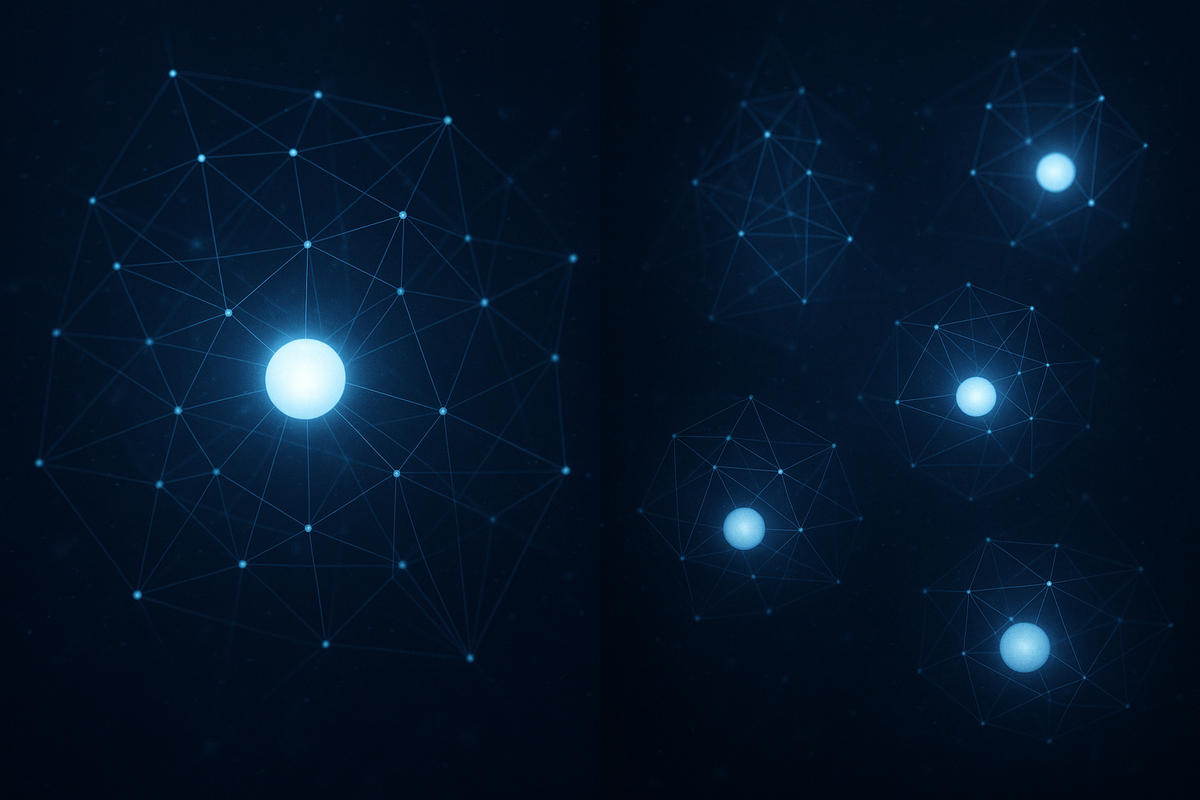
Two competing architectural philosophies have emerged as answers. The first is a Centralized AI Model Registry, a single source of truth owned by a platform or MLOps team that defines approved model versions across the organization. The second is Decentralized Per-Team Model Pinning, where individual product or backend teams manage their own model version locks independently. Both have passionate advocates. Both have real failure modes. This article breaks them down so your organization can make the right call before Q4 2026's rollout wave hits.
Understanding the Problem: What Is Silent Capability Drift?
Before comparing governance patterns, it is worth being precise about what we are defending against. Silent capability drift occurs when an AI model's behavior changes in production without a corresponding change in your application code or configuration. It typically happens through three vectors:
- Provider-side model swaps: When an API endpoint like
gpt-5-turbo-latestorgemini-2.0-flashsilently points to a newer underlying checkpoint without a version bump in the alias. - Deprecation-triggered fallbacks: When a pinned model version is sunset and the provider falls back to the nearest available version without surfacing a hard error.
- Prompt sensitivity amplification: When a newer model version interprets an existing prompt differently, producing outputs that pass surface-level validation but carry different reasoning patterns, tone, or factual tendencies.
The insidious part is that none of these changes trigger your CI/CD pipeline. Your tests pass. Your monitoring dashboards stay green. But your downstream business logic, your user experience, and potentially your compliance posture have all shifted. This is the core problem both governance patterns are trying to solve.
Option 1: The Centralized AI Model Registry
A Centralized AI Model Registry is a platform-level service, typically owned by an MLOps, AI Platform, or Architecture team, that maintains a canonical catalog of approved model versions. Every backend team that wants to call an AI provider must reference a model identifier from this registry rather than specifying a provider version string directly.
How It Works in Practice
In a centralized model, the registry acts as an abstraction and governance layer. A backend service does not call openai/gpt-5-turbo-0926 directly. Instead, it calls an internal alias like registry://text-generation/customer-support/v3, which the registry resolves to a specific provider model version at runtime or at deployment time. The platform team controls when that alias advances to a newer model version, and they do so only after running a standardized evaluation suite.
Key components of a mature centralized registry include:
- Model metadata store: Tracks provider, version, capability profile, known behavioral characteristics, and compliance clearance status for each approved model.
- Alias management system: Maps stable internal identifiers to specific provider version strings, with rollback capability.
- Evaluation gate: A required set of behavioral benchmarks, safety checks, and regression tests that a new model version must pass before being promoted in the registry.
- Audit log: An immutable record of which model version was active for any given alias at any point in time, critical for compliance and incident investigation.
- Drift detection hooks: Automated monitoring that compares output distributions against a baseline when a model version changes in the registry.
The Real Advantages
The strongest argument for centralization is organizational consistency. When OpenAI ships a new GPT-5 variant in October 2026 and simultaneously deprecates an older one, a centralized registry means exactly one team evaluates the change, runs the compliance checks, and decides when and how the organization migrates. The alternative, dozens of backend teams each independently discovering the deprecation notice and scrambling to update their pins, is a coordination nightmare at scale.
Centralization also creates a natural home for cross-cutting concerns that individual teams are poorly positioned to handle alone: GDPR and data residency compliance for model endpoints, security review of new model capabilities, cost optimization through consolidated rate limit management, and enterprise SLA negotiation with providers.
For regulated industries such as financial services, healthcare, and legal tech, the audit trail alone often makes centralization non-negotiable. When a regulator asks "what model generated this output on November 14th, 2026?", a centralized registry can answer that question in seconds.
The Real Weaknesses
The centralized registry's Achilles heel is velocity. In Q4 2026, with Google Gemini and OpenAI shipping meaningful capability improvements on near-monthly cadences, a centralized evaluation process can become a bottleneck that leaves teams running on models that are two or three generations behind the state of the art. The platform team becomes a dependency that every product team resents.
There is also the problem of false universality. A model that passes the platform team's generic evaluation suite might still behave poorly for a specific team's highly specialized use case. The centralized registry gives a false sense of safety for edge cases it was never designed to catch.
Finally, centralized registries can create organizational antibodies. Teams that feel the registry is too slow or too conservative will find workarounds, using provider API keys that bypass the registry entirely. This shadow AI problem is often worse than the drift problem the registry was designed to prevent.
Option 2: Decentralized Per-Team Model Pinning
In the decentralized pattern, each backend team owns its own model version configuration. Teams pin directly to specific provider version strings (for example, gemini-2-ultra-1015 or gpt-5-0924) in their own configuration files, environment variables, or service-level config stores. There is no central gatekeeper. Teams upgrade on their own schedule.
How It Works in Practice
Mature implementations of per-team pinning typically involve a few shared conventions without shared control:
- Pinning standards: An organization-wide policy that all teams must pin to explicit, dated version strings rather than floating aliases like
latest. This is a policy, not a platform. - Team-owned evaluation scripts: Each team maintains its own regression suite tailored to their specific use case, run in CI before any model version bump is merged.
- Shared deprecation alerting: A lightweight, centrally managed notification system that broadcasts provider deprecation notices to all teams simultaneously, but leaves the response to each team.
- Observability standards: Organization-wide conventions for logging model version identifiers in traces and metrics, so drift can be detected even without a central registry.
The Real Advantages
The strongest argument for decentralization is autonomy and speed. A team building a code generation feature can adopt Google Gemini 2.5 Ultra the week it launches, because they can run their own specialized evaluation suite and make an independent decision. They are not blocked by a platform team that is still evaluating the model for a completely different use case.
Per-team pinning also produces more accurate safety signals. A team that owns their own evaluation suite will write tests that reflect their actual production prompts, their actual output requirements, and their actual edge cases. A centralized registry's generic benchmarks simply cannot replicate this fidelity.
There is also a powerful resilience argument. When a provider deprecates a model version, the blast radius of a centralized registry failure is the entire organization. In a decentralized model, teams fail and recover independently. A bug in the platform team's alias resolution logic cannot take down every AI-powered feature simultaneously.
The Real Weaknesses
The most dangerous failure mode of per-team pinning is inconsistent discipline. The pattern works beautifully when every team follows the pinning standards rigorously. It collapses when one team uses a floating alias, another forgets to update their deprecation alert subscription, and a third runs an evaluation suite that has not been updated in six months. In a large organization, "some teams will be undisciplined" is not a risk; it is a certainty.
Decentralization also creates compliance blind spots. If a new Gemini model version has a data handling characteristic that creates a GDPR exposure, a centralized registry catches it once. In a decentralized model, the legal and security team must somehow communicate that risk to every team independently and then verify that every team acted on it. The surface area for compliance failure is proportional to the number of teams.
Finally, there is the cost and efficiency problem. Without centralized visibility into which model versions are running where, it is nearly impossible to negotiate enterprise pricing tiers with providers, consolidate rate limits intelligently, or identify where the organization is paying for premium model versions on use cases that a cheaper model would handle equally well.
Head-to-Head Comparison
The table below summarizes how these two patterns stack up across the dimensions that matter most for enterprise backend teams navigating the Q4 2026 model release environment:
- Drift Prevention: Centralized wins. A single evaluation gate and alias management system provides stronger guarantees against uncontrolled drift than distributed discipline.
- Velocity and Agility: Decentralized wins. Teams can adopt new model capabilities without waiting for platform team review cycles.
- Compliance and Auditability: Centralized wins decisively, especially for regulated industries.
- Use-Case-Specific Safety: Decentralized wins. Team-owned evaluation suites are more accurate for specialized workloads.
- Organizational Scalability: Centralized wins at large scale (50+ teams); decentralized wins at small-to-medium scale (under 15 teams).
- Resilience to Platform Failures: Decentralized wins. No single point of failure.
- Cost Optimization: Centralized wins. Unified visibility enables better provider negotiation and model right-sizing.
- Shadow AI Risk: Centralized loses if it creates too much friction; decentralized minimizes the incentive to bypass governance entirely.
The Hybrid Pattern: Why Most Mature Enterprises Will Land Here
The honest answer for most enterprise backend organizations in 2026 is that neither pure pattern is correct. The teams winning at AI governance are implementing a federated model that borrows the best of both approaches:
Layer 1: Centralized Compliance and Safety Clearance
The platform or security team maintains a registry of cleared model versions, not a registry of required model versions. A new Gemini or GPT-5 variant cannot be used in production until it has passed a centralized security and compliance review. This review is narrow in scope (data handling, safety characteristics, regulatory compliance) and time-boxed (completed within five business days of a major release). Crucially, it produces a clearance, not a mandate.
Layer 2: Decentralized Team Pinning Within the Cleared Set
Within the set of centrally cleared model versions, individual backend teams have full autonomy to pin to whatever version best serves their use case. They own their own evaluation suites, their own upgrade schedules, and their own rollback decisions. The platform team is not in the critical path for product velocity.
Layer 3: Shared Observability Infrastructure
A centrally maintained observability layer ensures that every service logs its active model version identifier in a standardized format. This makes organization-wide drift visible without requiring central control. When a provider deprecation notice arrives, the platform team can immediately see which teams are affected and by when, enabling targeted outreach rather than organization-wide fire drills.
Layer 4: Automated Deprecation Runbooks
Given the accelerating release cadence from OpenAI and Google in late 2026, manual deprecation management is no longer viable. Mature organizations are building automated pipelines that detect when a pinned model version enters a provider's deprecation window, open a ticket in the owning team's backlog, run the team's evaluation suite against the recommended successor version, and escalate to the platform team only if the evaluation fails.
Decision Framework: Which Pattern Is Right for Your Organization?
Use the following criteria to make the call for your specific context:
Choose Centralized Registry if:
- You operate in a regulated industry (finance, healthcare, legal, government) where auditability is non-negotiable.
- You have more than 30 backend teams consuming AI APIs, making decentralized discipline statistically unreliable.
- Your organization has a mature MLOps or AI Platform team with the headcount to run evaluations quickly without becoming a bottleneck.
- You have experienced a compliance incident or significant drift event caused by uncontrolled model version changes.
Choose Decentralized Per-Team Pinning if:
- You have fewer than 15 backend teams with strong engineering discipline and a culture of ownership.
- Your use cases are highly specialized and a generic central evaluation suite would provide low signal value.
- Speed of capability adoption is a core competitive differentiator for your product.
- You lack the platform team headcount to run a registry without it becoming a bottleneck.
Choose the Federated Hybrid if:
- You are a mid-to-large enterprise (15 to 100+ teams) where neither pure pattern is feasible.
- You need both compliance coverage and product velocity simultaneously.
- You are preparing for the Q4 2026 multi-provider rollout environment and need a pattern that scales with provider release cadence rather than against it.
What Q4 2026's Rollout Environment Changes About This Decision
It is worth being explicit about why the Q4 2026 context makes this decision more urgent than it was even twelve months ago. The simultaneous acceleration of OpenAI's GPT-5 family and Google's Gemini 2.x series means that enterprise backend teams are facing a scenario that is genuinely new: two major providers shipping meaningful capability updates on overlapping, near-monthly schedules.
This creates compounding governance pressure. A centralized registry that could comfortably evaluate one major model update per quarter is now facing four to six significant updates per quarter across two providers. Without process changes, the registry becomes the bottleneck it was always accused of being. Meanwhile, a decentralized team that could manage one provider's deprecation cycle is now tracking two providers' deprecation cycles simultaneously, doubling the operational surface area.
The organizations that navigate Q4 2026 successfully will be those that treated model governance as a first-class engineering problem in early 2026, building the automation, observability, and federated structures needed before the release wave arrived. If you are reading this and have not yet formalized your model governance pattern, the time to act is now, not after the first silent drift incident hits production.
Conclusion
Silent capability drift is not a theoretical risk. It is a practical operational failure mode that becomes more likely with every new model version that OpenAI and Google ship. The governance pattern you choose, centralized registry, decentralized per-team pinning, or a federated hybrid, will determine whether your organization detects drift in your monitoring dashboards or discovers it in a customer complaint or a compliance audit.
Neither pure pattern is universally correct. The centralized registry provides stronger compliance guarantees and organizational consistency at the cost of velocity. Decentralized per-team pinning provides speed and use-case fidelity at the cost of discipline and auditability. For most mid-to-large enterprises facing the Q4 2026 release environment, the federated hybrid is the pragmatic answer: centralize compliance clearance, decentralize version selection, and share the observability infrastructure that makes drift visible regardless of who controls the pin.
The worst outcome is having no explicit governance pattern at all. In a world where two of the most capable AI providers on the planet are shipping model updates faster than most enterprise change management processes can track, "we'll deal with it when it happens" is not a strategy. It is a guarantee that silent capability drift will eventually happen to you, quietly, on a Monday morning, when nobody is watching.