Agent-Native Message Queues vs. Kafka: Which Backbone Should Enterprise Backend Teams Choose for Agentic Workloads?
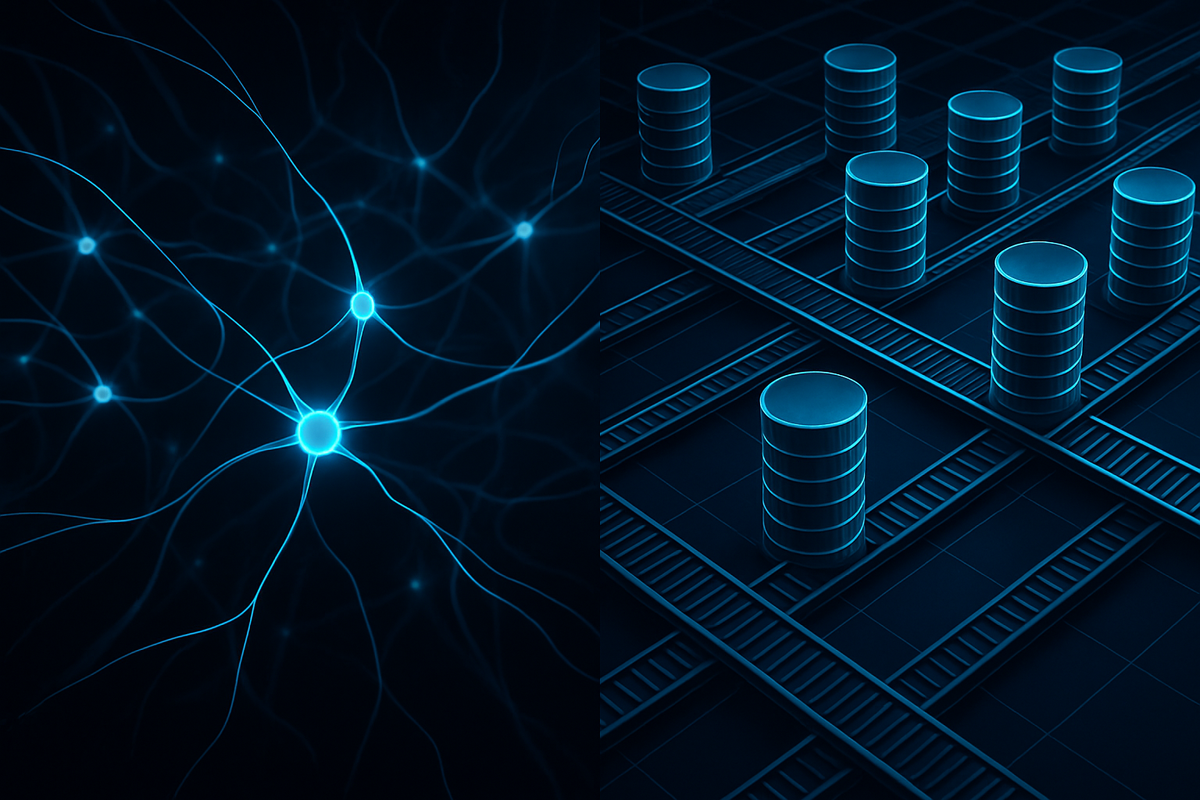
There is a quiet architectural war being waged inside enterprise backend teams right now. On one side: Apache Kafka and its battle-tested cousins, the traditional event brokers that have reliably shuttled billions of events per second for over a decade. On the other: a new class of infrastructure purpose-built for agentic AI workloads, sometimes called agent-native message queues, designed from the ground up to handle stateful, context-aware, and non-deterministic agent communication.
The uncomfortable truth is that most enterprise teams in 2026 are trying to force-fit their existing Kafka deployments to serve multi-agent systems, and it is costing them in latency, operational complexity, and agent reliability. This article makes the case that the choice between these two paradigms is not simply a matter of preference. It is an architectural decision that will define how well your agentic systems scale, recover, and reason at production load.
Why This Comparison Matters Right Now
Agentic AI workloads have fundamentally different communication semantics than traditional microservice events. A Kafka topic broadcasting an order.placed event is stateless by design: it fires and forgets, and any consumer that needs state reconstructs it from an event log. That model is elegant for deterministic, human-authored business logic.
But consider a multi-agent pipeline in which a planning agent spawns five subagents, each of which may invoke tools, call external APIs, backtrack on failed reasoning steps, and return partial results to a coordinating orchestrator. The messages flowing through this system are not just events. They are conversational turns, tool results, memory updates, and context snapshots, all of which need to be routed with awareness of which agent session they belong to, what state that session is in, and what priority that task carries relative to others competing for the same worker pool.
Traditional event brokers were not designed with any of that in mind. Agent-native queues were built for exactly this scenario. The question is whether the gap is wide enough to justify replacing or supplementing your existing infrastructure.
Understanding the Two Paradigms
Traditional Event Brokers (Kafka, Pulsar, RabbitMQ)
Apache Kafka is the dominant player here, with Confluent's managed platform and Apache Pulsar as close competitors. These systems share a common philosophical foundation:
- Log-based, append-only storage: Events are immutable records written to partitioned, ordered logs. Consumers replay from any offset.
- Stateless routing: Routing decisions are made at publish time via topic names and partition keys. The broker itself is agnostic to message content or session context.
- Consumer group semantics: Parallelism is achieved by distributing partitions across consumer group members. Rebalancing is a known operational pain point.
- Durability-first design: Kafka is optimized for throughput and durability, often at the expense of low-latency delivery for individual messages.
- Schema-driven contracts: Tools like the Confluent Schema Registry enforce message schemas, making Kafka excellent for structured, predictable data contracts between teams.
These properties make Kafka exceptional for data pipelines, audit logs, CDC (change data capture), and event sourcing. In 2026, Kafka remains the gold standard for those use cases, processing trillions of events daily across financial services, logistics, and streaming media.
Agent-Native Message Queues
Agent-native queues are a newer category, emerging from the practical pain points of teams building production multi-agent systems. Frameworks and platforms in this space, including purpose-built layers on top of existing infrastructure as well as standalone brokers, share a different set of design priorities:
- Session and context awareness: The broker understands the concept of an agent session or conversation thread. Messages are grouped, routed, and prioritized within the context of a running agent task, not just a topic.
- Stateful routing: Routing decisions can be made based on the current state of a downstream agent, its load, its active memory context, or its declared capabilities, not just a static partition key.
- Backpressure and interruption semantics: Agent tasks can be paused, cancelled, or reprioritized mid-flight. The queue layer understands the concept of a long-running, multi-step task rather than a single atomic event.
- Tool result and artifact passing: Native support for structured payloads that include tool call results, memory diffs, and reasoning traces, rather than requiring consumers to deserialize opaque byte arrays.
- Timeout and retry policies at the task level: Rather than per-message retry, these systems support retry and fallback logic scoped to an entire agent task, which may span dozens of individual messages.
The Core Technical Fault Lines
1. Stateless vs. Stateful Routing
This is the single biggest architectural divergence. Kafka's partition-key routing is deterministic and fast, but it is entirely blind to what is happening inside your agents. If you want to route a follow-up message from a user to the same agent instance that handled the first turn of their session, you need to build that logic yourself, typically by encoding a session ID as the partition key and ensuring your consumer group maintains affinity between partition and agent instance. This works at small scale. At enterprise scale, it becomes a nightmare of rebalancing events, sticky session management, and custom offset tracking.
Agent-native queues treat session affinity as a first-class primitive. The broker knows that messages tagged with session_id: abc-123 should be delivered to the agent instance currently holding that session's working memory, and it handles failover, rehydration, and rerouting automatically when that instance goes down.
2. Throughput vs. Latency Profile
Kafka is a throughput machine. It batches writes, compresses aggressively, and is optimized for sustained, high-volume streams. For agentic workloads, this is often the wrong optimization. A user waiting for an agent to complete a multi-step reasoning task cares about tail latency on individual message delivery, not aggregate throughput. Kafka's batching behavior, typically configurable via linger.ms and batch.size, introduces latency that is entirely acceptable for analytics pipelines but noticeable in interactive agent loops.
Agent-native queues prioritize low-latency delivery for individual task messages, often using in-memory routing for active sessions while persisting completed task logs asynchronously. The tradeoff is lower raw throughput compared to Kafka, but for most agentic workloads, the bottleneck is the LLM inference call, not the message broker. Optimizing broker throughput at the expense of routing latency is solving the wrong problem.
3. Backpressure and Flow Control
In a multi-agent system, agents can become overwhelmed. A planning agent might spawn more subagent tasks than the worker pool can handle. Traditional Kafka handles this through consumer lag: messages pile up in the topic, and consumers process them as fast as they can. This is fine for batch workloads but creates serious problems for agentic systems where a queued task may have already expired (the user gave up), or where a high-priority interruption (a human override signal) needs to jump the queue.
Agent-native queues implement priority lanes, task expiration, and graceful cancellation as core features. An orchestrator can signal "cancel all pending subagent tasks for session abc-123" and the broker will drain those messages, notify active consumers to stop, and confirm cancellation, all without the application layer needing to implement complex saga-style rollback logic.
4. Observability and Debugging
Debugging a Kafka-backed agentic system is genuinely painful. When an agent produces an unexpected output, reconstructing the full context, including which messages were delivered in which order, what the agent's state was at each step, and which tool calls influenced the reasoning, requires correlating data across Kafka consumer group offsets, your vector store, your LLM call logs, and your application traces. These are four different systems with four different time-series semantics.
Agent-native queues typically include built-in tracing for agent task lifecycles. Because the broker is context-aware, it can emit a structured trace of everything that happened within a session: message delivery, routing decisions, retries, tool result injections, and task completion or failure. This dramatically reduces mean time to diagnosis (MTTD) for production incidents in agentic systems.
Where Kafka Still Wins
To be clear: this is not a "Kafka is dead" argument. There are several enterprise scenarios where Kafka remains the right choice, even in 2026's agentic-first landscape.
- Agent telemetry ingestion: Streaming high-volume logs, traces, and metrics from thousands of agent instances into a data warehouse or observability platform is a classic Kafka use case. The data is stateless, high-volume, and append-only. Use Kafka.
- Triggering agent workflows from business events: When a business event (a new customer record, a completed transaction, an IoT sensor reading) should trigger an agent workflow, Kafka is an excellent trigger bus. The event is stateless; the agent workflow it spawns is stateful. Use Kafka for the trigger, and an agent-native queue for the internal agent communication.
- Audit and compliance logging: Agent actions that need immutable, replayable audit trails are well-served by Kafka's append-only log semantics. Regulated industries (finance, healthcare) will often want a Kafka audit log alongside whatever agent-native infrastructure they adopt.
- Cross-team data contracts: If your agentic system needs to publish results consumed by non-agentic downstream services (data science teams, reporting pipelines, other microservices), Kafka's schema registry and consumer group model is the lingua franca of enterprise data teams. Don't fight that convention.
The Hybrid Architecture: What Leading Enterprise Teams Are Building in 2026
The most pragmatic pattern emerging in enterprise backend teams this year is not a wholesale replacement of Kafka but a layered architecture in which each system does what it does best.
Here is the pattern in broad strokes:
- Layer 1 (External Event Bus): Kafka handles all inbound business events, external triggers, and outbound result publication. This is the interface between the agentic system and the rest of the enterprise data estate.
- Layer 2 (Agent Orchestration Bus): Agent-native queue handles all internal agent-to-agent communication, tool result routing, memory updates, and session state management. This layer is invisible to the rest of the enterprise but is the critical backbone for agent reliability.
- Layer 3 (Audit and Observability): Kafka again, receiving structured task lifecycle events from the agent-native queue for long-term storage, compliance, and analytics.
This separation of concerns means teams are not forced to choose one paradigm over the other. Kafka handles the enterprise integration surface; the agent-native queue handles the internal agentic semantics. The two layers communicate through well-defined adapters, typically lightweight consumer processes that translate Kafka events into agent task submissions and vice versa.
Decision Framework: Which Should You Prioritize?
Use the following criteria to guide your architectural decision:
Choose Kafka as your primary backbone if:
- Your agentic workloads are primarily batch-oriented, with no interactive latency requirements.
- Agent tasks are short, single-step, and stateless (closer to "smart functions" than autonomous agents).
- Your team has deep Kafka expertise and the cost of introducing new infrastructure outweighs the routing complexity.
- Compliance requires immutable, replayable event logs as the source of truth for all system behavior.
Invest in an agent-native queue layer if:
- You are running multi-step, multi-agent pipelines where session continuity and context-aware routing are requirements, not nice-to-haves.
- You have interactive user-facing agent experiences where tail latency matters.
- Your agents need to be interrupted, reprioritized, or cancelled mid-task in response to user or system signals.
- Your debugging and observability story for agentic workloads is currently "grep the logs and hope."
- You are running more than a few hundred concurrent agent sessions and session affinity management in Kafka has become a recurring operational burden.
The Bigger Principle at Stake
There is a temptation in enterprise engineering to treat infrastructure choices as purely technical decisions. But the choice between Kafka and agent-native queuing is also a statement about how your organization models AI agents. If you treat agents as just another microservice consumer, Kafka is fine, and your agents will behave like microservices: fast, predictable, and fundamentally stateless. If you treat agents as stateful, reasoning entities that operate over time with memory, context, and intent, your infrastructure needs to reflect that model.
The organizations that are shipping reliable, scalable agentic systems in production today are the ones that stopped asking "how do we make Kafka work for agents" and started asking "what does our infrastructure need to look like if agents are the primary runtime?" That is a more honest question, and it leads to better architectural outcomes.
Conclusion
Apache Kafka is not going away, nor should it. It remains one of the most reliable, scalable, and well-understood pieces of infrastructure in the enterprise software stack. But the rise of agentic AI workloads in 2026 has exposed a genuine capability gap in traditional event brokers: they were not designed for stateful, context-aware, multi-step agent communication, and trying to retrofit them for that purpose creates compounding operational debt.
Agent-native message queues fill that gap with purpose-built primitives for session affinity, task-level flow control, and structured agent observability. The winning architecture is not one or the other. It is a layered approach that lets Kafka do what it does brilliantly at the enterprise integration boundary, while an agent-native queue handles the nuanced, stateful communication happening inside your agentic systems.
The backend teams that get this right in 2026 will not just ship better AI features. They will build the foundational infrastructure that makes their agentic systems genuinely trustworthy at scale, and that is a competitive advantage that compounds over time.