A Beginner's Guide to Agentic Workflows: What Non-Technical Enterprise Stakeholders Need to Understand Before GPT-5.6 Lands in Your AI Stack

Picture this: It's a Tuesday morning in June 2026. Your IT team sends a calendar invite titled "GPT-5.6 Rollout Kickoff." You accept it, but quietly open a new browser tab and type: "What even is an agentic workflow?"
You are not alone. Across boardrooms, operations floors, and finance departments worldwide, non-technical enterprise stakeholders are being asked to greenlight, govern, and champion AI systems they have never had to understand at this level of depth before. The arrival of increasingly powerful large language model (LLM) iterations, including OpenAI's GPT-5.x line now actively being staged for enterprise stacks, marks a genuine inflection point. These are not chatbots. These are agents.
This guide is written specifically for you: the VP of Operations, the Chief Risk Officer, the HR Director, the Finance Controller. No coding required. No jargon left unexplained. Just a clear, honest map of what agentic AI workflows are, why they matter to your organization right now, and what you need to ask before your IT and data science teams flip the switch.
First Things First: What Is an "Agentic Workflow," Really?
Let's start with the word agent. In everyday language, an agent is someone who acts on your behalf. A travel agent books your flights. A real estate agent negotiates your purchase. An AI agent does the same thing, except instead of a person, it is a software system powered by a large language model that can plan, decide, take actions, and iterate to complete a goal.
An agentic workflow is simply a business process that is managed, executed, or significantly driven by one or more of these AI agents. The key difference from older automation (think: macros, rule-based bots, or simple chatbots) is this:
- Old automation: "If X happens, do Y." Rigid. Predictable. Limited.
- Agentic AI: "Here is the goal. Figure out the steps, use the tools available, handle surprises, and get it done."
That flexibility is both the superpower and the reason you, as a stakeholder, need to pay close attention.
The Four Building Blocks of an Agentic System
You do not need to understand the code, but you do need to understand the architecture in plain terms. Every agentic workflow in your enterprise will be built from some combination of these four components:
1. The Brain (The LLM)
This is the large language model at the center, such as GPT-5.6, Google's Gemini Ultra 2, or Anthropic's Claude 4. It is the reasoning engine. It reads instructions, interprets context, makes decisions, and generates outputs. Think of it as the highly capable new hire who understands nuance, can read between the lines, and works at machine speed.
2. The Tools
Agents are given access to tools: web search, your internal databases, your CRM, your ERP, email systems, calendar APIs, code execution environments, and more. When the agent needs information or needs to take an action, it reaches for the appropriate tool. This is what separates an agent from a simple chatbot. A chatbot responds. An agent acts.
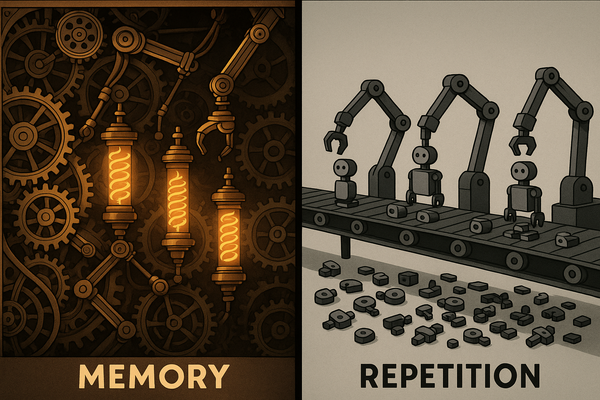
3. The Memory
Agents can be given short-term memory (what happened earlier in this conversation or task) and long-term memory (persistent knowledge stored across sessions). For enterprise use, this means an agent can remember your company's approval policies, your vendor contracts, or a customer's full interaction history without being told every time.
4. The Orchestrator
In more complex deployments, you will have multi-agent systems: a manager agent that breaks a big task into subtasks and delegates them to specialist agents. One agent researches. One drafts. One reviews for compliance. One sends the output. The orchestrator coordinates the whole operation. This is where enterprise-grade power, and enterprise-grade risk, truly lives.
A Real-World Example: What This Looks Like in Your Organization
Let's make this concrete. Imagine your procurement department currently handles vendor invoice reconciliation. Today, a team of three analysts spends roughly 40% of their week cross-referencing invoices against purchase orders, flagging discrepancies, emailing vendors for clarification, and updating your ERP system.
With an agentic workflow powered by GPT-5.6, here is what that same process could look like:
- An agent receives an incoming invoice via email.
- It retrieves the corresponding purchase order from your ERP system using its tools.
- It compares line items, quantities, and pricing, reasoning through any discrepancies.
- If the discrepancy is within a pre-approved threshold, it approves and logs the invoice automatically.
- If it falls outside that threshold, it drafts a clarification email to the vendor, flags the item in a dashboard for human review, and adds a note to the audit log explaining its reasoning.
- It learns from the human reviewer's decision and adjusts its future threshold recommendations.
This is not science fiction. Versions of this workflow are already running in forward-leaning enterprises in early 2026. GPT-5.6's expanded context window, improved tool-use reliability, and stronger reasoning capabilities will make these deployments faster to build and more accurate in execution.
Why GPT-5.6 Specifically Changes the Equation
You may be wondering: "We already have some AI tools. What makes this June rollout different?" It is a fair question, and the answer matters for your planning.
Earlier LLM generations were powerful but brittle in agentic settings. They would lose track of long tasks, misuse tools, hallucinate facts mid-workflow, or fail to handle unexpected edge cases gracefully. Each of those failure modes in an enterprise context is not just an inconvenience; it is a compliance risk, a financial exposure, or a reputational issue.
The GPT-5.x model family, and specifically the 5.6 iteration being staged for enterprise deployment in mid-2026, addresses several of these pain points directly:
- Longer, more reliable task persistence: The model can hold and act on complex multi-step instructions across much longer workflows without drifting off course.
- Improved tool-calling accuracy: Fewer instances of the agent reaching for the wrong tool or misinterpreting a tool's output.
- Better uncertainty signaling: The model is more calibrated about what it does not know, making it more likely to pause and escalate to a human rather than confidently guess wrong.
- Enterprise-grade guardrails: Tighter integration with role-based access controls, audit logging, and organizational policy documents fed into the system prompt.
In short: the reliability bar has crossed a threshold where agentic deployment in regulated, high-stakes enterprise environments has become genuinely viable at scale. That is why your IT team is scheduling that June kickoff.
The Governance Questions You Must Ask Before Go-Live
Here is the section that matters most if you are a stakeholder whose job involves risk, compliance, people management, or financial oversight. Agentic AI introduces a new category of organizational question that your current AI governance frameworks almost certainly do not fully address yet.
Who Is Accountable When the Agent Makes a Mistake?
An agent that sends an incorrect vendor payment, makes a hiring recommendation that violates equal opportunity policy, or shares a confidential document with the wrong recipient is not "the AI's fault" in any legal or operational sense. Your organization is accountable. Before deployment, you need a clear accountability map: which human role owns each agentic workflow and is responsible for its outputs.
What Can the Agent Do Without Human Approval?
This is your autonomy boundary conversation. Define it explicitly. A well-governed agentic deployment will have clearly documented tiers: actions the agent can take fully autonomously, actions that require notification after the fact, and actions that require explicit human approval before execution. Do not let this default to a technical decision made by your developers alone.
How Is the Agent's Reasoning Being Logged?
Modern agentic systems can generate reasoning traces, essentially a step-by-step log of how the agent arrived at a decision. For regulated industries (finance, healthcare, legal, HR), this is not optional. You need to be able to reconstruct why the agent did what it did. Ask your technical team: "Show me the audit trail for a sample workflow run." If they cannot, that is a red flag before go-live.
What Data Is the Agent Touching?
Agents with broad tool access can, if improperly scoped, touch data they should not. Before deployment, insist on a data access audit. The agent handling accounts payable should not have read access to HR compensation records. Principle of least privilege applies to AI agents exactly as it does to human employees.
What Is the Human-in-the-Loop Plan?
Even the most capable agentic systems will encounter situations outside their training or guardrails. What happens then? There must be a defined escalation path: the agent pauses, flags the item, and routes it to a named human role. "The AI will figure it out" is not an acceptable answer for edge cases in enterprise operations.
Common Misconceptions to Drop Before Your Kickoff Meeting
A few beliefs tend to circulate among non-technical stakeholders that can lead to either over-caution or dangerous overconfidence. Let's clear them up:
- "It will replace my entire team." Agentic AI handles repetitive, well-defined task sequences extremely well. It handles judgment calls, relationship management, ethical nuance, and novel situations poorly. The realistic near-term outcome is role transformation, not wholesale replacement. Your team will shift toward oversight, exception handling, and higher-order work.
- "It understands our business." It understands what you tell it and what you give it access to. An agent is only as context-aware as its system prompt, its memory, and its data connections. Garbage in, garbage out still applies, just at agent speed.
- "Once it's set up, it runs itself." Agentic workflows require ongoing monitoring, prompt tuning, guardrail updates, and performance review. Think of it less like installing software and more like onboarding a new team member who needs regular feedback and occasional correction.
- "AI agents are always on and always right." They can fail silently, confidently, and at scale. Human oversight checkpoints are not a sign of distrust in the technology; they are a sign of mature, responsible deployment.
A Simple Framework for Evaluating Your First Agentic Use Case
If your team is deciding where to start, here is a straightforward filter you can apply without needing a technical background. The best first agentic use cases share most of these characteristics:
- High volume, repetitive steps: The task is done many times a day or week, following a broadly consistent pattern.
- Clear success criteria: You can objectively tell whether the agent did the job correctly.
- Recoverable errors: A mistake in this workflow can be caught and corrected before it causes serious harm.
- Structured data inputs: The agent is working with documents, databases, or systems that have predictable formats.
- Low regulatory sensitivity (to start): Save the compliance-heavy workflows for after you have built internal confidence and governance muscle.
Good starting candidates in most enterprises include: internal knowledge base Q&A, first-pass document summarization, meeting notes and action item extraction, IT helpdesk ticket triage, and basic data pipeline monitoring and alerting.
Conclusion: Your Role Is Not to Understand the Code. It Is to Ask the Right Questions.
The most dangerous position a non-technical enterprise stakeholder can take in the age of agentic AI is passive deference: nodding along in technical meetings, approving budgets without understanding what is being built, and assuming that "the AI team has it covered."
Your role is not to write the prompts or architect the pipelines. Your role is to be the voice of accountability, ethics, risk tolerance, and organizational values in every deployment conversation. The questions in this guide are your toolkit. Bring them to your June kickoff. Bring them to every AI steering committee meeting from here forward.
Agentic workflows built on models like GPT-5.6 represent a genuine leap in what enterprise AI can do. Used thoughtfully, with clear governance and realistic expectations, they will free your teams to do the work that actually requires human judgment. Used carelessly, they will create new categories of operational and reputational risk at machine speed.
The difference between those two outcomes is not the technology. It is the quality of the humans overseeing it. That means you.
Ready to go deeper? Share this guide with your leadership team before your next AI planning session, and consider scheduling a dedicated governance workshop before any agentic deployment goes into production. The 30 minutes you invest now will save you significantly more later.