5 Ways Enterprise Backend Teams Are Underestimating the Operational Complexity of Managing Agent Persona Drift When Foundation Models Are Fine-Tuned or Swapped Mid-Production in 2026
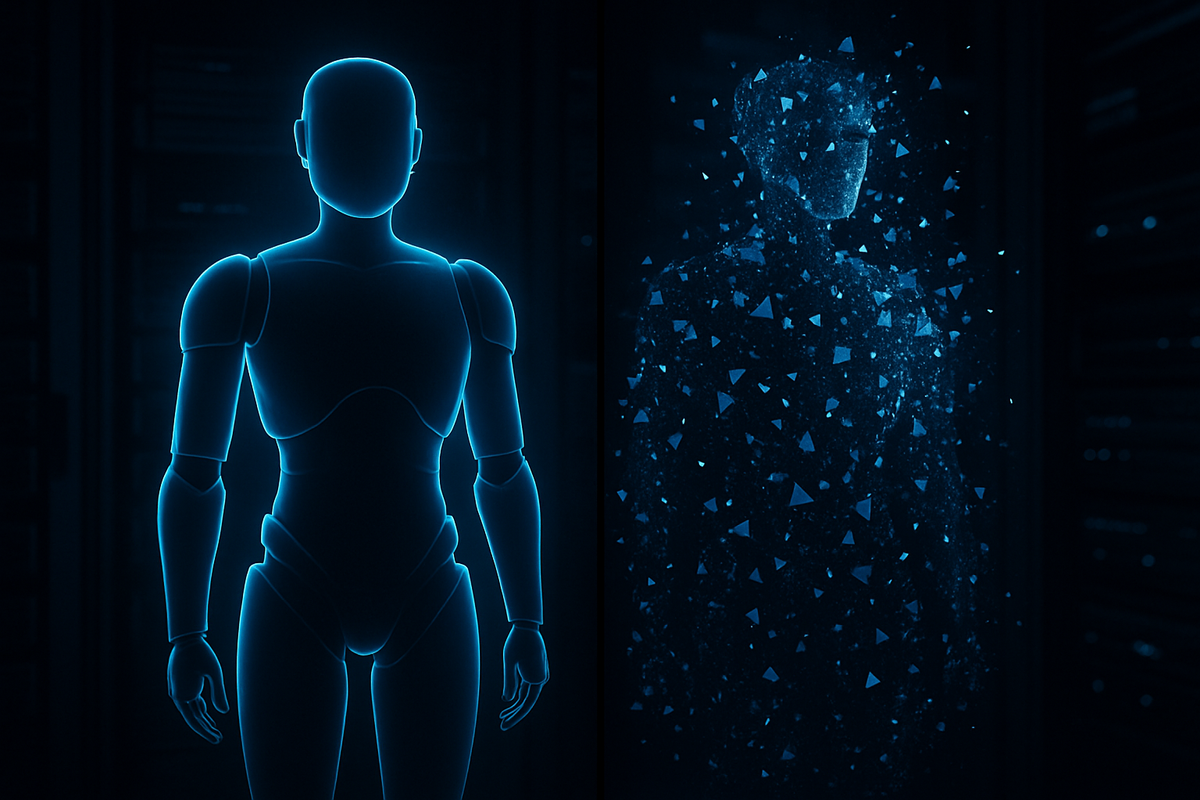
There is a quiet crisis unfolding inside enterprise AI stacks right now. As organizations race to deploy conversational agents, autonomous workflow assistants, and customer-facing AI personas at scale, backend engineering teams are discovering a problem that almost nobody budgeted for: agent persona drift. This is the subtle, often invisible degradation of an AI agent's behavioral identity, tone, decision-making style, and boundary enforcement that occurs when the underlying foundation model is fine-tuned, version-bumped, or swapped out entirely, all while the agent is live in production.
In 2026, model churn is no longer an edge case. With major providers like OpenAI, Anthropic, Google DeepMind, and a growing roster of open-weight model vendors pushing significant architecture updates on compressed timelines, enterprise teams are routinely inheriting new model behaviors mid-deployment. What used to be a controlled lab experiment (swap the model, re-test, re-deploy) has become a continuous operational reality. And most backend teams are nowhere near ready for it.
This is not a post about prompt engineering basics. This is about the systemic, architectural, and organizational gaps that cause seemingly minor model updates to cascade into significant persona failures, compliance violations, and degraded user trust. Here are the five most underestimated dimensions of this problem.
1. Persona Specifications Are Treated as Static Artifacts, Not Living Contracts
The first and most foundational mistake is treating the agent's persona definition as a document you write once and file away. In most enterprise deployments, persona specifications live as a block of system prompt text, perhaps versioned in a Git repository, perhaps not. They describe tone, role boundaries, escalation behavior, language formality, and brand voice. Teams write them carefully at launch and then largely forget about them.
The problem is that a persona specification is not a universal truth. It is a negotiation between human intent and model behavior. When the underlying model changes, even subtly, the same specification text can produce meaningfully different behavioral outputs. A fine-tuned variant of a model that has been trained on additional customer service corpora may interpret the phrase "be empathetic but concise" in a way that is measurably different from its predecessor. A model swap from one foundation provider to another can render entire sections of a persona spec functionally inert or actively counterproductive.
What backend teams need, and almost none have built, is a persona contract testing framework: a suite of behavioral assertions that runs automatically whenever a model version changes, validating that the agent's observable outputs still conform to the intended persona profile. Think of it like unit tests, but for identity. Without this, teams are flying blind every time a model update lands in their inference stack.
2. Behavioral Regression Is Nearly Impossible to Detect Without Structured Baselines
Software engineers are well-trained to detect functional regressions. If an API returns a wrong status code or a database query returns incorrect rows, automated tests catch it. But persona drift does not produce an error. It produces a slightly different answer, delivered in a slightly different tone, with slightly different boundary-setting behavior. None of these changes throw exceptions. They simply erode the user experience and brand consistency over time.
The core operational gap here is the absence of structured behavioral baselines. A behavioral baseline is a curated dataset of canonical input-output pairs that represent the "gold standard" persona expression across a wide range of interaction scenarios: edge cases, emotionally charged inputs, ambiguous requests, policy boundary tests, and routine queries. When a model is updated, outputs for these canonical inputs should be compared against the baseline using both automated semantic similarity scoring and, for high-stakes scenarios, human-in-the-loop review.
In practice, most enterprise teams in 2026 still rely on post-deployment user complaints as their primary signal for persona regression. This is the equivalent of using customer support tickets as your only bug tracker. By the time the signal surfaces, thousands of interactions may have already occurred under the drifted persona, some of them with real compliance, reputational, or contractual consequences.
- What good looks like: A versioned behavioral baseline library, updated collaboratively by product, legal, and engineering teams, with automated diff reports generated on every model update.
- What most teams have: A Confluence page with persona guidelines that was last edited fourteen months ago.
3. Multi-Agent Architectures Multiply Drift Vectors Exponentially
Single-agent deployments are hard enough. But the dominant enterprise architecture in 2026 is not a single agent. It is a network of specialized agents: an orchestrator, a retrieval agent, a summarization agent, a compliance checker, a customer-facing conversational agent, and several domain-specific sub-agents, all coordinating through tool calls, shared memory, and message-passing protocols.
In this architecture, persona drift does not just affect one node. It ripples. Consider a scenario where the orchestrator model is fine-tuned to be more decisive and less likely to ask clarifying questions. This behavioral shift changes the nature of the task descriptions it passes to downstream agents. Those downstream agents, operating under their own (now mismatched) persona specifications, may produce outputs that are contextually inconsistent with the new orchestrator behavior. The customer-facing agent at the end of the chain then synthesizes these inconsistent signals into a response that feels subtly "off" to users, even though no single agent has obviously failed.
This is what makes multi-agent persona drift so operationally dangerous: the failure mode is emergent, not localized. Traditional observability tools that monitor individual agent outputs will miss it entirely. Teams need cross-agent behavioral coherence monitoring, which tracks not just what each agent says, but whether the combined behavioral profile of the agent network remains internally consistent after any model update anywhere in the chain.
Very few organizations have built this capability. Most are still instrumenting agents individually, which is necessary but not sufficient for catching systemic persona drift in networked architectures.
4. Fine-Tuning Pipelines Lack Persona Preservation as an Explicit Objective
When enterprise ML teams fine-tune a foundation model, they are typically optimizing for task performance: accuracy on domain-specific queries, reduction in hallucination rates, improved instruction-following on proprietary formats, or latency improvements. Persona preservation is almost never included as an explicit fine-tuning objective, and this is a serious oversight.
Fine-tuning, by definition, shifts the weight distribution of a model. Even a relatively small fine-tuning run on a narrow domain dataset can produce measurable changes in the model's default tone, its tendency to hedge or assert, its handling of sensitive topics, and its propensity to break character under pressure. These are not bugs in the fine-tuning process. They are expected side effects of the optimization. The problem is that most teams treat them as acceptable collateral damage rather than engineering problems to be solved.
The emerging best practice, still rare in production environments, is to include persona alignment as a component of the fine-tuning reward signal. This can be implemented through a combination of techniques:
- Including persona-representative examples in the fine-tuning dataset with explicit weighting to prevent their influence from being diluted by domain-specific data.
- Using a lightweight persona evaluation model (a smaller, frozen model trained specifically to score persona conformance) as a reward signal during RLHF or DPO training runs.
- Running persona regression evaluations as a blocking gate in the fine-tuning CI/CD pipeline, preventing a fine-tuned model from being promoted to production if its persona drift score exceeds a defined threshold.
Without these guardrails, every fine-tuning cycle is a gamble on whether the persona comes out intact on the other side.
5. Organizational Ownership of Persona Is Fragmented Across Teams That Don't Talk to Each Other
This final point is the most human of all five, and arguably the most damaging. Agent persona is a cross-functional concern. It lives at the intersection of brand, product, legal, compliance, and engineering. In most enterprise organizations, these teams operate in silos with misaligned incentives, different vocabularies for describing the same problems, and no shared operational process for managing persona changes.
Here is what typically happens when a foundation model is swapped mid-production: the ML engineering team evaluates the new model on task performance benchmarks and gives it a green light. The backend team updates the inference endpoint and runs integration tests. Nobody loops in the brand team to validate tone consistency. Nobody runs the new model outputs through the legal team's sensitive-topic boundary checklist. Nobody asks the product team whether the updated model's tendency to be more verbose aligns with the UX copy strategy. The model goes live, and the persona drifts, and everyone wonders why the support metrics look slightly worse this quarter.
The fix is not just technical. It requires establishing a Persona Governance Board (or equivalent cross-functional working group) with a defined change management process for model updates. This process should include:
- A mandatory persona impact assessment as part of any model update review, similar to a security review or a data privacy impact assessment.
- Clear ownership of the behavioral baseline library, with named stakeholders from product, legal, and brand alongside engineering.
- A defined escalation path when persona drift is detected post-deployment, with SLAs for remediation that match the severity of the drift.
- Regular "persona audits" on a scheduled cadence, independent of model update cycles, to catch slow-burn drift caused by retrieval data changes, prompt template edits, or system configuration shifts.
The organizations that are getting this right in 2026 are treating agent persona with the same operational rigor they apply to data governance or security posture. The ones that are not are accumulating invisible technical and reputational debt with every model update they ship.
The Bottom Line: Persona Is Infrastructure
Agent persona drift is not a soft problem. It is not a UX polish issue or a nice-to-have for the brand team. In an enterprise context, where AI agents are making consequential decisions, representing your organization to customers, and operating within regulatory frameworks, persona consistency is a hard operational requirement with real business risk attached to it.
The five gaps described above, static persona artifacts, missing behavioral baselines, multi-agent coherence blind spots, persona-unaware fine-tuning pipelines, and fragmented organizational ownership, are all solvable. But they require treating persona as infrastructure: something that is versioned, tested, monitored, governed, and continuously maintained, not something that is written once and trusted to survive the relentless churn of foundation model evolution.
Backend teams that build this capability now will have a significant competitive advantage as model update cycles continue to accelerate. Those that do not will find themselves in an increasingly uncomfortable position: deploying agents they cannot fully characterize, at scale, to users who are paying close attention to every inconsistency.
The model will change. The persona should not have to.



