Why Backend Engineers Who Treat Per-Tenant AI Agent Governance as a Pure Technical Problem Will Lose to Competitors Who've Realized It's Become a Board-Level Business Risk in 2026
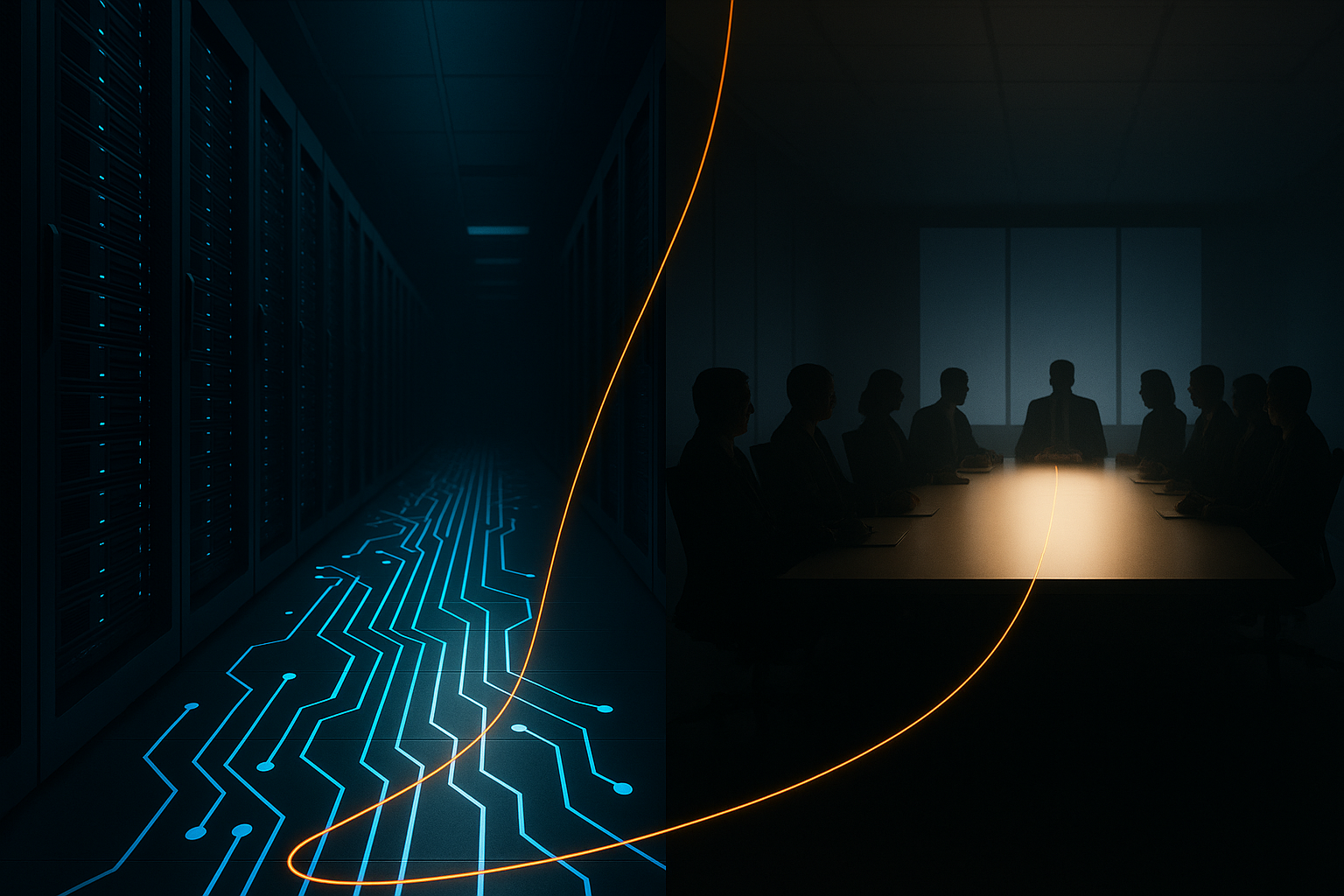
There is a quiet but widening fault line running through the engineering floors of SaaS companies right now. On one side, you have backend engineers doing what they have always done: treating per-tenant AI agent governance as an architecture challenge. Rate limits, token budgets, prompt isolation, data sandboxing. Clean, solvable, satisfying. On the other side, you have a growing cohort of product leaders, legal teams, and board members who have started asking questions that no database schema or middleware layer can fully answer.
The uncomfortable truth is this: in 2026, per-tenant AI agent governance is no longer a backend problem with business implications. It is a board-level business problem with a backend component. Engineers who have not internalized that distinction are not just missing context. They are actively building the wrong things, at the wrong level of abstraction, and optimizing for the wrong outcomes. And their competitors who have internalized it are quietly eating their lunch.
How We Got Here: The Invisible Escalation
For most of the early agentic AI era, the multi-tenant governance conversation stayed safely in the realm of infrastructure. When you gave each of your enterprise customers their own AI agent, the questions were technical by nature: How do you prevent tenant A's data from leaking into tenant B's context window? How do you enforce per-tenant tool call permissions? How do you audit agent actions at a granular enough level to satisfy a SOC 2 auditor?
Those are real problems. They still matter. But they were solvable with good engineering, and so engineering teams solved them, checked the boxes, and moved on.
What nobody fully anticipated was the compounding effect of three simultaneous shifts happening in 2025 and now accelerating through 2026:
- Agents gained real-world authority. AI agents are no longer summarizing documents. They are sending emails on behalf of executives, executing financial transactions, modifying production databases, and interacting with third-party APIs that carry legal liability. The blast radius of a governance failure is no longer a bad response in a chat UI. It is a wire transfer to the wrong account, a contract sent to the wrong counterparty, or a patient record accessed without authorization.
- Regulatory frameworks caught up. The EU AI Act's high-risk system provisions are now in full enforcement mode. The US AI liability frameworks that were in draft form through 2025 have matured into enforceable standards in multiple jurisdictions. Sector-specific regulators in finance, healthcare, and legal services have issued explicit guidance on agentic AI systems. Governance failures are no longer just embarrassing. They are litigable.
- Enterprise buyers became sophisticated. The Fortune 500 procurement teams signing your largest contracts now have AI governance questionnaires that run to forty pages. They are asking about per-tenant audit trails, agent rollback capabilities, human-in-the-loop override mechanisms, and explainability reports. These are not technical due diligence questions. They are business continuity questions, and they are being reviewed by general counsel and the CISO before a contract is signed.
The result is that a governance failure in your multi-tenant AI agent platform is no longer a bug report. It is a board agenda item. And if it is a board agenda item for your customers, it needs to be a board agenda item for you, too.
The Engineer's Blind Spot: Solving for Correctness Instead of Accountability
Here is where the fault line becomes a competitive liability. Engineers are trained to think about correctness. Does the system behave as specified? Are the boundaries enforced? Is the data isolated? These are the right questions for building a reliable system. They are the wrong questions for managing a business risk.
Business risk governance asks a different set of questions entirely:
- When tenant X's AI agent takes an action that causes harm, who is accountable, and can we demonstrate that accountability to a regulator or a jury?
- Can we provide tenant X with a complete, human-readable audit trail of every decision their agent made, the reasoning it used, and the data it accessed, on demand, within a contractually guaranteed timeframe?
- Do we have per-tenant governance policies that the tenant themselves can configure, override, and attest to, so that liability is appropriately shared rather than entirely absorbed by us as the platform provider?
- When a tenant's compliance requirements change because of a new regulation in their jurisdiction, how quickly can we adapt their agent's governance model without a code deployment?
Notice that none of these questions are answered by a well-designed permission middleware or a robust tenant isolation layer. They require governance infrastructure that is legible to non-engineers, configurable without engineering intervention, and auditable in ways that satisfy legal standards rather than just technical ones.
The engineer who hears these requirements and thinks "I'll add another column to the audit log table" is not wrong, exactly. They are just operating at the wrong level of abstraction. The competitor who hears these requirements and thinks "I need to build a governance plane that my customers' compliance officers can operate independently" is building a product with a fundamentally different value proposition.
What Board-Level Thinking Actually Changes in the Architecture
This is not an argument that backend engineers should stop engineering. It is an argument that the design inputs to the engineering work need to change. When you treat per-tenant AI agent governance as a board-level business risk, several concrete architectural decisions shift:
1. Audit Logs Become First-Class Products, Not Afterthoughts
Most multi-tenant AI platforms today generate audit logs that are technically complete but practically unusable by anyone outside the engineering team. They are structured for debugging, not for compliance reporting or legal discovery. Board-level governance thinking forces you to design audit infrastructure that produces outputs a compliance officer can read, a regulator can ingest, and an attorney can present in court. That is a fundamentally different design brief, and it changes your data model, your retention policies, your query interface, and your export formats from day one.
2. Governance Policies Become Tenant-Configurable, Not Hardcoded
When governance is a technical problem, you define the rules and enforce them uniformly. When governance is a business risk, you recognize that different tenants have different regulatory obligations, different risk tolerances, and different accountability structures. A healthcare tenant operating under HIPAA has different agent governance requirements than a marketing SaaS tenant. A financial services tenant in the EU has different requirements than one operating exclusively in jurisdictions with lighter AI oversight.
This means your governance layer needs to be a policy engine that tenants can configure through a self-service interface, not a set of hardcoded rules in your application layer. It means building something closer to a governance-as-a-feature product than a governance-as-a-constraint infrastructure layer.
3. Human-in-the-Loop Becomes a Configurable Business Control, Not an Engineering Toggle
In 2026, the most legally significant question about your AI agent platform is often not "what did the agent do?" but "was there an appropriate human review opportunity before the agent did it?" Regulators and courts are increasingly distinguishing between autonomous agent actions and agent actions that passed through a human approval gate. Your per-tenant governance architecture needs to make that distinction not just technically possible but operationally manageable. Tenants need to be able to define which agent action categories require human review, who in their organization is authorized to approve them, and what the escalation path is when approvals are delayed. That is a workflow product, not a feature flag.
4. Explainability Becomes a Contractual Deliverable, Not a Nice-to-Have
The growing wave of enterprise AI contracts now includes explicit clauses requiring the platform provider to deliver per-agent decision explanations on demand. When a tenant's AI agent denies a customer a loan, recommends a medical treatment, or terminates a supplier relationship, the tenant needs to be able to explain that decision to the affected party in plain language. That is not a technical requirement about model interpretability. It is a contractual and regulatory requirement about documentation, and it needs to be engineered as such from the ground up.
The Competitive Moat You Are Missing
Here is the strategic argument that should concern any engineering-led SaaS company building on top of agentic AI: the companies that have elevated per-tenant governance to a board-level concern are building a competitive moat that is very difficult to retrofit.
Governance infrastructure that is legible, configurable, and legally defensible is not something you bolt on after the fact. It requires design decisions that touch your data model, your API surface, your tenant onboarding flow, your contractual language, and your internal escalation processes. Companies that are building this from the ground up in 2026 will have a structural advantage in enterprise sales cycles by 2027 that late movers will struggle to close.
More importantly, they will have built something that scales in a way that pure technical governance does not. When your governance policies are tenant-configurable and self-service, your sales team can close deals with highly regulated customers without requiring a custom engineering engagement for each one. When your audit infrastructure produces compliance-ready outputs automatically, your customer success team can renew contracts in regulated industries without a manual data extraction project. The governance investment pays for itself in reduced friction across the entire customer lifecycle.
A Message to Engineering Leaders Specifically
If you are a VP of Engineering, a Staff Engineer, or a Principal Architect at a company building multi-tenant AI agent products, the ask here is not to become a compliance officer or a risk manager. It is to do something harder: to bring the board-level framing of this problem into your architectural decision-making before your product roadmap forces you to.
That means actively pulling your legal, compliance, and enterprise sales teams into your governance architecture reviews, not just your security reviews. It means treating "can a compliance officer operate this independently?" as a first-class design constraint alongside "does this scale to ten thousand tenants?" It means reading the AI liability frameworks coming out of Brussels, Washington, and Singapore not as legal noise but as design requirements.
It also means being willing to slow down the feature velocity on your agent capabilities to build the governance plane that makes those capabilities enterprise-sellable. That is a hard conversation to have with a product team that is excited about what agents can do. But it is the right conversation to have in 2026, before your competitors have it for you.
The Bottom Line
Per-tenant AI agent governance is one of those rare problems that looks technical on the surface and is actually organizational, legal, and strategic underneath. The engineers and engineering leaders who see only the technical surface are building products that will hit a hard ceiling in enterprise sales, regulatory scrutiny, and customer retention. The ones who see the full depth of the problem are building products that will define the enterprise AI platform market for the next decade.
The board does not care about your tenant isolation middleware. They care about whether an agent failure will end up on the front page of the Financial Times, in a regulator's enforcement action, or in a customer's breach-of-contract lawsuit. Your job, as the person building the system, is to make sure the answer to all three is no. And that requires thinking at a level of abstraction that no amount of clean backend code alone can reach.
The companies that understand this in 2026 will not just build better software. They will build more defensible businesses. And in the enterprise AI market, defensibility is the only moat that lasts.