Why Backend Engineers Who Treat AI Agent Versioning as a Software Problem Are Sleepwalking Into a Behavioral Drift Crisis , And What a Model-Version-Aware Routing and Regression Detection Architecture Actually Looks Like in 2026
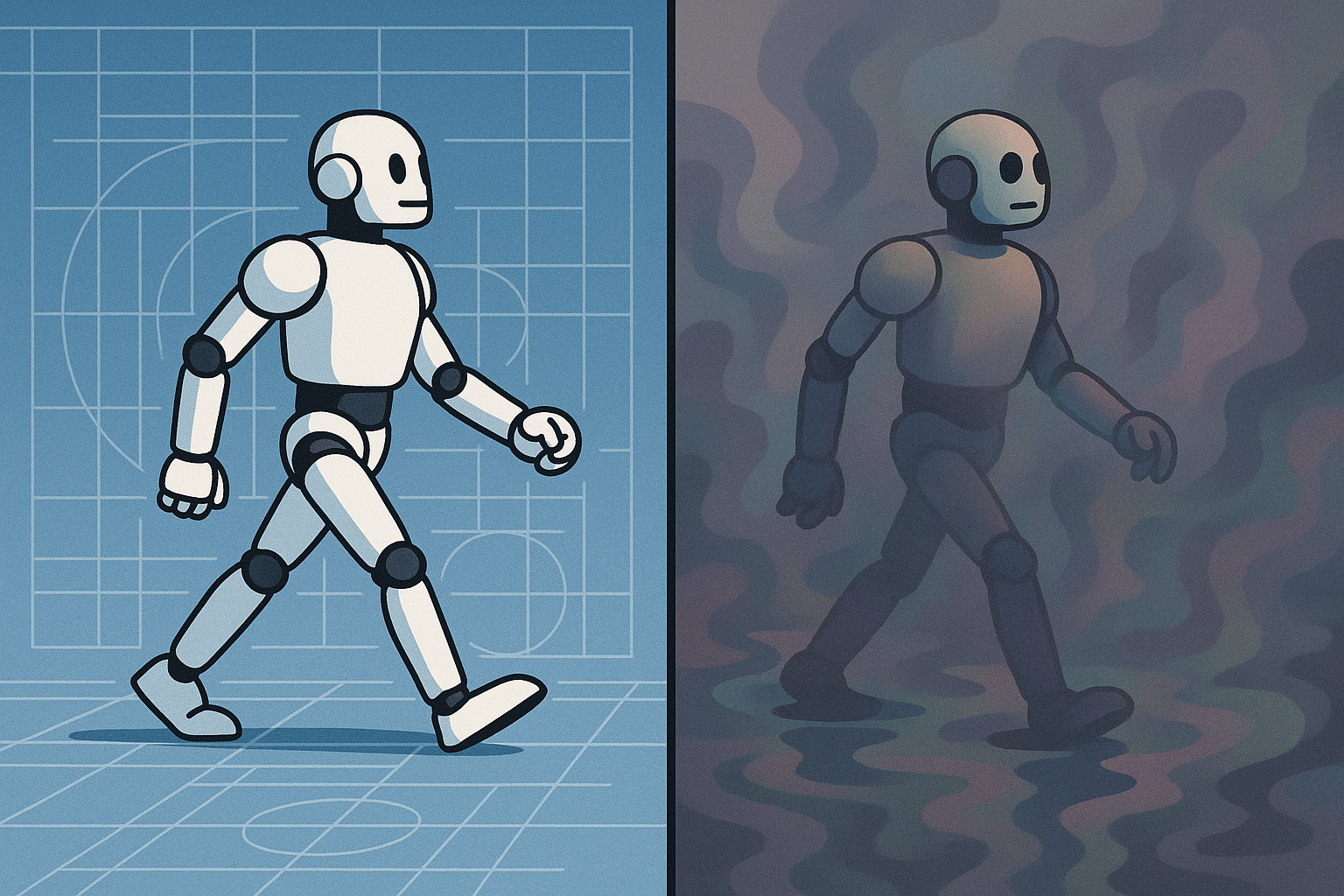
There is a particular kind of confidence that comes from having solved hard problems before. Backend engineers are, as a rule, very good at solving hard problems. Distributed systems, API versioning, database migrations, zero-downtime deployments: these are the battlegrounds where modern backend engineers have earned their scars. And so, when AI agents arrived in production systems at scale, many of those same engineers did what any reasonable expert would do. They reached for the tools and mental models that had served them well.
They started treating AI agent versioning as a software problem.
This is an understandable mistake. It is also, in 2026, one of the most quietly dangerous architectural decisions a team can make. The behavioral drift crisis is not coming. For many teams running AI agents in production, it is already here. It just does not look like a crisis yet, because the failures are subtle, cumulative, and almost perfectly designed to slip past conventional monitoring.
This post is about why that happens, and more importantly, what a real solution looks like architecturally.
The Core Category Error: Versions Are Not Releases
In traditional software, a version is a snapshot of deterministic behavior. v2.4.1 does exactly what v2.4.1 did yesterday, and what it will do tomorrow. The contract between a version number and a behavior is total. This is the foundation of every versioning strategy in software engineering, from semantic versioning to blue-green deployments to canary releases. The version is the behavior.
With large language model (LLM)-backed AI agents, this contract is fundamentally broken. And it is broken in at least four distinct ways that most backend engineers have not fully internalized:
- Provider-side silent updates: Model providers, including OpenAI, Anthropic, Google, and Mistral, routinely update the weights, RLHF fine-tuning, and safety filters of models that share the same public version identifier.
gpt-4oin March 2026 is not the same model it was in October 2025. The API endpoint is identical. The behavior is not. - Context window sensitivity: The same model, given the same prompt, can produce meaningfully different outputs based on the structure and length of the surrounding context. Agents that accumulate memory or tool-call history across turns are especially vulnerable to this.
- Temperature and sampling non-determinism: Even with temperature set to zero, some providers do not guarantee fully deterministic outputs across infrastructure changes, load balancing shifts, or hardware generation upgrades on their side.
- Tool schema evolution: As the tools available to an agent change, the model's reasoning about which tool to call and how to call it shifts, even if the underlying model weights have not changed at all.
Each of these is a behavioral change vector that has no analogue in traditional software versioning. Treating them with a git tag and a changelog is not a versioning strategy. It is a ritual that provides the feeling of control without the substance of it.
What Behavioral Drift Actually Looks Like in Production
Behavioral drift is insidious because it rarely manifests as an outright error. Your error rates stay flat. Your latency dashboards look fine. Your agent still completes tasks. But the way it completes them has shifted, and the shift is often invisible to standard observability tooling.
Here are the real patterns teams encounter:
Tone and Persona Drift
A customer-facing support agent that was calibrated to be warm, concise, and empathetic gradually becomes more verbose, more hedged, or more formal after a provider-side model update. No alert fires. Customer satisfaction scores begin a slow decline that the team attributes to seasonal factors or product changes. Three months later, someone notices the agent's average response length has increased by 40 percent.
Reasoning Path Drift
A multi-step reasoning agent that was reliably choosing Tool A for a class of queries begins preferring Tool B after a model update. Tool B produces valid outputs, so no error is thrown. But Tool B is slower, more expensive, and occasionally produces outputs that downstream systems handle less gracefully. The agent has not broken. It has drifted into a suboptimal behavioral basin that your regression suite cannot see because your regression suite tests for correctness, not for behavioral consistency.
Refusal and Safety Boundary Drift
A model update tightens safety filters in ways that cause your agent to refuse a category of requests it previously handled. These refusals are not errors from the model's perspective. They are correct behavior according to the new model. But from your product's perspective, you have a silent capability regression that your users encounter as unexplained failures.
Structured Output Format Drift
Your agent produces JSON outputs that downstream services parse. A model update changes the subtle patterns in how the model structures nested objects or handles edge cases in optional fields. Your JSON schema validation passes. But your downstream service's assumptions about field ordering, whitespace, or null handling break in ways that only surface under specific production conditions.
Why the Standard MLOps Playbook Is Not Enough
The MLOps community has developed solid practices for managing model drift in traditional machine learning pipelines: data drift detection, model performance monitoring, shadow deployments, champion-challenger frameworks. These are valuable. They are also insufficient for AI agent systems, for a specific structural reason.
Traditional ML drift detection assumes you have a ground truth label, or at least a clear performance metric, that you can measure against a baseline. An AI agent operating in an open-ended task space often produces outputs where ground truth is expensive, delayed, or genuinely ambiguous. You cannot run a standard A/B test on "did the agent give good advice" in real time. The feedback loop is too long and too noisy.
What you need instead is a behavioral fingerprinting approach: a way to detect that the agent's behavior has changed, independent of whether that change is "good" or "bad," so that you can make an intentional decision about whether to accept it. The goal is not automated correctness checking. It is automated drift detection that triggers human-in-the-loop review.
The Architecture: Model-Version-Aware Routing with Behavioral Regression Detection
Here is what a production-grade architecture for this problem actually looks like in 2026. This is not a vendor pitch. It is a set of design principles and components that you can implement with the infrastructure you likely already have.
Layer 1: The Model Version Manifest
The foundation is a centralized, versioned manifest that treats model configurations as first-class infrastructure artifacts, not application configuration. This manifest captures:
- Provider model identifier: The specific model string passed to the API (e.g.,
anthropic.claude-opus-5-20260201) - Observed behavioral hash: A hash computed from a canonical set of probe outputs (described below)
- Capability declarations: What this model version is known to support (tool calling schema version, context window size, structured output reliability rating)
- Behavioral baseline vectors: Embedding-space representations of expected output distributions for a curated probe set
- Promotion status: Whether this model version has passed behavioral regression gates for each agent type in your system
This manifest lives in version control. Changes to it go through code review. It is the source of truth that your routing layer consults at request time.
Layer 2: The Behavioral Probe Suite
A behavioral probe suite is a curated set of inputs designed to be sensitive to behavioral drift without requiring ground truth labels. Think of it as a behavioral fingerprint generator. The probes are not comprehensive tests of correctness. They are carefully chosen inputs that are known to produce outputs that vary in predictable ways when model behavior shifts.
Good probes share these properties:
- They cover the behavioral dimensions you care about: tone, reasoning path selection, refusal boundaries, output format adherence, and tool selection patterns.
- They are stable inputs, meaning the "correct" answer does not change over time, so any output change is attributable to model behavior rather than prompt relevance.
- They are cheap to run, because you need to run them frequently (on every deployment, and on a scheduled basis against live production endpoints).
- They produce outputs that are amenable to embedding-space comparison, so you can measure behavioral distance without requiring a human judge for every probe.
The output of the probe suite is a behavioral fingerprint: a vector or set of vectors that characterizes the model's current behavior. When this fingerprint diverges from the baseline fingerprint by more than a calibrated threshold, you have detected behavioral drift.
Layer 3: Model-Version-Aware Request Routing
The routing layer sits between your agent orchestration logic and your model provider API calls. Its job is to ensure that each agent type is always calling the model version that has been approved for that agent, and to detect when the approved version's behavior has shifted.
The router maintains a local cache of the current behavioral fingerprint for each model version it is routing to. On a configurable schedule (every hour, every deployment, or triggered by an external signal), it runs a lightweight subset of the probe suite and compares the result to the cached fingerprint. If drift is detected, it does one of three things depending on your configured policy:
- Alert and continue: Log the drift, fire an alert to your on-call channel, and continue routing to the drifted model while a human reviews. Appropriate for low-stakes agents.
- Shadow and hold: Begin routing a percentage of traffic to a shadow instance while continuing to serve from the last known-good version. Appropriate for medium-stakes agents.
- Hard pin and escalate: Immediately pin all traffic to the last known-good model version (which may require falling back to a self-hosted or pinned snapshot) and escalate to your AI platform team. Appropriate for high-stakes agents in financial, medical, or legal contexts.
Layer 4: Continuous Behavioral Regression Gates
Before any model version is promoted to production for a given agent type, it must pass a behavioral regression gate. This is different from a traditional test suite. A behavioral regression gate does not ask "is the output correct?" It asks "is the output distribution consistent with what we have approved?"
The gate runs the full probe suite against the candidate model version and computes three signals:
- Behavioral distance score: The cosine distance between the candidate's behavioral fingerprint and the approved baseline in embedding space. Must be below a calibrated threshold.
- Format adherence rate: The percentage of structured output probes where the candidate's output passes schema validation and downstream parsing. Must exceed a minimum threshold.
- Tool selection consistency score: For agents with tool-calling capabilities, the percentage of tool-selection probes where the candidate chooses the same tool as the approved baseline. Significant deviations trigger human review even if the distance score passes.
If any signal fails its threshold, the model version is not promoted. A human review is required before promotion can proceed. The gate output is logged to your manifest as an audit trail.
Layer 5: Production Behavioral Telemetry
Even after promotion, behavioral monitoring continues in production. The telemetry layer captures a sampled stream of production inputs and outputs and runs them through a lightweight behavioral analysis pipeline:
- Output embedding drift: Continuously compute the rolling distribution of output embeddings and alert when the distribution shifts significantly from the baseline established at promotion time.
- Tool call pattern monitoring: Track the distribution of tool selections per agent type and alert on statistically significant shifts in tool preference.
- Refusal rate tracking: Monitor the rate at which the agent declines to complete tasks, broken down by task category. A sudden increase in refusals for a category that was previously handled is a strong signal of safety boundary drift.
- Latency and token distribution: Track the distribution of output token counts and latency. A shift in these distributions often precedes or accompanies behavioral drift and can serve as an early warning signal.
The Organizational Dimension: Who Owns Behavioral Integrity?
Architecture alone is not enough. The behavioral drift problem also has an organizational dimension that most teams have not resolved. In a traditional backend system, the question of "who owns the behavior of this service" has a clear answer: the team that owns the service. But in an AI agent system, behavior is a product of the interaction between the prompt, the model, the tools, and the orchestration logic. Ownership of behavior is diffuse by default.
The teams that are handling this well in 2026 have made one structural choice that makes everything else easier: they have designated a behavioral integrity function, whether that is a dedicated role, a working group, or a formal responsibility assigned to their AI platform team. This function owns the probe suite, the manifest, the regression gates, and the escalation policy. It is the organizational equivalent of a security team for behavioral risk.
Without this function, behavioral drift review becomes everyone's responsibility and therefore no one's priority. Alerts get acknowledged and closed without investigation. Probe suites go stale. Regression gates get bypassed under release pressure. The architecture degrades from a safety system into a compliance checkbox.
A Word on Self-Hosted and Pinned Models
One reasonable response to provider-side silent updates is to self-host models or use providers that offer true version pinning with immutable model snapshots. This is a valid strategy, and in 2026, the open-weight model ecosystem (Llama 4 variants, Mistral's open releases, DeepSeek's continued contributions) has made self-hosting genuinely viable for many use cases.
But self-hosting is not a complete solution to the behavioral drift problem. It eliminates provider-side drift while introducing operational complexity that creates its own failure modes. Your infrastructure team now owns model updates, hardware provisioning, and inference optimization. The behavioral drift risk does not disappear; it shifts from "the provider changed something" to "our infrastructure team upgraded something." The same architecture described above applies. You still need probe suites, behavioral fingerprinting, and regression gates. The source of potential drift has changed. The need to detect and manage it has not.
The Deeper Mindset Shift Required
The engineers who build the most resilient AI agent systems in 2026 share a common mental model: they think of a deployed AI agent not as a versioned software artifact but as a behavioral contract with a probabilistic fulfillment guarantee. The contract specifies what the agent should do. The guarantee is probabilistic because the underlying model is probabilistic. Their job is to monitor the fulfillment rate of that contract continuously, detect when it degrades, and respond with the appropriate intervention.
This is a fundamentally different relationship with software reliability than backend engineers are trained for. It requires accepting that you cannot achieve deterministic behavioral guarantees, and building systems that are robust to probabilistic drift rather than systems that assume determinism. It requires investing in behavioral observability as seriously as you invest in system observability. And it requires organizational structures that treat behavioral integrity as a first-class engineering concern, not an afterthought.
Conclusion: The Drift Is Already Happening
If your team is running AI agents in production today and you do not have a behavioral probe suite, a model version manifest, drift-aware routing, and behavioral regression gates, then you are not managing behavioral drift. You are hoping it is not happening. In 2026, with the pace of model updates across every major provider, with the proliferation of multi-agent systems where drift in one agent propagates through a pipeline, and with the increasing stakes of AI agent decisions in production workflows, hope is not an architecture.
The good news is that the architecture described here is buildable with existing infrastructure. It does not require exotic tooling. It requires a clear-eyed recognition that AI agent versioning is a behavioral problem that happens to have a software component, not a software problem that happens to involve AI. That single reframe is the difference between teams that will be surprised by behavioral drift and teams that will detect it, understand it, and manage it deliberately.
The sleepwalking has to stop. The behavioral drift crisis is quiet, but it is not invisible, if you know what to look for and you have built the systems to look.