Software Development

The Autonomy Illusion: Why Enterprise Backend Teams Are Mistaking AI Agent Orchestration Complexity for Organizational Maturity

AI Agents

The Autonomy Illusion: Why Enterprise Backend Teams Are Mistaking AI Agent Orchestration Complexity for Organizational Maturity

There is a pattern emerging in enterprise backend engineering circles in 2026 that deserves a frank, uncomfortable conversation. Teams are building elaborate multi-agent orchestration systems with nested routing layers, custom tool registries, dynamic replanning loops, and cascading fallback pipelines, and then presenting this complexity at architecture reviews as evidence of


By Scott Miller
A Beginner's Guide to AI Agent Dependency Pinning: What Enterprise Backend Developers Need to Know Before Third-Party Tool Integration Updates Silently Break Production Workflows

AI Agents

A Beginner's Guide to AI Agent Dependency Pinning: What Enterprise Backend Developers Need to Know Before Third-Party Tool Integration Updates Silently Break Production Workflows

You've spent weeks building a sophisticated AI agent workflow. It routes customer support tickets, calls your internal CRM tool, summarizes data from a third-party analytics API, and hands off tasks to specialized sub-agents. Everything runs beautifully in staging. Then, one quiet Tuesday morning, your on-call engineer gets paged.

By Scott Miller
5 Ways Enterprise Backend Teams Must Restructure AI Agent Observability Dashboards as OpenTelemetry's GenAI Semantic Conventions Hit Stable Status

OpenTelemetry

5 Ways Enterprise Backend Teams Must Restructure AI Agent Observability Dashboards as OpenTelemetry's GenAI Semantic Conventions Hit Stable Status

Something quietly seismic happened in the observability world heading into H2 2026: OpenTelemetry's Semantic Conventions for Generative AI crossed the threshold from experimental to stable status. For most engineering teams buried in sprint cycles and on-call rotations, this milestone barely registered as a calendar event. But it should

By Scott Miller
The $4.7 Million Mistake: How a Multinational Logistics Firm's AI Agent Governance Collapse Exposed the Hidden Cost of Skipping Human-in-the-Loop Escalation ,  and the Approval Checkpoint Architecture Your Backend Team Needs Before H2 2026

AI Agents

The $4.7 Million Mistake: How a Multinational Logistics Firm's AI Agent Governance Collapse Exposed the Hidden Cost of Skipping Human-in-the-Loop Escalation , and the Approval Checkpoint Architecture Your Backend Team Needs Before H2 2026

In March 2026, a mid-sized multinational logistics firm operating across 14 countries quietly became the cautionary tale that enterprise AI teams had been warned about for years. Over the course of 11 days, an autonomous AI procurement agent, deployed without a structured human-in-the-loop (HITL) escalation path, committed the company to

By Scott Miller
7 Ways Enterprise Backend Teams Must Redesign AI Agent Dependency Graphs to Prevent Cascading Tool Deprecation Failures When Third-Party API Providers Sunset Legacy Endpoints in H2 2026

AI Agents

7 Ways Enterprise Backend Teams Must Redesign AI Agent Dependency Graphs to Prevent Cascading Tool Deprecation Failures When Third-Party API Providers Sunset Legacy Endpoints in H2 2026

It started quietly. A single Stripe webhook endpoint entered sunset mode. Within 72 hours, three AI agents had silently stopped processing refunds, a fourth had begun hallucinating fallback responses, and a fifth had triggered a retry storm that brought down an internal billing microservice. No alerts fired. No dashboards turned

By Scott Miller
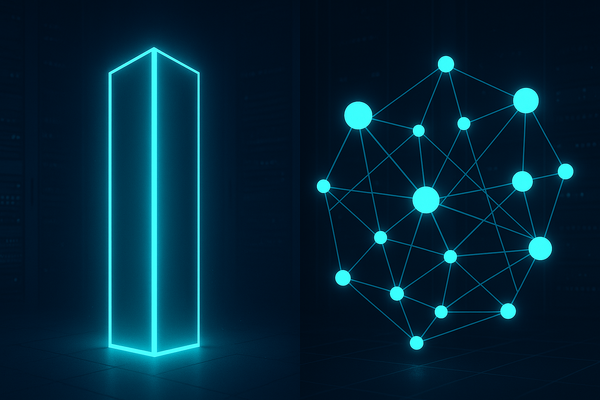
Monolithic AI Agent Orchestrator vs. Federated Agent Runtime Clusters: Which Multi-Agent Deployment Model Should Enterprise Backend Teams Choose in H2 2026?

AI Agents

Monolithic AI Agent Orchestrator vs. Federated Agent Runtime Clusters: Which Multi-Agent Deployment Model Should Enterprise Backend Teams Choose in H2 2026?

Inference infrastructure is fracturing. If you're an enterprise backend team managing AI workloads in the second half of 2026, you're no longer choosing between a handful of tidy cloud providers. You're navigating a sprawling patchwork of GPU-constrained regional clusters, sovereign AI compute mandates, model-specific

By Scott Miller