Enterprise AI

The Agent Observability Gap: Why Enterprise Backend Teams Will Lose Control of Multi-Agent Pipeline Debugging in H2 2026 Without a Unified Tracing Strategy That Spans Foundation Model Boundaries

AI Observability

The Agent Observability Gap: Why Enterprise Backend Teams Will Lose Control of Multi-Agent Pipeline Debugging in H2 2026 Without a Unified Tracing Strategy That Spans Foundation Model Boundaries

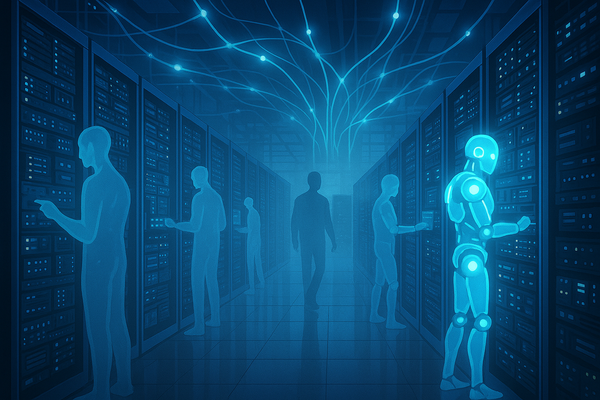
There is a slow-moving crisis unfolding inside enterprise engineering organizations right now, and most teams will not feel its full weight until a production incident exposes it at the worst possible moment. Multi-agent AI pipelines, once a proof-of-concept curiosity, have become load-bearing infrastructure. Agents are routing customer requests, triggering financial

By Scott Miller
RAG vs. Fine-Tuning for Enterprise Multi-Agent Pipelines in 2026: Which Approach Actually Wins When Your Domain Knowledge Changes Faster Than Your Retraining Budget?

RAG

RAG vs. Fine-Tuning for Enterprise Multi-Agent Pipelines in 2026: Which Approach Actually Wins When Your Domain Knowledge Changes Faster Than Your Retraining Budget?

Here is a scenario that should sound familiar to any enterprise AI architect working in 2026: your legal team updates compliance policies every six weeks, your product catalog turns over 30% of its SKUs each quarter, and your internal knowledge base grows by hundreds of documents a month. Meanwhile, your

By Scott Miller
The Apple Intelligence Developer Tax: Why Enterprise Backend Teams Building Multi-Agent Pipelines Must Rethink Their On-Device vs. Cloud Inference Split After WWDC 2026's Siri Overhaul

Apple Intelligence

The Apple Intelligence Developer Tax: Why Enterprise Backend Teams Building Multi-Agent Pipelines Must Rethink Their On-Device vs. Cloud Inference Split After WWDC 2026's Siri Overhaul

Let me say something that will make a certain type of senior iOS engineer deeply uncomfortable: the architectural decisions your backend team made about on-device versus cloud inference in late 2024 are now wrong. Not slightly miscalibrated. Structurally, economically, and operationally wrong. WWDC 2026 did not just ship a Siri

By Scott Miller
How to Migrate Your Enterprise Multi-Agent Pipeline's Embedding Strategy When Your Vector Database Vendor Announces Deprecation of Legacy Index Formats Mid-Production Cycle

vector database

How to Migrate Your Enterprise Multi-Agent Pipeline's Embedding Strategy When Your Vector Database Vendor Announces Deprecation of Legacy Index Formats Mid-Production Cycle

It always seems to happen at the worst possible time. Your enterprise multi-agent pipeline is humming along in production, serving thousands of requests per day, and then the email arrives: your vector database vendor is deprecating its legacy index format. You have a migration window. The clock is ticking. And

By Scott Miller
7 Ways Enterprise Backend Teams Are Quietly Breaking Their Multi-Agent Pipelines by Misusing Vector Database Retrieval as a Substitute for Proper Agent State Management

Multi-Agent Systems

7 Ways Enterprise Backend Teams Are Quietly Breaking Their Multi-Agent Pipelines by Misusing Vector Database Retrieval as a Substitute for Proper Agent State Management

There is a silent crisis spreading across enterprise AI infrastructure in 2026, and most backend teams do not even know they are the ones causing it. As multi-agent systems have moved from research novelty to production backbone, a seductive shortcut has emerged: using vector database retrieval to carry the weight

By Scott Miller
A Beginner's Guide to Agent Context Windows: Why Enterprise Backend Developers Keep Hitting Silent Failures When Long-Running Multi-Agent Pipelines Exhaust Their Token Budgets Mid-Task

AI Agents

A Beginner's Guide to Agent Context Windows: Why Enterprise Backend Developers Keep Hitting Silent Failures When Long-Running Multi-Agent Pipelines Exhaust Their Token Budgets Mid-Task

You pushed a new multi-agent pipeline to staging. It ran for 40 minutes, processed dozens of tool calls, and then... nothing. No exception. No stack trace. No alert in your observability dashboard. The task just quietly stopped. If this story sounds familiar, you have almost certainly met one of the

By Scott Miller