
Backend Engineering

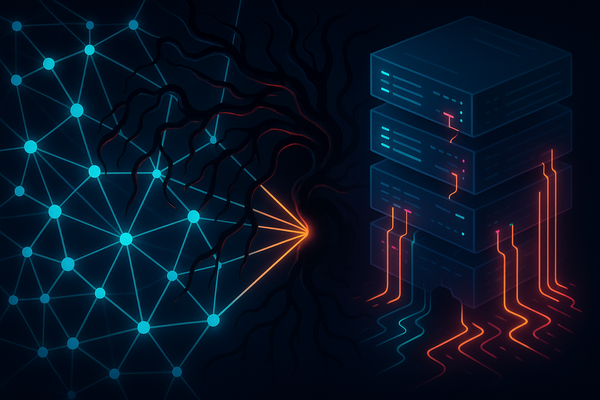
Centralized AI Agent Orchestration vs. Decentralized Multi-Agent Mesh: Why the Conductor Pattern Is Quietly Killing Your Throughput in 2026

AI Agents

Centralized AI Agent Orchestration vs. Decentralized Multi-Agent Mesh: Why the Conductor Pattern Is Quietly Killing Your Throughput in 2026

There is a quiet architectural crisis unfolding inside the backend systems of companies that moved fast to adopt agentic AI. Teams built their first multi-agent pipelines, reached for the most intuitive design pattern available, and landed on the conductor model: one orchestrator agent at the center, routing tasks, managing state,

By Scott Miller
7 Trends Reshaping How Backend Engineers Will Design AI Agent Audit Trails and Compliance Reporting Pipelines by Q4 2026

AI Agents

7 Trends Reshaping How Backend Engineers Will Design AI Agent Audit Trails and Compliance Reporting Pipelines by Q4 2026

There is a quiet infrastructure crisis building inside every organization that has deployed autonomous AI agents at scale. The agents are making decisions. They are calling APIs, reading databases, sending emails, triggering financial transactions, and escalating support tickets. And when a regulator, an internal auditor, or a legal team asks

By Scott Miller
7 Ways Backend Engineers Are Misconfiguring AI Agent Sandboxing and Code Execution Environments (And the Isolation Architecture That Fixes It)

AI Security

7 Ways Backend Engineers Are Misconfiguring AI Agent Sandboxing and Code Execution Environments (And the Isolation Architecture That Fixes It)

AI agents that write, execute, and iterate on code are no longer a research novelty. In 2026, they are a production reality. Frameworks like autonomous coding agents, LLM-powered CI pipelines, and multi-step tool-using systems are running inside the same infrastructure that serves paying customers, processes sensitive data, and operates under

By Scott Miller
Why Backend Engineers Who Treat GPT-5.4's Reduced Error Rates as a Reliability Guarantee Are Sleepwalking Into a False Confidence Crisis ,  And What a Model-Upgrade-Aware Fault Tolerance and Behavioral Regression Architecture Actually Looks Like in 2026

AI Reliability

Why Backend Engineers Who Treat GPT-5.4's Reduced Error Rates as a Reliability Guarantee Are Sleepwalking Into a False Confidence Crisis , And What a Model-Upgrade-Aware Fault Tolerance and Behavioral Regression Architecture Actually Looks Like in 2026

There is a quiet, comfortable lie spreading across backend engineering teams in 2026: that a lower benchmark error rate on the latest GPT model release means your production system is more reliable. It is a seductive belief. OpenAI ships GPT-5.4, the release notes cite measurable reductions in hallucination rates,

By Scott Miller