AI Infrastructure

How Enterprise Backend Teams Should Design a Multi-Agent Pipeline Observability Stack That Distinguishes Between Foundation Model Degradation and Application-Layer Bugs

multi-agent AI

How Enterprise Backend Teams Should Design a Multi-Agent Pipeline Observability Stack That Distinguishes Between Foundation Model Degradation and Application-Layer Bugs

There is a specific kind of chaos that hits an enterprise on-call engineer at 2 a.m. when a multi-agent pipeline starts returning garbage. The traces look suspicious. The outputs are wrong. The latency has spiked. And in the incident channel, two camps form almost instantly: the team that owns


By Scott Miller
Why Enterprise Backend Teams That Haven't Stress-Tested Their Multi-Agent Pipelines Against Foundation Model Provider Capacity Throttling During Peak Demand Windows Will Face a Silent Availability Crisis Before Q4 2026

multi-agent AI

Why Enterprise Backend Teams That Haven't Stress-Tested Their Multi-Agent Pipelines Against Foundation Model Provider Capacity Throttling During Peak Demand Windows Will Face a Silent Availability Crisis Before Q4 2026

There is a specific kind of system failure that engineers fear most: not the loud, dramatic crash that triggers every alert in the monitoring stack, but the quiet degradation that silently erodes availability while dashboards stay green. In 2026, that failure mode has a name, and most enterprise backend teams

By Scott Miller
A Beginner's Guide to Prompt Caching: What Enterprise Backend Developers Need to Know Before Scaling Repeated-Context Calls Across Multi-Agent Pipelines

prompt caching

A Beginner's Guide to Prompt Caching: What Enterprise Backend Developers Need to Know Before Scaling Repeated-Context Calls Across Multi-Agent Pipelines

You have just finished wiring together a multi-agent pipeline that feels genuinely impressive. One agent retrieves documents, another reasons over them, a third formats the output, and a fourth validates the result. You run it in staging. It works beautifully. Then you look at your token usage dashboard and feel

By Scott Miller
Why Enterprise Backend Teams Treating Multi-Agent Pipeline SLAs Like Traditional Microservice SLAs Are Setting Themselves Up for a Contractual Nightmare With Foundation Model Providers by Q4 2026

multi-agent AI

Why Enterprise Backend Teams Treating Multi-Agent Pipeline SLAs Like Traditional Microservice SLAs Are Setting Themselves Up for a Contractual Nightmare With Foundation Model Providers by Q4 2026

There is a quiet but dangerous assumption spreading through enterprise backend teams right now, and it is going to cost organizations real money, real credibility, and real legal headaches before the year is out. The assumption goes something like this: "We already know how to write SLAs. We'

By Scott Miller
7 Ways Enterprise Backend Teams Are Miscalculating the True Latency Cost of Chaining Specialized Micro-Agents Instead of Using Monolithic Agents in Production Multi-Agent Pipelines in 2026

multi-agent AI

7 Ways Enterprise Backend Teams Are Miscalculating the True Latency Cost of Chaining Specialized Micro-Agents Instead of Using Monolithic Agents in Production Multi-Agent Pipelines in 2026

The shift to multi-agent AI architectures has been one of the defining infrastructure stories of the past two years. Enterprise backend teams, seduced by the elegant modularity of specialized micro-agents, have been building production pipelines where a router agent hands off to a retrieval agent, which hands off to a

By Scott Miller
7 Cost Overruns Enterprise Backend Teams Keep Triggering by Mismanaging Token Budgets Across Multi-Model Multi-Agent Pipelines When Foundation Model Providers Reprice Mid-Contract

LLM cost management

7 Cost Overruns Enterprise Backend Teams Keep Triggering by Mismanaging Token Budgets Across Multi-Model Multi-Agent Pipelines When Foundation Model Providers Reprice Mid-Contract

It started as a line item nobody questioned. Then the invoice arrived. Across enterprise backend teams in 2026, a familiar horror story is playing out in finance reviews: AI infrastructure bills that were budgeted at tens of thousands of dollars per month are landing at two, three, sometimes five times

By Scott Miller
7 Reasons Enterprise Backend Teams Are Underestimating the Operational Complexity of Running Gemini and ChatGPT Side-by-Side in Production Multi-Agent Pipelines

Enterprise AI

7 Reasons Enterprise Backend Teams Are Underestimating the Operational Complexity of Running Gemini and ChatGPT Side-by-Side in Production Multi-Agent Pipelines

There is a quiet confidence spreading through enterprise engineering floors right now. Teams that have successfully deployed a single large language model in production are increasingly pitching their leadership on the next logical step: running multiple frontier models side-by-side in the same pipeline. The pitch usually sounds something like this:

By Scott Miller
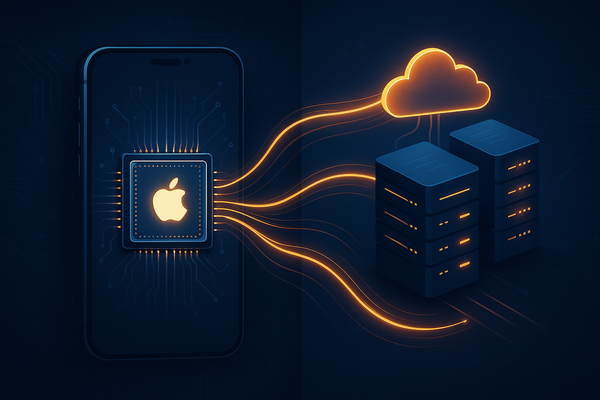
The Apple Intelligence Developer Tax: Why Enterprise Backend Teams Building Multi-Agent Pipelines Must Rethink Their On-Device vs. Cloud Inference Split After WWDC 2026's Siri Overhaul

Apple Intelligence

The Apple Intelligence Developer Tax: Why Enterprise Backend Teams Building Multi-Agent Pipelines Must Rethink Their On-Device vs. Cloud Inference Split After WWDC 2026's Siri Overhaul

Let me say something that will make a certain type of senior iOS engineer deeply uncomfortable: the architectural decisions your backend team made about on-device versus cloud inference in late 2024 are now wrong. Not slightly miscalibrated. Structurally, economically, and operationally wrong. WWDC 2026 did not just ship a Siri

By Scott Miller
5 Dangerous Myths Enterprise Backend Teams Still Believe About Multi-Agent Pipeline Disaster Recovery ,  And Why the Q1 2026 Foundation Model Outages Proved Every One of Them Wrong

multi-agent AI

5 Dangerous Myths Enterprise Backend Teams Still Believe About Multi-Agent Pipeline Disaster Recovery , And Why the Q1 2026 Foundation Model Outages Proved Every One of Them Wrong

In the first quarter of 2026, something quietly catastrophic happened across dozens of enterprise engineering floors. Orchestration pipelines froze. Autonomous agents entered infinite retry loops. Customer-facing workflows that had been humming along for months suddenly returned nothing but timeout errors. The culprit? A series of rolling degradations and partial outages

By Scott Miller