AI Engineering

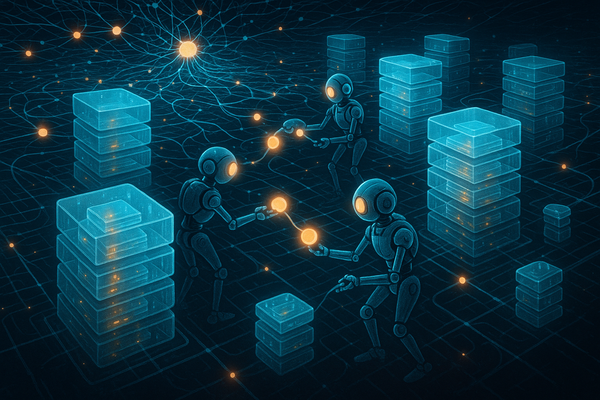
7 Ways Enterprise Backend Teams Must Redesign Multi-Agent Pipeline Memory Architecture When Stateful Context Windows Exceed Foundation Model Provider Hard Limits During Long-Running Autonomous Workflows in H2 2026

multi-agent AI

7 Ways Enterprise Backend Teams Must Redesign Multi-Agent Pipeline Memory Architecture When Stateful Context Windows Exceed Foundation Model Provider Hard Limits During Long-Running Autonomous Workflows in H2 2026

There is a quiet crisis unfolding inside enterprise AI infrastructure teams right now, and most engineering managers are only discovering it when a production autonomous workflow silently fails at hour six of a twelve-hour run. The culprit is almost always the same: a stateful multi-agent pipeline that has accumulated so

By Scott Miller
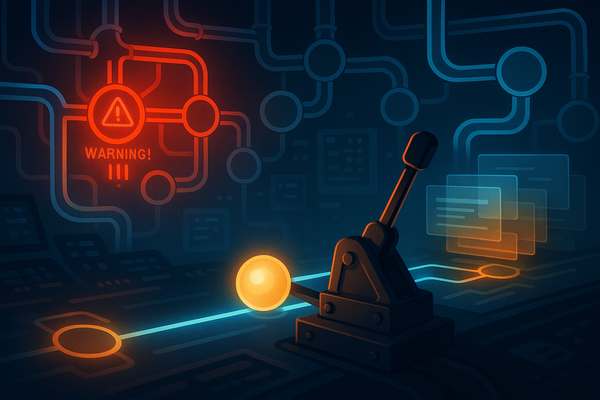
How Enterprise Backend Teams Should Instrument Multi-Agent Pipeline Prompt Versioning and Rollback Workflows to Prevent Silent Regression When Foundation Model Fine-Tunes Are Pushed Without Changelog Notifications

multi-agent AI

How Enterprise Backend Teams Should Instrument Multi-Agent Pipeline Prompt Versioning and Rollback Workflows to Prevent Silent Regression When Foundation Model Fine-Tunes Are Pushed Without Changelog Notifications

Picture this: your enterprise's customer support multi-agent pipeline has been running flawlessly for three months. Accuracy is high, escalation rates are low, and the business is happy. Then, on a quiet Tuesday morning, a foundation model provider silently pushes a fine-tuned checkpoint to their API. No email. No

By Scott Miller
7 Multi-Agent Pipeline Incident Postmortem Mistakes Enterprise Backend Teams Keep Making That Prevent Accurate Root Cause Attribution Between Orchestration Logic and Foundation Model Behavior

multi-agent AI

7 Multi-Agent Pipeline Incident Postmortem Mistakes Enterprise Backend Teams Keep Making That Prevent Accurate Root Cause Attribution Between Orchestration Logic and Foundation Model Behavior

It was 2:47 AM when the on-call engineer got paged. A critical customer-facing workflow had silently degraded for six hours, producing subtly wrong outputs that nobody caught until a downstream data pipeline exploded. By morning, a war room had formed. By afternoon, the postmortem doc was open. And by

By Scott Miller
7 Ways Enterprise Backend Teams Are Quietly Breaking Their Multi-Agent Pipelines by Misusing Vector Database Retrieval as a Substitute for Proper Agent State Management

Multi-Agent Systems

7 Ways Enterprise Backend Teams Are Quietly Breaking Their Multi-Agent Pipelines by Misusing Vector Database Retrieval as a Substitute for Proper Agent State Management

There is a silent crisis spreading across enterprise AI infrastructure in 2026, and most backend teams do not even know they are the ones causing it. As multi-agent systems have moved from research novelty to production backbone, a seductive shortcut has emerged: using vector database retrieval to carry the weight

By Scott Miller
How to Redesign Enterprise Multi-Agent Observability Pipelines When Distributed Tracing Breaks Down Across Heterogeneous Tool-Call Graphs

Multi-Agent Systems

How to Redesign Enterprise Multi-Agent Observability Pipelines When Distributed Tracing Breaks Down Across Heterogeneous Tool-Call Graphs

Here is the scenario that no one warns you about when you first wire together a multi-agent system: everything looks fine until it absolutely does not. Your orchestrator dispatches a task, three sub-agents fan out across a retrieval pipeline, a code-execution sandbox, and a third-party API broker, and somewhere in

By Scott Miller
7 Dangerous Myths Enterprise Backend Teams Believe About Stateful Agent Checkpoint Recovery and Workflow Resumption After Partial Failures in Long-Running Multi-Agent Pipelines

Multi-Agent Systems

7 Dangerous Myths Enterprise Backend Teams Believe About Stateful Agent Checkpoint Recovery and Workflow Resumption After Partial Failures in Long-Running Multi-Agent Pipelines

Long-running multi-agent pipelines are no longer a research curiosity. By 2026, enterprise backend teams are routinely deploying orchestration systems where dozens of specialized AI agents collaborate across hours or even days to complete complex workflows: financial audits, autonomous code review cycles, supply chain optimization runs, and multi-step document processing at

By Scott Miller
7 Dangerous Myths Enterprise Backend Teams Believe About Agent State Serialization and Checkpoint Recovery

multi-agent workflows

7 Dangerous Myths Enterprise Backend Teams Believe About Agent State Serialization and Checkpoint Recovery

Enterprise backend teams are building longer, more complex agentic pipelines than ever before. In 2026, multi-agent workflows that span hours, coordinate dozens of sub-agents, and interact with external APIs, databases, and human reviewers have become the new normal in production AI systems. The promise is enormous: autonomous pipelines that can

By Scott Miller
7 Ways Enterprise Backend Teams Are Failing to Screen, Onboard, and Retain Specialized AI Pipeline Engineers in 2026

AI Engineering

7 Ways Enterprise Backend Teams Are Failing to Screen, Onboard, and Retain Specialized AI Pipeline Engineers in 2026

Something quietly broke in enterprise engineering hiring over the last 18 months, and most backend team leads are only now starting to feel the consequences. The rise of the forward-deployed software engineer (FDSE) model, popularized by AI-native companies that embed engineers directly inside customer environments to build, tune, and ship

By Scott Miller
FAQ: What Enterprise Backend Teams Building Multi-Agent Systems Actually Need to Know About Agent Workflow Versioning and Backward Compatibility

Multi-Agent Systems

FAQ: What Enterprise Backend Teams Building Multi-Agent Systems Actually Need to Know About Agent Workflow Versioning and Backward Compatibility

If you've spent any real time shipping multi-agent systems to production, you already know the feeling: a seemingly minor update to a prompt, a tool schema tweak, or a subagent interface change quietly detonates something three layers deep in your orchestration graph. Suddenly, a workflow that ran perfectly

By Scott Miller