AI Agents

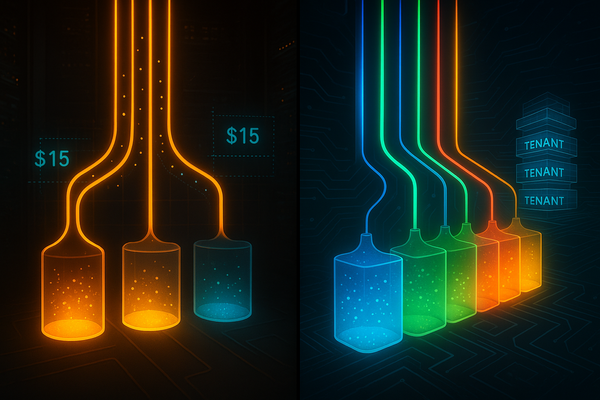
FAQ: Why Backend Engineers Must Stop Treating AI Agent Costs as Shared Infrastructure (And How to Build Real-Time Token Cost Metering That Actually Saves Your Business)

AI Agents

FAQ: Why Backend Engineers Must Stop Treating AI Agent Costs as Shared Infrastructure (And How to Build Real-Time Token Cost Metering That Actually Saves Your Business)

The tech industry entered 2026 with a brutal reckoning. After years of AI investment running ahead of AI monetization, the first quarter of 2026 delivered a wave of engineering layoffs that cut deep into teams at mid-size SaaS companies and even well-funded AI-native startups. The common thread in almost every

By Scott Miller
Why Backend Engineers Who Treat AI Agent Workflow Checkpointing as a Nice-to-Have Are Sleepwalking Into an Unrecoverable Long-Running Task Crisis ,  And What a Durable Execution, Mid-Flight Resumption Architecture Actually Looks Like in 2026

AI Agents

Why Backend Engineers Who Treat AI Agent Workflow Checkpointing as a Nice-to-Have Are Sleepwalking Into an Unrecoverable Long-Running Task Crisis , And What a Durable Execution, Mid-Flight Resumption Architecture Actually Looks Like in 2026

There is a quiet catastrophe forming inside the backend infrastructure of thousands of AI-powered products right now. It does not announce itself with a loud crash. It creeps in slowly, disguised as a flaky integration test, a mysteriously silent task queue, or a user complaint that their "AI research

By Scott Miller
7 Ways Backend Engineers Are Misconfiguring AI Agent Tool Schema Validation and Treating Malformed Function-Call Payloads as an Edge Case ,  When They're Actually the Silent Root Cause of Cascading Multi-Tenant Data Corruption in 2026

AI Agents

7 Ways Backend Engineers Are Misconfiguring AI Agent Tool Schema Validation and Treating Malformed Function-Call Payloads as an Edge Case , When They're Actually the Silent Root Cause of Cascading Multi-Tenant Data Corruption in 2026

There is a quiet crisis spreading across production AI systems in 2026. It does not announce itself with a 500 error. It does not trigger your on-call alerts at 2 a.m. It does not show up cleanly in your distributed traces. Instead, it hides in the space between what

By Scott Miller
7 Mistakes Backend Engineers Make Treating AI Agent Rate Limit Errors as Transient Network Noise (And the Adaptive Throttling + Multi-Provider Load-Balancing Architecture That Stops Silent Quota Exhaustion From Cascading Into Full Multi-Tenant Outages)

AI Agents

7 Mistakes Backend Engineers Make Treating AI Agent Rate Limit Errors as Transient Network Noise (And the Adaptive Throttling + Multi-Provider Load-Balancing Architecture That Stops Silent Quota Exhaustion From Cascading Into Full Multi-Tenant Outages)

Here is a scenario that should feel uncomfortably familiar: your monitoring dashboard is green, your SLAs look healthy, and then, without warning, a single enterprise tenant's AI agent workload quietly burns through your shared OpenAI quota at 2:47 AM. By the time your on-call engineer gets paged,

By Scott Miller
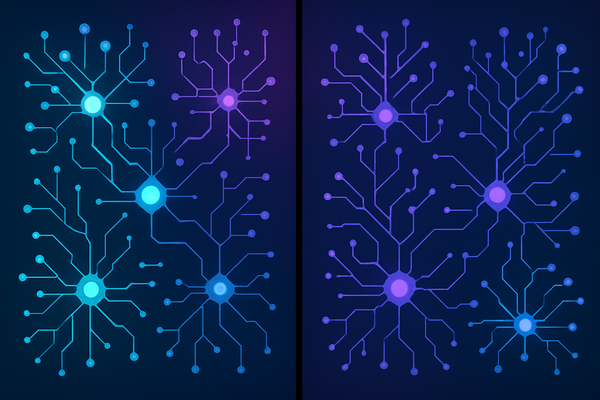
Centralized AI Agent Orchestration vs. Decentralized Multi-Agent Mesh: Why the Conductor Pattern Is Quietly Killing Your Throughput in 2026

AI Agents

Centralized AI Agent Orchestration vs. Decentralized Multi-Agent Mesh: Why the Conductor Pattern Is Quietly Killing Your Throughput in 2026

There is a quiet architectural crisis unfolding inside the backend systems of companies that moved fast to adopt agentic AI. Teams built their first multi-agent pipelines, reached for the most intuitive design pattern available, and landed on the conductor model: one orchestrator agent at the center, routing tasks, managing state,

By Scott Miller
7 Trends Reshaping How Backend Engineers Will Design AI Agent Audit Trails and Compliance Reporting Pipelines by Q4 2026

AI Agents

7 Trends Reshaping How Backend Engineers Will Design AI Agent Audit Trails and Compliance Reporting Pipelines by Q4 2026

There is a quiet infrastructure crisis building inside every organization that has deployed autonomous AI agents at scale. The agents are making decisions. They are calling APIs, reading databases, sending emails, triggering financial transactions, and escalating support tickets. And when a regulator, an internal auditor, or a legal team asks

By Scott Miller
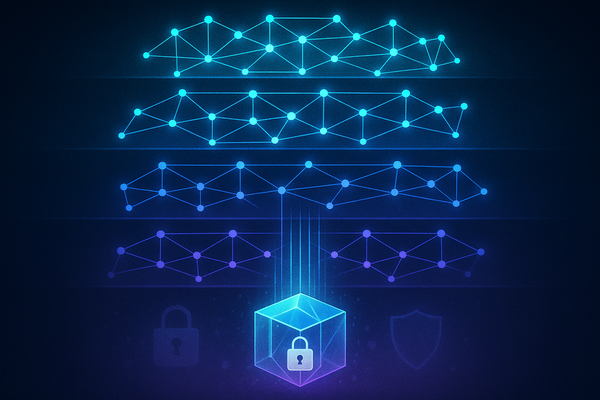
How a Regional Healthcare SaaS Provider's AI Agent Deployment Unraveled Under HIPAA-Scoped Data Residency Violations ,  and the Jurisdiction-Aware, Tenant-Isolated Routing Architecture That Rebuilt Their Compliant Multi-Agent Pipeline From the Ground Up

HIPAA Compliance

How a Regional Healthcare SaaS Provider's AI Agent Deployment Unraveled Under HIPAA-Scoped Data Residency Violations , and the Jurisdiction-Aware, Tenant-Isolated Routing Architecture That Rebuilt Their Compliant Multi-Agent Pipeline From the Ground Up

In early 2026, a mid-sized regional healthcare SaaS provider operating across seven U.S. states and two Canadian provinces discovered something every engineering leader in the healthcare space dreads: their newly deployed multi-agent AI pipeline had been quietly routing protected health information (PHI) through inference endpoints hosted in jurisdictions that

By Scott Miller
How a Mid-Size Fintech's AI Agent Deployment Collapsed Under Cascading Webhook Timeout Failures ,  and the Idempotency-First, Event-Driven Callback Architecture That Rebuilt Their Multi-Tenant Pipeline From the Ground Up

AI Agents

How a Mid-Size Fintech's AI Agent Deployment Collapsed Under Cascading Webhook Timeout Failures , and the Idempotency-First, Event-Driven Callback Architecture That Rebuilt Their Multi-Tenant Pipeline From the Ground Up

In early 2026, a mid-size B2B fintech company we'll call ClearLedger was nine months into what their CTO had proudly described in an all-hands meeting as "the most ambitious AI deployment in the company's history." They had embedded a fleet of LLM-powered AI agents

By Scott Miller