AI Agents

A collection of 186 posts
7 Signs Your Per-Tenant AI Agent Sandbox Environment Is Becoming a Security Liability as Model Context Protocol Adoption Forces Backend Engineers to Rethink Tool Execution Boundaries in 2026
AI security

7 Signs Your Per-Tenant AI Agent Sandbox Environment Is Becoming a Security Liability as Model Context Protocol Adoption Forces Backend Engineers to Rethink Tool Execution Boundaries in 2026

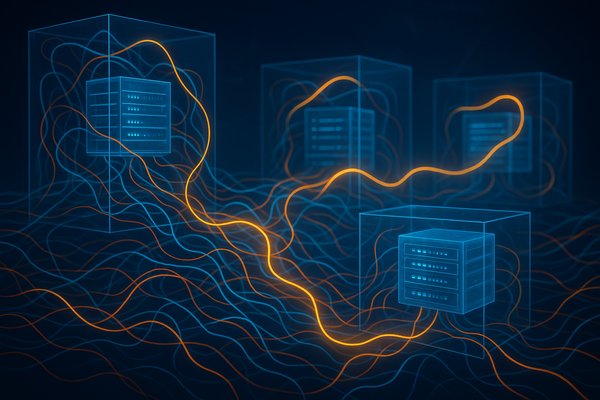
When Anthropic introduced the Model Context Protocol (MCP) in late 2024, most backend engineers treated it as a convenient plumbing upgrade: a standardized way to connect AI agents to tools, APIs, and data sources. By early 2026, MCP has become the de facto lingua franca of agentic AI infrastructure. Hundreds
8 min read
FAQ: Why Are Backend Engineers Suddenly Scrambling to Add Per-Tenant AI Agent Cost Attribution Dashboards in 2026 ,  And What Does a Correct Chargeback Architecture Actually Look Like Across Model Inference, Tool Execution, and Memory Retrieval?
AI Agents

FAQ: Why Are Backend Engineers Suddenly Scrambling to Add Per-Tenant AI Agent Cost Attribution Dashboards in 2026 , And What Does a Correct Chargeback Architecture Actually Look Like Across Model Inference, Tool Execution, and Memory Retrieval?

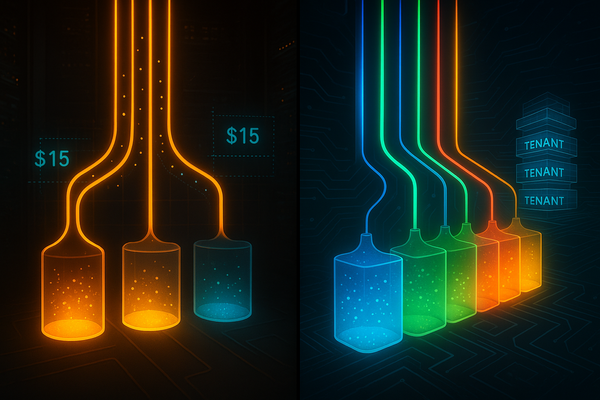
If you work on the backend of any SaaS product that has shipped an AI agent feature in the past year or two, you have probably heard some version of this conversation: "Wait, our AI costs tripled last month. Which tenant is responsible?" Silence follows. Nobody knows. The
12 min read
Why Backend Engineers Who Treat Per-Tenant AI Agent Governance as a Pure Technical Problem Will Lose to Competitors Who've Realized It's Become a Board-Level Business Risk in 2026
AI governance

Why Backend Engineers Who Treat Per-Tenant AI Agent Governance as a Pure Technical Problem Will Lose to Competitors Who've Realized It's Become a Board-Level Business Risk in 2026

There is a quiet but widening fault line running through the engineering floors of SaaS companies right now. On one side, you have backend engineers doing what they have always done: treating per-tenant AI agent governance as an architecture challenge. Rate limits, token budgets, prompt isolation, data sandboxing. Clean, solvable,
7 min read
A Beginner's Guide to Per-Tenant AI Agent Secret Management: How to Safely Store, Rotate, and Scope API Keys Before One Leaked Credential Burns Down Your Entire LLM Platform
AI security

A Beginner's Guide to Per-Tenant AI Agent Secret Management: How to Safely Store, Rotate, and Scope API Keys Before One Leaked Credential Burns Down Your Entire LLM Platform

Imagine you have just launched a multi-tenant AI agent platform. Dozens of businesses are using it to power their own AI workflows, each with their own integrations, their own third-party tools, and their own sensitive API keys. Now imagine that one of those keys leaks. Not because of a sophisticated
10 min read
7 Predictions for How the Per-Tenant AI Agent Identity Crisis Will Force Backend Engineers to Rearchitect Multi-Tenant Authorization Pipelines
AI security

7 Predictions for How the Per-Tenant AI Agent Identity Crisis Will Force Backend Engineers to Rearchitect Multi-Tenant Authorization Pipelines

Something quietly alarming is happening inside enterprise backends right now. AI agents are proliferating faster than the authorization infrastructure meant to contain them. In multi-tenant SaaS platforms, each tenant is spinning up fleets of autonomous agents that call APIs, read databases, trigger workflows, and impersonate human users with delegated credentials.
8 min read
7 Ways Backend Engineers Are Mistakenly Treating LangGraph's Persistent Checkpointing as a Safe Per-Tenant Agent State Isolation Primitive (And Why It's Silently Leaking Cross-Tenant Workflow State in Multi-Tenant Agentic Pipelines)
LangGraph

7 Ways Backend Engineers Are Mistakenly Treating LangGraph's Persistent Checkpointing as a Safe Per-Tenant Agent State Isolation Primitive (And Why It's Silently Leaking Cross-Tenant Workflow State in Multi-Tenant Agentic Pipelines)

It starts innocuously enough. You're building a multi-tenant SaaS product powered by agentic AI workflows. You've chosen LangGraph as your orchestration backbone, you've wired up a SqliteSaver or a PostgresSaver checkpointer, and you're passing a thread_id derived from your tenant'
9 min read
How to Build a Per-Tenant AI Agent Quantum-Safe Encryption Handoff Pipeline for Multi-Tenant LLM Platforms Before PQC Compliance Mandates Hit in Q4 2026
post-quantum cryptography

How to Build a Per-Tenant AI Agent Quantum-Safe Encryption Handoff Pipeline for Multi-Tenant LLM Platforms Before PQC Compliance Mandates Hit in Q4 2026

The clock is ticking. With the U.S. Office of Management and Budget (OMB) and NIST's finalized FIPS 203, FIPS 204, and FIPS 205 post-quantum cryptography (PQC) standards now fully ratified and enforcement timelines tightening toward Q4 2026, engineering teams running multi-tenant LLM platforms are staring down one
11 min read
7 Predictions for How Per-Tenant AI Agent Audit Trail Standardization Will Force Backend Engineers to Rearchitect Multi-Tenant Compliance Pipelines Before 2026 Regulatory Deadlines
AI Agents

7 Predictions for How Per-Tenant AI Agent Audit Trail Standardization Will Force Backend Engineers to Rearchitect Multi-Tenant Compliance Pipelines Before 2026 Regulatory Deadlines

If you run a multi-tenant SaaS platform with embedded AI agents, the next nine months may be the most consequential in your engineering organization's history. A convergence of emerging per-tenant audit trail standards, accelerating regulatory timelines, and the architectural debt baked into most agentic platforms is creating a
7 min read
7 Predictions for How the Emerging Per-Tenant AI Agent Compute Spot Market Will Force Backend Engineers to Rearchitect Multi-Tenant Inference Scheduling Before Preemption Events Cascade Into SLA Breaches by Q3 2026
AI Infrastructure

7 Predictions for How the Emerging Per-Tenant AI Agent Compute Spot Market Will Force Backend Engineers to Rearchitect Multi-Tenant Inference Scheduling Before Preemption Events Cascade Into SLA Breaches by Q3 2026

There is a storm quietly forming at the intersection of cloud economics, agentic AI workloads, and distributed systems engineering. Most backend teams are not watching it closely enough. By Q3 2026, the per-tenant AI agent compute spot market will have matured to the point where preemption events are no longer
7 min read
7 Ways Backend Engineers Are Mistakenly Treating Wasm-Based Agent Sandboxing as a Sufficient Per-Tenant Execution Isolation Primitive for Multi-Tenant Agentic Pipelines in 2026
WebAssembly

7 Ways Backend Engineers Are Mistakenly Treating Wasm-Based Agent Sandboxing as a Sufficient Per-Tenant Execution Isolation Primitive for Multi-Tenant Agentic Pipelines in 2026

WebAssembly has had an extraordinary run. What started as a browser performance trick has matured, through the Wasm 3.0 specification and the WASI Component Model, into a genuinely compelling server-side runtime primitive. It is fast, portable, and ships with a capability-based security model that looks, on paper, like exactly
7 min read
7 Ways Backend Engineers Are Mistakenly Treating AutoGen 0.4's Actor-Based Agent Runtime as a Safe Per-Tenant Execution Sandbox
AutoGen

7 Ways Backend Engineers Are Mistakenly Treating AutoGen 0.4's Actor-Based Agent Runtime as a Safe Per-Tenant Execution Sandbox

Microsoft's AutoGen 0.4 was a landmark architectural shift. It moved away from the conversation-centric model of earlier AutoGen versions and introduced a proper actor-based agent runtime, inspired by the actor model popularized by frameworks like Erlang and Akka. Agents became first-class, message-passing entities. The AgentRuntime became the
9 min read
A Beginner's Guide to Multi-Tenant AI Agent Observability: Build Your First Per-Tenant Tracing and Logging Pipeline Before Blind Spots Become Production Incidents
AI Agents

A Beginner's Guide to Multi-Tenant AI Agent Observability: Build Your First Per-Tenant Tracing and Logging Pipeline Before Blind Spots Become Production Incidents

You just shipped your first agentic feature. Maybe it is a customer-facing AI assistant, an automated workflow engine, or a code-review bot that runs inside your SaaS product. Your agents are handling real user requests, tool calls are firing, LLM responses are streaming back, and everything looks fine in your
9 min read