Push-Based vs. Pull-Based AI Agent Task Scheduling: Why Polling Architectures Are Quietly Killing Multi-Tenant Latency (And What to Do Instead)
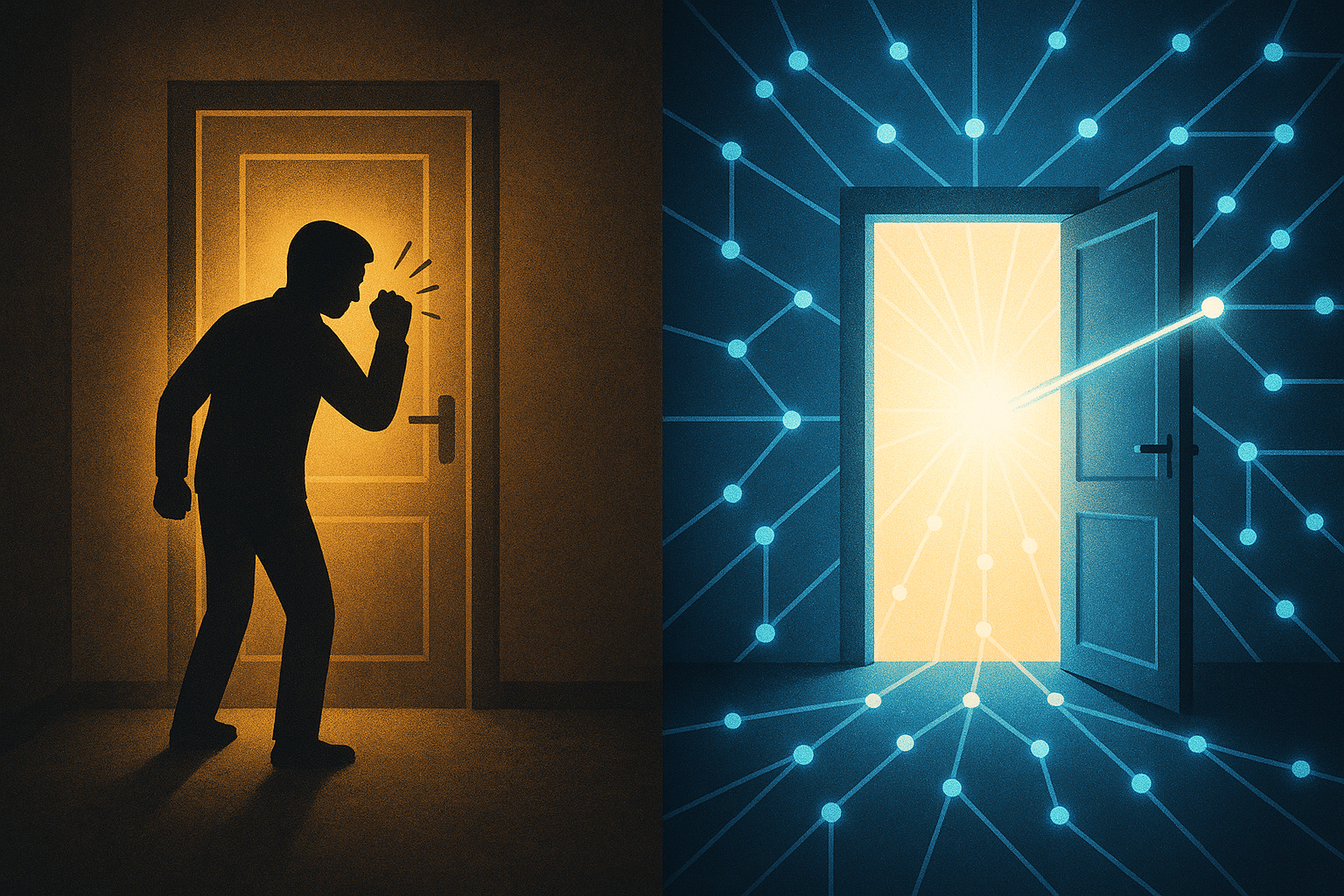
There is a quiet performance crisis unfolding inside a surprising number of AI-powered SaaS platforms right now. It does not show up as a dramatic outage. It does not trigger a P0 incident. It just quietly accumulates: sluggish agent response times, degraded tenant isolation, and infrastructure bills that creep upward month after month with no obvious culprit. The culprit, more often than not, is a polling loop.
Pull-based task scheduling, the practice of having AI agents periodically check a queue or database for new work to do, is the default mental model for many backend engineers. It is familiar, easy to reason about, and simple to implement. But in 2026, as multi-agent systems have graduated from research demos to production-critical infrastructure, that familiarity is becoming a liability. The gap between a polling architecture and a properly designed event-driven dispatch model is no longer a matter of preference. It is a matter of competitive viability.
This article is a direct, technical comparison of the two paradigms. We will look at how each model works, where each breaks down, and what a modern reactive dispatch architecture actually looks like when you are running dozens of tenants and hundreds of concurrent AI agents in production.
The Pull-Based Model: How It Works and Why Engineers Reach for It First
Pull-based scheduling is conceptually simple. An agent, or a pool of agents, runs a loop. At some interval, say every 500 milliseconds or every 2 seconds, each agent queries a central task queue or database table and asks: "Is there any work for me?" If there is, the agent picks up a task and processes it. If there is not, the agent waits and tries again.
This pattern has deep roots in backend engineering. It mirrors the familiar consumer loop in traditional message queue implementations, it is easy to debug because the state is always visible in the queue, and it degrades gracefully under load in a way that feels predictable. For engineers coming from job processing backgrounds (think Sidekiq, Celery, or Resque), it is the default mental model.
In single-tenant or low-volume systems, this works fine. The inefficiencies are small enough to be invisible. But once you introduce multi-tenancy, heterogeneous agent types, and the bursty, unpredictable workload patterns that characterize real AI agent pipelines, the cracks become structural.
The Hidden Costs of Polling at Scale
- Wasted compute cycles: In a system with 200 agents polling every second, you are generating 200 queue reads per second regardless of whether any work exists. In a multi-tenant environment with 50 tenants, many of whom are idle at any given moment, the ratio of wasted reads to productive reads can easily exceed 90 percent.
- Latency floor: The polling interval creates an irreducible latency floor. If your agents poll every 2 seconds and a high-priority task arrives 100 milliseconds after the last poll, that task waits up to 1.9 seconds before it is even seen. For AI agents orchestrating real-time user interactions, this is unacceptable.
- Thundering herd on burst: When a large batch of tasks arrives simultaneously, every idle agent wakes up and hammers the queue at the same time. This creates a thundering herd problem that spikes database or message broker CPU, degrades queue read latency for all tenants, and can cascade into broader instability.
- Tenant isolation erosion: In a naive polling architecture, all agents share the same polling mechanism. A noisy tenant that generates a burst of tasks can starve out quieter tenants, because the agents that happen to poll first will consume all available work regardless of tenant priority or fairness guarantees.
- Observability gaps: Because polling is stateless between cycles, it is difficult to build meaningful telemetry around agent responsiveness. You can measure task completion time, but the time spent waiting in the queue before an agent even notices the task is often invisible in standard metrics pipelines.
The Push-Based Model: Event-Driven, Reactive Dispatch
In a push-based or event-driven dispatch model, the scheduling logic is inverted. Agents do not ask for work. Work is delivered to agents. When a new task enters the system, the dispatch layer actively identifies the appropriate agent or agent pool, evaluates routing logic, and pushes the task directly to the target. The agent does not need to be running a poll loop; it is simply listening on a channel and reacts when signaled.
This is not a new concept in distributed systems. WebSockets, server-sent events, and reactive stream processing have all operated on this principle for years. What is new in 2026 is the degree to which AI agent runtimes have matured to support this model natively, and the degree to which multi-tenant AI platforms have begun to feel the acute pain of not adopting it.
Core Components of a Reactive Dispatch Architecture
A production-grade event-driven AI agent scheduling system in 2026 typically consists of the following layers:
- Event ingestion layer: This is where tasks originate, whether from user interactions, upstream agent completions, webhook triggers, or scheduled cron-style events. The ingestion layer normalizes these into a consistent task event format and emits them onto a durable event stream (commonly Apache Kafka, Redpanda, or a managed equivalent like Confluent Cloud or AWS EventBridge Pipes).
- Routing and classification engine: Before a task reaches an agent, a lightweight routing layer evaluates it against a set of rules: tenant identity, task type, required agent capabilities, current agent load, and priority tier. This layer is the brain of the dispatch model. It is responsible for tenant isolation, priority enforcement, and load balancing, all without a single polling loop.
- Agent registry with live state: Push-based dispatch requires the scheduler to know which agents are available and what their current capacity is. This is maintained through a continuously updated agent registry, typically backed by a fast in-memory store like Redis or DragonflyDB, where agents heartbeat their availability and current load. The registry is not queried on every task; it is maintained reactively as agents complete work and signal readiness.
- Direct dispatch channel: Once the routing engine selects a target agent, the task is pushed directly to that agent via a dedicated channel. This can be a topic partition in Kafka (where each agent subscribes to its own partition), a direct gRPC stream, or a WebSocket connection maintained by the agent runtime. The key property is that the agent receives the task with sub-millisecond overhead from the moment the routing decision is made.
- Backpressure and overflow handling: A well-designed push model must handle the case where agents are at capacity. Rather than dropping tasks or silently queuing them, the dispatch layer applies backpressure: it signals upstream producers to slow down, routes overflow to a secondary agent pool, or parks tasks in a bounded buffer with explicit priority ordering per tenant.
Head-to-Head Comparison: Polling vs. Event-Driven Dispatch
Let us put the two models side by side across the dimensions that matter most in a multi-tenant AI agent platform.
Latency
Pull-based: Latency is bounded below by the polling interval. In practice, p99 task pickup latency in a polling system with a 1-second interval commonly sits between 800ms and 1.2 seconds, even under low load. Under burst conditions, it can spike to several seconds as the queue backs up and polling contention increases.
Push-based: Task pickup latency is bounded by network round-trip time and routing engine evaluation time. In a well-tuned event-driven system, p99 task pickup latency can be consistently held below 20 to 50 milliseconds, an improvement of one to two orders of magnitude.
Tenant Isolation
Pull-based: Tenant isolation in a polling system requires either separate agent pools per tenant (expensive) or complex weighted queue logic that is difficult to enforce correctly. Noisy tenants routinely bleed latency onto quiet ones.
Push-based: The routing engine enforces tenant isolation as a first-class concern at dispatch time. Each tenant's tasks are routed through dedicated logical channels with independent priority queues. A burst from Tenant A has zero impact on the task pickup latency of Tenant B.
Infrastructure Cost
Pull-based: Polling generates constant, load-independent infrastructure cost. Your database or message broker is handling thousands of empty reads per minute regardless of whether any work is being done. At scale, this is a non-trivial portion of your compute and I/O budget.
Push-based: Infrastructure consumption is proportional to actual work. When no tasks are flowing, the event stream is quiet and agents are idle without generating any overhead. Cost scales with utilization, not with agent count.
Observability
Pull-based: The gap between task creation and task pickup is opaque. Standard metrics show queue depth and processing time, but the "time to first agent awareness" is a blind spot. Debugging latency regressions requires custom instrumentation that most teams never build.
Push-based: Every step in the dispatch lifecycle is an explicit event: task created, routing decision made, agent selected, task delivered, task acknowledged. This produces a rich, naturally structured trace for every task that flows through the system, making latency debugging straightforward.
Complexity and Operational Overhead
Pull-based: Lower upfront complexity. Any engineer who has used a job queue library can implement it in hours. Operational overhead is minimal initially but grows as you add workarounds for the isolation and latency problems described above.
Push-based: Higher upfront design investment. You need a routing engine, an agent registry, and a durable event stream. However, the operational complexity curve is much flatter: the system does not accumulate hacks over time, and the explicit event model makes it far easier to reason about at scale.
What a Real Reactive Dispatch System Looks Like in 2026
Theory is useful. A concrete architecture is better. Here is what a production-ready event-driven AI agent dispatch system looks like for a mid-scale multi-tenant platform running in 2026.
The Task Lifecycle
- A user action or upstream agent completion generates a task event. The event is published to a Kafka topic (or Redpanda equivalent) with a tenant ID, task type, priority tier, and required agent capability set as metadata fields.
- A stateless routing service (deployed as a horizontally scalable microservice) consumes from the intake topic. It evaluates the task against a routing policy stored in a fast config store, queries the agent registry in Redis for available agents matching the capability requirements, and applies a weighted fair-queuing algorithm to select the target agent while respecting per-tenant rate limits.
- The routing service publishes the dispatched task to the selected agent's dedicated partition in a dispatch topic. The agent, which maintains a persistent consumer subscription, receives the task within milliseconds of the routing decision.
- The agent processes the task and publishes a completion event (or a failure event with retry metadata) back to a results topic. The routing service updates the agent registry to reflect the agent's new availability.
- All events across this lifecycle are automatically captured by a distributed tracing layer (OpenTelemetry is the standard here in 2026) and surfaced in a real-time observability dashboard. Tenant-level p50, p95, and p99 pickup latencies are visible at all times.
Handling the Hard Cases
Two scenarios trip up many first implementations of push-based dispatch: agent failure and priority inversion.
Agent failure: If an agent crashes after receiving a task but before completing it, the task must not be lost. This is handled through a combination of Kafka consumer group offsets (the task is not committed as consumed until the agent signals completion) and a dead-letter queue with automatic requeue logic. The agent registry also detects missed heartbeats and marks the agent as unavailable, triggering re-dispatch of any in-flight tasks.
Priority inversion: In a multi-tenant system, a low-priority task from a high-volume tenant can accidentally block a high-priority task from a smaller tenant if the dispatch queue is not carefully structured. The solution is to maintain separate priority lanes per tenant in the routing engine, with strict preemption rules: a high-priority task always jumps the queue regardless of which tenant it belongs to, and tenant fairness is enforced within each priority tier rather than globally.
When Pull-Based Polling Is Still the Right Answer
To be fair: polling is not always wrong. There are legitimate use cases where it remains the appropriate choice.
- Low-frequency, non-latency-sensitive batch jobs: If your AI agents are running nightly data enrichment pipelines where a 5-second pickup delay is irrelevant, the simplicity of a polling architecture is a genuine advantage.
- Single-tenant internal tools: When you have one tenant (your own organization) and a small, predictable workload, the isolation and fairness problems of polling simply do not manifest. The overhead is negligible.
- Early-stage prototypes: When you are validating whether an AI agent workflow is worth building at all, a polling loop is a perfectly reasonable way to get to a demo quickly. The mistake is carrying it into production without reconsidering the architecture.
The problem is not that polling exists. The problem is that it is the default, and defaults have enormous gravitational pull. Engineers who built their mental models on Sidekiq and Celery reach for polling instinctively, even when they are building systems where its limitations are immediately relevant.
The Migration Path: From Polling to Event-Driven Dispatch
If you are running a polling-based AI agent system today and want to migrate, the good news is that you do not have to do it all at once. A practical migration path looks like this:
- Instrument first: Before changing anything, add explicit timing instrumentation around your poll loop. Measure actual task pickup latency (time from task creation to first agent awareness) per tenant. This gives you a baseline and, in many cases, makes the business case for the migration self-evident.
- Introduce an event stream in parallel: Stand up Kafka or Redpanda alongside your existing queue. Begin publishing task creation events to the stream without changing your agents. This lets you validate your event infrastructure without any risk to production agents.
- Build the routing engine as a sidecar: Implement the routing and dispatch logic as a new service that consumes from the event stream and writes to a new dispatch topic. Your existing polling agents can continue running while you bring up new event-driven agents that consume from the dispatch topic.
- Migrate tenants incrementally: Route one tenant (ideally an internal or low-risk one) through the new event-driven path while keeping others on the polling path. Compare latency metrics directly. Once you are confident, migrate remaining tenants one by one.
- Decommission the polling loop: Once all tenants are on the event-driven path and you have validated stability over a meaningful observation window, remove the polling agents. Your infrastructure costs will visibly drop within the first billing cycle.
Conclusion: The Default Is Not Neutral
Choosing a polling architecture for AI agent task scheduling in 2026 is not a neutral technical decision. It is a decision with concrete, measurable consequences for your tenants' experience, your infrastructure costs, and your ability to scale without accumulating architectural debt.
The event-driven, reactive dispatch model is not exotic or experimental. The components required to build it, durable event streams, agent registries, stateless routing engines, and OpenTelemetry-based observability, are all mature, well-documented, and widely available. The barrier to adoption is not technical capability. It is the gravitational pull of familiar defaults.
The engineers building the most performant multi-tenant AI agent platforms right now are not doing anything magical. They are simply refusing to let a pattern that made sense for background job processing in 2015 dictate the architecture of real-time AI orchestration in 2026. That refusal, quiet and unglamorous as it is, is the difference between a system that scales gracefully and one that quietly erodes the experience of every tenant who relies on it.
If your agents are polling, it is time to ask whether they should be listening instead.