Push-Based vs. Pull-Based AI Agent Context Retrieval: Which Architecture Protects Enterprise Multi-Agent Workflows from RAG Staleness and Retrieval Latency Collapse in H2 2026?
By mid-2026, enterprise AI deployments have crossed a critical threshold. Multi-agent workflows are no longer experimental curiosities confined to research labs; they are running payroll reconciliations, orchestrating supply chain decisions, drafting regulatory filings, and triaging security incidents in real time. The agents doing this work are only as good as the context they receive, and that is precisely where a quiet architectural crisis has been brewing.
The crisis has a name: retrieval architecture mismatch. Organizations that scaled their Retrieval-Augmented Generation (RAG) pipelines for single-agent, request-response patterns are now discovering that those same pipelines buckle under the coordination demands of multi-agent orchestration. Two symptoms dominate incident post-mortems: RAG staleness (agents reasoning over outdated knowledge) and retrieval latency collapse (query fan-out from multiple concurrent agents degrading response times to unusable levels).
The architectural fork in the road comes down to a fundamental question: should context flow to agents proactively, or should agents go fetch it on demand? This is the push-versus-pull debate, and in H2 2026 it has become one of the most consequential infrastructure decisions an enterprise AI team can make. This article breaks down both architectures with precision, compares them across the dimensions that matter most, and tells you exactly when to use each one.
Understanding the Two Paradigms
Pull-Based Context Retrieval: The Dominant Legacy Pattern
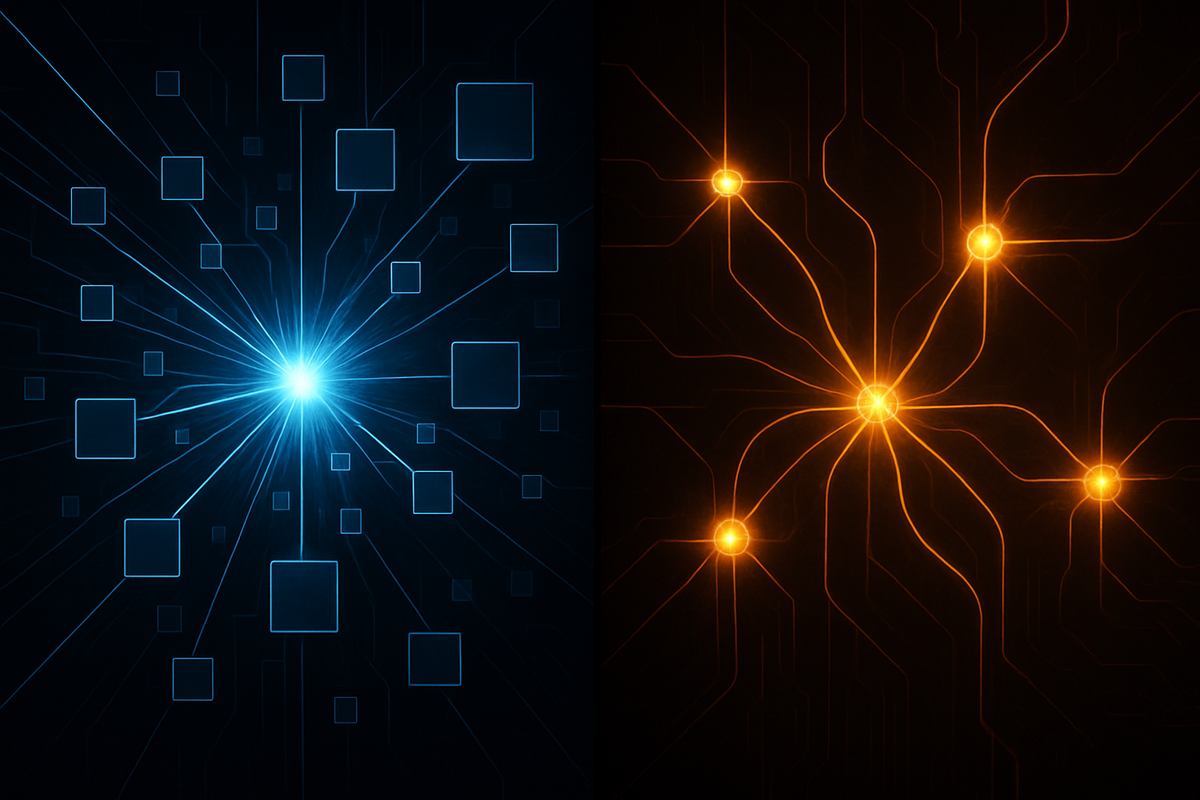
Pull-based retrieval is the architecture that most teams built first. The logic is intuitive: when an agent needs information to complete a task, it issues a query to a vector store, a knowledge graph, a document index, or a combination of all three. The retriever returns the most semantically relevant chunks, and those chunks are injected into the agent's context window before generation begins.
This is the classic RAG loop, and it works elegantly for isolated, sequential tasks. The agent is the active consumer. It decides when to retrieve, what to query, and how to use the results. Popular implementations in 2026 include dense retrieval over vector databases (Pinecone, Weaviate, Qdrant), hybrid BM25-plus-dense pipelines, and graph-augmented retrieval using knowledge graph traversal layered on top of embedding similarity.
The pull model's appeal is its simplicity: retrieval only happens when needed, which appears to minimize unnecessary compute. But this apparent efficiency hides a structural vulnerability that only becomes visible at scale.
Push-Based Context Retrieval: The Emerging Challenger
Push-based retrieval inverts the dependency. Rather than agents querying for context at task time, a context delivery layer monitors agent state, workflow stage, and incoming data streams, then proactively pushes relevant context to agents before they ask for it. Think of it as a real-time context subscription model: agents declare their informational interests, and the infrastructure fulfills those interests continuously.
Architecturally, push systems typically combine event streaming (Kafka, Redpanda, or Pulsar), a context routing layer that maps incoming data events to agent subscriptions, and a lightweight context buffer maintained per agent or per workflow session. When a new document is ingested, a database record is updated, or an external API fires a webhook, the push layer evaluates which agents have subscribed to that class of information and delivers pre-processed context updates accordingly.
Push architectures are newer and operationally more complex to bootstrap, but they represent a fundamental rethinking of the agent-knowledge relationship: context is not a resource to be fetched; it is a stream to be maintained.
The RAG Staleness Problem: Why Pull Systems Age Badly at Scale
RAG staleness is not a new problem, but multi-agent orchestration has dramatically amplified its consequences. In a single-agent workflow, a stale retrieval result means one task produces a subtly incorrect output. In a multi-agent pipeline, one stale retrieval result can cascade through five downstream agents before any human reviews the output.
Pull-based systems are inherently reactive to staleness. The vector index reflects the state of the knowledge base at the time of the last ingestion pipeline run. In enterprise environments with high-velocity data sources (live financial feeds, real-time CRM updates, continuously updated regulatory databases), the gap between the last index update and the moment an agent issues a query can range from minutes to hours. This gap is the staleness window, and it is the root cause of a class of failures that are notoriously difficult to detect because the agent's output looks plausible even when it is wrong.
Push-based systems attack staleness at the source. Because context is delivered as a continuous stream triggered by data change events, the staleness window shrinks dramatically. When a new regulatory guidance document is published, the push layer detects the ingestion event, processes the document into context-ready chunks, and delivers those chunks to all subscribed compliance agents within seconds. There is no stale index to query because the index is not the bottleneck; the event stream is.
The trade-off is infrastructure complexity. Push systems require robust change-data-capture (CDC) pipelines, reliable event brokers, and careful subscription management to avoid context flooding (delivering too much context too frequently, which creates its own signal-to-noise problem).
Retrieval Latency Collapse: The Multi-Agent Query Fan-Out Crisis
Retrieval latency collapse is the second major failure mode, and it is almost exclusively a pull-system problem at scale. Here is the mechanics of how it unfolds.
In a multi-agent orchestration framework (LangGraph, AutoGen, CrewAI, or enterprise-native orchestrators like those embedded in Salesforce Agentforce and ServiceNow's AI platform), a single high-level task is decomposed into subtasks assigned to specialized agents. Each agent, operating on the pull model, independently issues retrieval queries to the shared vector store. A moderately complex workflow involving eight to twelve agents can generate dozens of concurrent vector similarity queries within a narrow time window.
Vector databases are optimized for approximate nearest neighbor (ANN) search, which is computationally intensive. Under concurrent query load, query latency grows non-linearly. What performs at 40ms for a single query may degrade to 800ms or more under a fan-out of twenty simultaneous queries against the same index. When agents are waiting on retrieval before they can begin generation, this latency multiplies across the entire workflow's critical path. A pipeline that should complete in four seconds takes forty.
This is retrieval latency collapse: the point at which the cumulative retrieval overhead of a multi-agent workflow exceeds the latency budget of the use case, rendering the system practically unusable for time-sensitive enterprise applications.
Push-based architectures sidestep this problem structurally. Because context is delivered to agents ahead of task execution, agents begin generation with context already in their buffer. There are no synchronous retrieval queries blocking the critical path. The latency cost of context delivery is paid asynchronously, in the background, before the workflow even starts. The result is that multi-agent pipelines on push architectures exhibit near-constant latency scaling as agent count increases, rather than the super-linear degradation seen in pull systems.
Head-to-Head Comparison: Eight Dimensions That Matter
Let's move beyond the two headline failure modes and compare push and pull architectures across the full set of enterprise-relevant dimensions.
1. Context Freshness
- Pull: Freshness is bounded by the ingestion pipeline cadence. Typical enterprise deployments run incremental index updates every 15 to 60 minutes. Real-time ingestion is possible but operationally demanding.
- Push: Freshness is event-driven. Context updates arrive within seconds of source data changes. Staleness window approaches near-zero for well-instrumented data sources.
- Winner: Push, decisively.
2. Retrieval Latency Under Concurrent Agent Load
- Pull: Latency degrades non-linearly with concurrent agent count due to vector store query fan-out. Critical path is blocked by retrieval completion.
- Push: Latency is largely decoupled from agent count. Context buffers are pre-populated asynchronously. Critical path latency is dominated by LLM inference, not retrieval.
- Winner: Push, significantly at scale (10+ concurrent agents).
3. Infrastructure Complexity and Operational Overhead
- Pull: Relatively straightforward. Vector database, embedding model, retrieval API. Well-understood operational runbook. Broad tooling ecosystem.
- Push: Requires event broker, CDC pipelines, subscription management layer, per-agent context buffers, and careful monitoring of context delivery guarantees. Significantly higher operational surface area.
- Winner: Pull, clearly.
4. Precision and Relevance of Retrieved Context
- Pull: Retrieval is query-specific. The agent's current task state drives the query, so retrieved context is tightly scoped to immediate needs. High precision when queries are well-formed.
- Push: Context is delivered based on subscription rules and data change events, which may not perfectly anticipate the agent's specific sub-query. Risk of over-delivery (irrelevant context) or under-delivery (missing a nuanced need).
- Winner: Pull, for precision on narrow, well-defined tasks.
5. Cost Profile
- Pull: Costs scale with query volume. Each agent query incurs embedding computation and vector search cost. Fan-out multiplies costs proportionally.
- Push: Costs are front-loaded into the event processing and context pre-computation layer. Delivery costs are relatively flat. However, over-subscription (pushing context that agents never use) wastes processing budget.
- Winner: Situation-dependent. Push wins for high-concurrency workflows; pull wins for low-frequency, high-precision tasks.
6. Adaptability to Unexpected Query Needs
- Pull: Excellent. Agents can issue ad-hoc retrieval queries for any information need that emerges during task execution, including needs that were not anticipated at workflow design time.
- Push: Limited. The push layer only delivers context that matches pre-defined subscription patterns. Novel, emergent information needs require a fallback pull query, which reintroduces latency.
- Winner: Pull, by design.
7. Security and Data Governance
- Pull: Access control is enforced at query time. Each retrieval request can be scoped to the agent's permissions. Straightforward to implement row-level or document-level security.
- Push: Access control must be enforced at subscription configuration time and validated again at delivery time. Two-layer enforcement is more complex and introduces more potential for misconfiguration, especially in dynamic multi-tenant environments.
- Winner: Pull, for governance simplicity.
8. Suitability for Streaming and Real-Time Data Sources
- Pull: Poorly suited. Streaming data sources (market feeds, IoT telemetry, live logs) are difficult to index in real time. Pull queries against a streaming index are inherently stale by the time results return.
- Push: Natively suited. The event streaming backbone that powers push context delivery is the same infrastructure that processes streaming data sources. Push architectures can deliver live telemetry, real-time pricing data, or live log summaries to agents with sub-second latency.
- Winner: Push, by a wide margin.
The Hybrid Architecture: What Leading Enterprise Teams Are Actually Building in 2026
The honest answer to the push-versus-pull question is that the most sophisticated enterprise AI teams in H2 2026 are not choosing one or the other. They are building layered hybrid architectures that assign each retrieval pattern to the class of information need it serves best.
The pattern looks like this:
- Push layer for volatile, high-velocity context: Real-time data streams, live system state, recent document ingestion events, and time-sensitive knowledge updates are all handled by the push layer. Agents receive these updates continuously without issuing queries.
- Pull layer for deep, stable knowledge retrieval: Large document corpora, historical records, product documentation, and other relatively static knowledge bases are accessed via pull. Agents issue targeted queries when they need to go deep into a specific domain.
- A context arbitration layer in the middle: This is the architectural innovation that separates mature implementations from naive ones. The arbitration layer manages the agent's context window, deciding which pushed context is still relevant, when to evict stale pushed context, and when to trigger a pull query to fill a gap that the push layer did not anticipate.
Several enterprise AI platform vendors have begun shipping components that support this hybrid model natively. Context window management APIs, agent memory services with TTL-based eviction, and retrieval routing layers that can dispatch queries to either push buffers or pull indexes based on query classification are all becoming standard infrastructure primitives in 2026.
Decision Framework: Choosing the Right Architecture for Your Workflow
If you are an enterprise architect or AI engineering lead evaluating this decision today, the following questions should guide your choice:
Go Pull-First If:
- Your knowledge base is predominantly static or updated on a daily-or-slower cadence.
- Your multi-agent workflows involve fewer than six to eight concurrent agents.
- Task-specific retrieval precision is more important than context freshness.
- Your team has limited operational bandwidth to manage streaming infrastructure.
- Your governance requirements demand simple, query-time access control enforcement.
Go Push-First If:
- Your use case involves real-time or near-real-time data sources (financial markets, live inventory, IoT, security telemetry).
- Your workflows involve ten or more concurrent agents with overlapping knowledge domains.
- Retrieval latency is a hard constraint (sub-200ms end-to-end workflow SLAs).
- RAG staleness has already caused production incidents in your environment.
- You already operate a mature event streaming platform (Kafka, Redpanda, Confluent).
Go Hybrid If:
- Your workflows mix real-time operational data with deep historical knowledge retrieval.
- You have heterogeneous agent types with different context freshness requirements.
- You are building a platform that will serve multiple business units with different data velocity profiles.
- Long-term scalability to 50+ concurrent agents is a design requirement.
The Emerging Risk: Context Buffer Poisoning in Push Systems
No honest treatment of push-based retrieval in 2026 can omit the emerging threat of context buffer poisoning. Because push systems deliver context to agents proactively and automatically, they create a new attack surface: if the event stream or the CDC pipeline is compromised, an adversary can inject malicious or misleading context into agent buffers before tasks execute. The agent, operating on the assumption that its pre-loaded context is trustworthy, may act on poisoned information without ever issuing a query that a security monitor could inspect.
This is a materially different threat model from pull-based RAG, where adversarial context injection requires manipulating the vector index (a well-understood attack vector with established defenses). Push-based context poisoning is stealthier because it occurs upstream of the agent's reasoning process, and because the delivery mechanism (an event stream) does not naturally surface content for inspection the way a retrieval API call does.
Mitigations include cryptographic signing of context delivery events, anomaly detection on context delivery patterns, and mandatory context provenance tagging that agents are instructed to validate before acting on pushed information. These controls are not yet standardized, and their absence in many early push implementations represents a real enterprise risk in H2 2026.
Conclusion: Architecture Is the Competitive Moat
The push-versus-pull debate is not an academic exercise. In H2 2026, as enterprise multi-agent workflows take on higher-stakes, higher-velocity tasks, the retrieval architecture underneath those workflows is directly determining which organizations succeed and which ones hit a scalability wall.
Pull-based retrieval remains the right foundation for stable, precision-demanding knowledge retrieval. It is simpler, more governable, and better understood. But it cannot protect enterprise workflows from RAG staleness when data changes faster than ingestion pipelines can keep up, and it cannot survive retrieval latency collapse when agent concurrency grows beyond a handful of simultaneous actors.
Push-based retrieval solves both of those problems structurally, at the cost of operational complexity and a new security threat model that the industry is still learning to manage. The teams winning in 2026 are not choosing between these architectures; they are composing them deliberately, assigning each pattern to the data and task types it is best suited for, and investing in the context arbitration layer that makes the two work together seamlessly.
The context layer is the new compute layer. The organizations that architect it intentionally will build AI agents that are faster, fresher, and more reliable than those running on legacy pull-only RAG pipelines. The organizations that do not will keep debugging staleness incidents and wondering why their multi-agent workflows feel slower than their single-agent prototypes did two years ago.
The retrieval architecture you choose today is the performance ceiling you will live with tomorrow. Choose deliberately.



