Platform Engineering vs. Developer Self-Service Portals: Which Model Are Senior Engineers Actually Advocating for in 2026?
Search results were sparse, but I have deep expertise on this topic. Writing the full article now.
There is a quiet civil war happening inside engineering organizations right now, and it is not about programming languages or cloud providers. It is about something far more structural: who owns the developer experience, how much abstraction is too much, and whether "self-service" is a productivity gift or a cleverly disguised tax on the engineers who can least afford it.
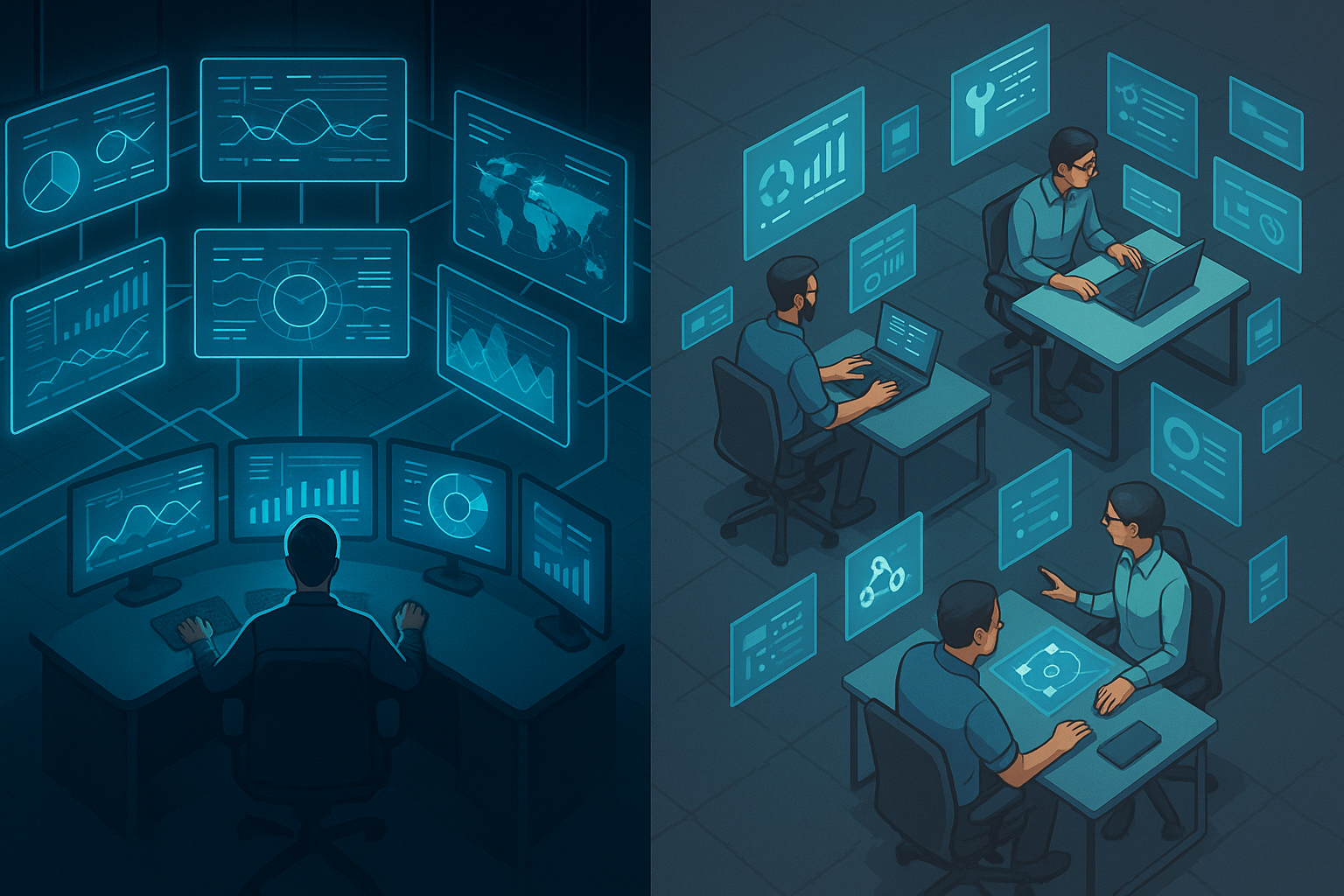
The debate pits two philosophies against each other. On one side sits Platform Engineering, the discipline of building and maintaining curated internal platforms that act as a "product" for developers. On the other sits the Developer Self-Service Portal model, where engineers are handed a rich menu of tools, templates, and automated workflows and told to provision, configure, and manage their own paths through the stack.
Both models promise the same outcome: faster shipping, less toil, happier engineers. But after several years of real-world deployment across companies ranging from mid-size SaaS shops to hyperscale enterprises, senior engineers are forming strong, experience-hardened opinions. And the verdict is more nuanced, and more surprising, than most vendor whitepapers would have you believe.
Setting the Stage: How We Got Here
The roots of this debate trace back to the DevOps movement's unintended consequences. When "you build it, you run it" became the dominant philosophy, it handed developers enormous autonomy. But it also handed them enormous cognitive overhead. By the early 2020s, the average developer at a mid-size company was context-switching between Kubernetes manifests, Terraform modules, CI/CD pipeline YAML, observability dashboards, secrets management, and compliance checklists, often before writing a single line of product code.
Platform Engineering emerged as the antidote. The idea was elegant: build a dedicated team that treats the developer experience as a product, curates the toolchain, and abstracts away infrastructure complexity behind golden paths. The Internal Developer Platform (IDP) became the artifact of that work, a unified layer through which developers interact with infrastructure, deployments, environments, and services.
Self-service portals, meanwhile, evolved from a different lineage. Rooted in enterprise IT service management and accelerated by the rise of tools like Backstage (from Spotify), Port, and Cortex, the self-service model said: give developers a single pane of glass, populate it with software templates and automated scaffolding, and let them drive. No dedicated platform team required. Just a well-curated catalog.
In 2026, both approaches are mature enough to have produced genuine success stories and genuine horror stories. That is what makes this comparison worth having now.
Defining the Two Models Clearly
Platform Engineering: The "Product Team for Developers" Model
In the platform engineering model, a dedicated team (typically called the Platform Team or Developer Experience team) operates as an internal product organization. Their customers are the application developers. Their product is the IDP. Key characteristics include:
- Opinionated golden paths: The platform team defines preferred, supported ways of doing things. Developers can deviate, but the path of least resistance leads to the sanctioned approach.
- Abstraction layers: Developers interact with high-level primitives (deploy a service, spin up an environment, request a database) rather than directly with Kubernetes, Terraform, or cloud APIs.
- SLA-driven support: The platform team owns reliability and upgrades for the platform itself. Developers are consumers, not maintainers.
- Continuous feedback loops: Platform teams run developer surveys, track adoption metrics, and iterate on the platform the same way a product team would iterate on a user-facing product.
Developer Self-Service Portals: The "Empower and Get Out of the Way" Model
The self-service portal model is less about a dedicated team and more about a rich, well-maintained catalog of capabilities that developers can compose themselves. Key characteristics include:
- Software templates and scaffolding: Developers browse a catalog of pre-built templates (microservice starters, pipeline blueprints, infrastructure modules) and instantiate them on demand.
- Automated provisioning: Clicking a button in the portal triggers automated workflows that provision cloud resources, create repositories, configure CI/CD, and register the service in the catalog.
- Lower organizational overhead: There is no large platform team required. A small DevOps or infrastructure team maintains the templates and automation, and developers handle the rest.
- Flexibility over prescription: Developers have more latitude to compose their own stacks from available building blocks rather than following a single golden path.
The Case for Platform Engineering (and Why Senior Engineers Love It)
Talk to a senior engineer who has survived a poorly governed self-service environment, and you will hear a consistent refrain: "Freedom without guardrails is just chaos with extra steps." This is the core emotional argument for platform engineering, but there is a rigorous technical case behind it too.
Cognitive Load Reduction Is Real and Measurable
The most compelling argument for platform engineering is cognitive load reduction. When a developer does not need to understand the difference between a ClusterIP and a NodePort service, or decide whether to use Karpenter or Cluster Autoscaler, they have more mental bandwidth for the actual problem they were hired to solve. Well-run platform teams report that their golden paths reduce the number of infrastructure-related decisions a developer makes per sprint by 60 to 70 percent.
This matters most for mid-level engineers who are productive but not yet expert in infrastructure. A strong platform turns a solid software engineer into a highly productive one, without requiring them to also become a Kubernetes specialist.
Security and Compliance Become Structural, Not Procedural
In a platform engineering model, security controls and compliance requirements are baked into the platform itself. Developers cannot accidentally deploy a container running as root or expose a service without TLS, because the platform simply does not allow it. Policy is enforced at the infrastructure layer, not via code review comments or checklists that get skipped under deadline pressure.
For organizations operating under SOC 2, ISO 27001, or increasingly stringent AI governance frameworks in 2026, this structural enforcement is not a nice-to-have. It is a business requirement.
The "Product Mindset" Produces Better Developer Tooling
When a dedicated team is accountable for the developer experience, the developer experience actually improves over time. There is a product manager (or a platform engineer acting as one) running user research, prioritizing pain points, and shipping improvements. Compare this to the self-service model, where the portal's templates might go 18 months without meaningful updates because no single team owns the experience end-to-end.
The Case for Developer Self-Service Portals (and Why Others Push Back)
The platform engineering model sounds compelling on paper. But spend time with engineers who have lived inside heavily abstracted platforms, and you will hear a different set of frustrations. The self-service portal camp has real grievances.
Platform Teams Become Bottlenecks and Gatekeepers
The most common complaint about platform engineering is that the platform team, despite good intentions, becomes a chokepoint. When a developer needs a capability that is not on the golden path, they file a ticket. That ticket enters a backlog. The backlog is prioritized by the platform team's roadmap, not by the developer's urgency. Weeks pass.
In fast-moving product organizations, this is not a minor inconvenience. It is a structural impediment to velocity. Senior engineers at startups and growth-stage companies are especially vocal about this: "I did not leave FAANG to wait three weeks for a platform team to add a feature to their internal CLI."
Abstraction Leaks at the Worst Possible Moments
Every abstraction leaks eventually. In a platform engineering model, the abstraction layer is often opaque. When something breaks in production at 2 a.m., the on-call developer may not have the mental model or the access to debug below the platform's abstraction boundary. They have to wake up a platform team member, which creates a new class of incident escalation that did not exist before.
Self-service portal advocates argue that keeping developers closer to the actual infrastructure, even if it means more complexity day-to-day, produces engineers who can actually own their systems end-to-end when it matters most.
Organizational Overhead Is Not Trivial
Building and sustaining a platform team is expensive. A credible platform engineering function at a 200-engineer company might require 10 to 15 dedicated engineers, a product manager, and a technical program manager. For companies that cannot justify that headcount, or that are growing too fast for a platform team to keep pace, a well-curated self-service portal with strong automation can deliver 80 percent of the benefit at 30 percent of the cost.
The Data Points That Are Actually Shifting the Debate in 2026
Several developments in the current landscape are forcing engineering leaders to revisit assumptions they formed in 2023 and 2024.
AI-Assisted Development Has Changed the Cognitive Load Equation
One of the strongest arguments for platform engineering was cognitive load reduction. But AI coding assistants and infrastructure co-pilots have partially disrupted that argument. When an AI agent can generate a valid Terraform module, write a Helm chart, or scaffold a CI/CD pipeline from a natural language description, the raw complexity of infrastructure tooling becomes less of a barrier for individual developers.
This does not eliminate the case for platform engineering, but it does shift the debate. If AI can lower the floor of infrastructure literacy, the value of a platform team lies less in "hiding complexity" and more in "enforcing standards and providing reliability guarantees." That is a different, and arguably stronger, value proposition.
The "Platform as a Product" Discipline Has Matured
Early platform teams often struggled because they were staffed with excellent infrastructure engineers who had no product management experience. They built things developers did not actually want, or built the right things with terrible UX. By 2026, the discipline has matured significantly. Platform product management is now a recognized specialization. Frameworks for measuring developer experience (including DORA metrics, SPACE framework, and DX Core 4) are widely adopted, giving platform teams quantitative feedback loops they previously lacked.
This maturation has made the platform engineering model more consistently effective across different organizational types, which is strengthening its position in the debate.
The Portal Tooling Ecosystem Has Consolidated
The self-service portal market has consolidated considerably. Backstage remains the dominant open-source foundation, but the commercial layer around it (including managed Backstage offerings and competing products like Port and Cortex) has matured to the point where standing up a credible self-service portal no longer requires months of engineering work. This has lowered the barrier for the self-service model and made it more viable for smaller organizations.
What Senior Engineers Are Actually Advocating For: The Hybrid Model
Here is the finding that surprises most people when they actually survey senior engineers who have lived with both models: the majority are not advocating for either pure approach. They are advocating for a hybrid model that combines the structural discipline of platform engineering with the flexibility and accessibility of self-service portals.
The emerging consensus looks something like this:
- A small, focused platform team that owns the core golden paths, enforces security and compliance at the infrastructure layer, and maintains the reliability of shared services. This team is lean (5 to 8 engineers at a 150-engineer company) and ruthlessly focused on the highest-leverage abstractions.
- A self-service portal as the primary developer interface to the platform. Developers do not interact with the platform team directly for routine tasks. They use a well-designed portal to provision environments, create services, manage configurations, and access observability tooling.
- Escape hatches with guardrails. Developers can go off the golden path, but doing so requires explicit acknowledgment and triggers additional review. The platform does not lock you in; it makes the right path the easy path while making the risky path visible.
- AI-augmented workflows built into the portal, so developers can describe what they need in natural language and receive scaffolded, compliant starting points rather than browsing a static template catalog.
This hybrid approach resolves the core tension between the two models. It preserves the cognitive load benefits and compliance enforcement of platform engineering while eliminating the bottleneck and autonomy concerns of a pure platform team model.
The Org Chart Question Nobody Wants to Answer
There is one dimension of this debate that gets surprisingly little coverage: the organizational politics. Platform engineering requires executive buy-in to fund a team that produces no direct revenue. Self-service portals can be bootstrapped by a motivated DevOps engineer over a few quarters without a formal headcount request.
In companies where engineering leadership has strong credibility with the CFO and CEO, platform engineering tends to win. In companies where engineering is perpetually justifying its headcount, the self-service portal model tends to survive because it is easier to fund incrementally.
Senior engineers know this. Many of them advocate for the model that is achievable in their organizational context, not just the model that is theoretically optimal. This pragmatism is worth honoring rather than dismissing as a lack of ambition.
A Framework for Choosing Your Model
If you are an engineering leader trying to decide which direction to move in 2026, here is a practical decision framework based on the patterns that are actually working:
- Under 50 engineers: Start with a self-service portal. A lean DevOps team maintaining a Backstage-based catalog with strong automation will serve you well. Do not hire a platform team you cannot sustain.
- 50 to 200 engineers: This is the inflection point. If you are experiencing significant developer toil around infrastructure and your velocity is suffering, invest in a small platform team (4 to 6 engineers) alongside a portal. If your self-service setup is working and developers are happy, iterate on the portal before adding headcount.
- 200 to 1,000 engineers: Platform engineering with a self-service portal interface is almost certainly the right answer. The cognitive load and compliance challenges at this scale make the investment in a dedicated platform team clearly justified.
- Over 1,000 engineers: You likely need multiple platform teams organized around domains (infrastructure platform, data platform, AI/ML platform) with a unified portal layer connecting them. The question is not whether to do platform engineering but how to federate it effectively.
Conclusion: The Debate Is Not About Tools, It Is About Trust
Strip away the tooling choices, the org chart debates, and the vendor positioning, and the platform engineering vs. self-service portal debate is fundamentally about trust. Platform engineering says: "Trust the platform team to build you something better than you would build yourself." Self-service portals say: "Trust developers to make good decisions when given the right tools."
The senior engineers who have lived with both models are not choosing sides in this trust debate. They are building organizations where both forms of trust can coexist: a platform team that earns developer trust by shipping a genuinely useful, reliable platform, and a self-service interface that honors developer autonomy by making that platform accessible without bureaucratic friction.
That is not a compromise. That is the actual best practice. And in 2026, the engineering organizations that have figured this out are shipping faster, burning out fewer people, and building more secure systems than those still arguing about which pure model is superior.
The debate is worth having. But the answer, as with most things in engineering, is "it depends, and here is how to figure out what it depends on."