Per-Tenant AI Agent State Persistence: Redis vs. PostgreSQL for Long-Running Agentic Workflows at Multi-Tenant Scale
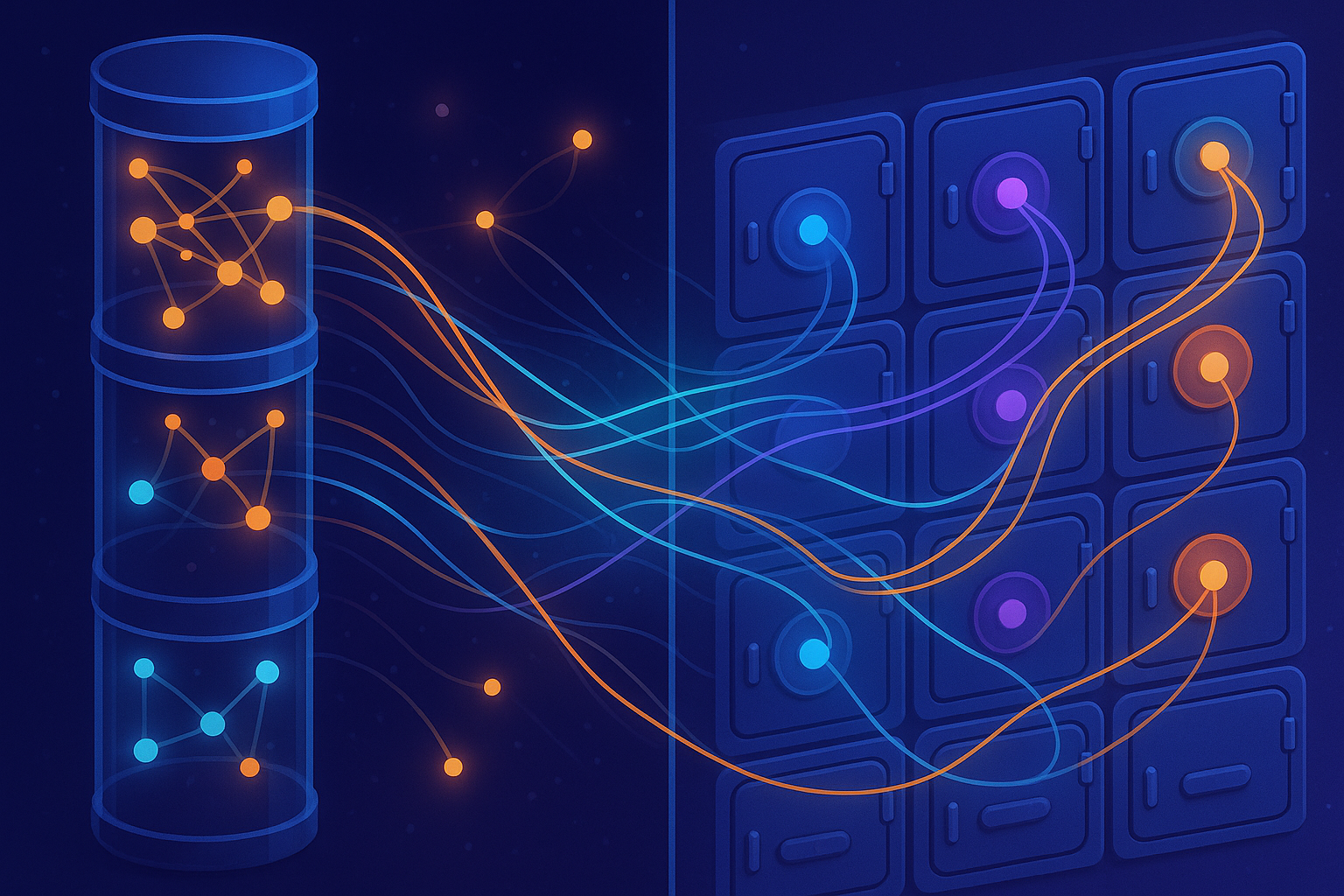
Something quietly broke in the standard AI infrastructure playbook the moment agentic workflows stopped being a novelty and became a production reality. In early 2026, teams are no longer asking whether their AI agents need durable memory. They are asking a far harder question: which backend can actually keep per-tenant agent state alive, consistent, and resumable across hours, days, or even weeks of interrupted execution?
The two heavyweights on the shortlist are ones you already know: Redis and PostgreSQL. But the context here is completely different from choosing a session store or a reporting database. Long-running agentic workflows introduce state semantics that neither tool was originally designed for. Add multi-tenancy to the mix and you have a genuinely difficult architectural decision with real consequences for correctness, cost, and operational complexity.
This article cuts through the surface-level comparisons and digs into the specific pressures that agentic, multi-tenant workloads place on each backend. By the end, you will have a clear mental model for choosing, and you might be surprised which one wins in which scenario.
What "Agent State" Actually Means in 2026
Before comparing backends, it is worth being precise about what you are persisting. Modern agentic frameworks (LangGraph, AutoGen, CrewAI, and the growing wave of custom orchestrators built on top of model APIs from OpenAI, Anthropic, and Google) treat agent state as a structured checkpoint that includes:
- Conversation and reasoning history: The full message thread, including intermediate chain-of-thought steps, tool call records, and model responses.
- Tool execution results: Outputs from web searches, code execution, API calls, and file reads that have already been paid for and should not be re-run on resumption.
- Graph traversal position: In graph-based orchestrators, the current node, pending branches, and accumulated edge weights or decision metadata.
- Working memory blobs: Arbitrary structured data the agent accumulates during its run, often serialized as JSON or MessagePack.
- Tenant-scoped context: User preferences, account-level constraints, prior session summaries, and permission boundaries that must never bleed across tenant lines.
The critical insight is that this is not a cache. It is a durable, auditable, resumable record of work in progress. That distinction changes everything about how you evaluate Redis and PostgreSQL.
The Multi-Tenancy Multiplier
Single-tenant agent state is already non-trivial. Multi-tenant agent state is a different problem category entirely. Here is why the tenant dimension matters so much for backend selection:
Isolation Guarantees
At scale, you may have thousands of concurrent tenants each running one or more long-lived agents. A backend failure, a runaway query, or a noisy neighbor must not corrupt or expose another tenant's checkpoint. This pushes you toward backends with strong namespacing primitives and fine-grained access control.
Cardinality of Active State Objects
In a B2B SaaS context, even a modest deployment might have 5,000 active tenants each with 3 to 10 concurrent agent threads. That is 15,000 to 50,000 live state objects that need to be written on every checkpoint, read on every resumption, and expired or archived on completion. The read/write pattern is bursty, not uniform.
Compliance and Auditability
Enterprise tenants increasingly require that agent execution history be auditable. Regulations around AI decision transparency (particularly under the EU AI Act's 2026 enforcement provisions) mean you may need to reconstruct exactly what an agent did, when, and why. That is a query workload, not just a key lookup.
Redis as an Agent State Backend: Strengths and Cracks
Redis has become the default first instinct for agent state, largely because of its speed and its natural fit with the ephemeral, fast-moving nature of early agentic prototypes. Let us be precise about where that instinct holds and where it breaks.
Where Redis Genuinely Excels
Sub-millisecond checkpoint writes. When an agent is mid-execution and needs to flush its state before yielding control (for a human-in-the-loop pause, a long async tool call, or a scheduled resumption), Redis can absorb that write in under a millisecond. For high-frequency checkpointing patterns, this matters enormously for throughput.
Native data structure alignment. Redis Streams, Sorted Sets, and Hashes map surprisingly well to agent state components. A Stream can represent the ordered message history. A Hash can hold the flat key-value working memory. A Sorted Set can manage pending tasks by priority. You can model a checkpoint without serializing everything into a single opaque blob.
TTL-based lifecycle management. Abandoned agent sessions (a tenant cancels a run, a user never returns) are a real operational problem. Redis TTLs give you automatic garbage collection without a separate cleanup job. Set a 7-day TTL on inactive agent state and the problem largely manages itself.
Pub/Sub for resumption signaling. When an agent is waiting on an external event (a webhook, a human approval, an async API response), Redis Pub/Sub or Keyspace Notifications can wake the orchestration layer the moment the signal arrives, without polling.
Where Redis Breaks Down at Multi-Tenant Scale
Durability is configurable but not guaranteed by default. Redis's AOF (Append-Only File) and RDB persistence modes are solid, but they require deliberate configuration. The default Redis setup is not durable. In a multi-tenant production environment, a misconfigured or resource-starved Redis node can silently lose checkpoints. For a single-tenant prototype, losing a checkpoint is annoying. For a paying enterprise tenant mid-workflow, it is a support escalation and potentially a compliance incident.
Memory as the primary constraint. Redis stores data in RAM. At multi-tenant scale, working memory per agent thread can range from tens of kilobytes to several megabytes (especially when tool outputs and reasoning chains accumulate). Multiply that by thousands of concurrent agents and you are looking at significant memory costs, especially since Redis clusters need headroom for replication and peak load. Memory is expensive infrastructure.
Weak cross-tenant query capabilities. "Show me all agent runs for tenant X that touched tool Y in the last 30 days" is a routine operational query. In Redis, this requires either maintaining separate index structures (which you must build and maintain yourself) or doing a full scan with SCAN and pattern matching. Neither is elegant at scale. Redis is not a query engine and should not be treated as one.
Tenant isolation requires discipline, not enforcement. Redis namespacing via key prefixes (e.g., tenant:{id}:agent:{thread_id}:state) works, but it is a convention, not a hard boundary. A bug in your key construction logic can cause cross-tenant reads or writes with no error thrown. At scale, this is a latent correctness risk.
PostgreSQL as an Agent State Backend: Strengths and Cracks
PostgreSQL has gained serious traction as an agent state backend in 2026, driven partly by the maturity of its JSONB support, its role as the default database in many SaaS stacks, and the emergence of frameworks like LangGraph that ship native PostgreSQL checkpointers. Let us examine the case honestly.
Where PostgreSQL Genuinely Excels
ACID guarantees as a foundation. Every checkpoint write is a real transaction. You get atomicity, consistency, isolation, and durability without configuration gymnastics. In a multi-tenant environment where a partial checkpoint write could leave an agent in a corrupt intermediate state, this is not a nice-to-have. It is foundational correctness.
Row-level security for hard tenant isolation. PostgreSQL's Row-Level Security (RLS) lets you enforce tenant boundaries at the database layer, not the application layer. A query issued in the context of tenant A will never return rows belonging to tenant B, regardless of application-layer bugs. For enterprise deployments with strict data isolation requirements, this is a meaningful architectural advantage.
JSONB plus relational structure. Agent state is semi-structured by nature. PostgreSQL's JSONB columns let you store the variable, nested parts of agent state (tool outputs, reasoning traces, arbitrary working memory) while keeping the structural metadata (tenant ID, thread ID, status, timestamps, node position) in typed relational columns. This hybrid model is extremely powerful for operational queries and compliance reporting.
Rich querying without external indexes. The audit and observability queries that Redis struggles with are trivial in PostgreSQL. You can query across tenants, filter by agent status, join against user tables, compute aggregates over execution history, and reconstruct full audit trails using standard SQL. No secondary index infrastructure required.
Ecosystem depth. In 2026, PostgreSQL integrates cleanly with pgvector for embedding storage (useful for semantic memory retrieval), logical replication for read scaling, TimescaleDB extensions for time-series agent telemetry, and every major cloud provider's managed database offering. The operational tooling (backups, point-in-time recovery, monitoring) is mature and widely understood.
Where PostgreSQL Breaks Down at Multi-Tenant Scale
Write latency under high-frequency checkpointing. PostgreSQL writes involve disk I/O, WAL (Write-Ahead Log) flushing, and lock acquisition. For agents that checkpoint every step (a common pattern in graph-based orchestrators to enable fine-grained resumption), this can add 5 to 20 milliseconds per write under load. At high concurrency, this latency accumulates and can become a bottleneck in the agent execution loop itself.
Connection pool pressure at tenant scale. PostgreSQL's connection model is process-based. At 5,000 concurrent tenants each with active agent threads, naive connection management will exhaust your connection pool and trigger queuing or errors. You need PgBouncer or a similar connection pooler in transaction mode, which adds operational complexity and some constraint on transaction semantics.
Schema management across tenants. Whether you use a shared schema with a tenant ID column (most common), separate schemas per tenant, or separate databases per tenant, each model has tradeoffs. Shared schemas require rigorous RLS enforcement. Schema-per-tenant approaches create migration complexity at scale. Database-per-tenant is operationally expensive. None of these is a dealbreaker, but all require intentional design.
No native TTL or expiry. Unlike Redis, PostgreSQL has no built-in TTL mechanism. Cleaning up completed or abandoned agent state requires scheduled jobs (pg_cron, external cron tasks, or application-level cleanup workers). This is not a hard problem, but it is operational overhead that Redis handles automatically.
Head-to-Head: The Decision Matrix
Rather than a winner-takes-all verdict, the right framework is a decision matrix keyed to your specific workload characteristics:
- Checkpoint frequency is very high (every agent step, sub-second intervals): Redis wins on write throughput and latency. Consider Redis as the hot checkpoint store with async flush to PostgreSQL for durability.
- Workflow durations exceed hours or span multiple days: PostgreSQL wins on durability guarantees and resistance to data loss during infrastructure events.
- Compliance and auditability are hard requirements: PostgreSQL wins decisively. ACID transactions, RLS, and SQL queryability make audit reconstruction straightforward.
- Tenant count is in the thousands with bursty concurrent activity: Redis handles burst write concurrency more gracefully, but requires careful memory capacity planning.
- Agent state includes large tool output blobs (megabytes per checkpoint): PostgreSQL's disk-based storage is more cost-efficient at scale. Redis memory costs become prohibitive.
- You need semantic/vector memory retrieval within agent state: PostgreSQL with pgvector is the clear choice, enabling hybrid relational and semantic queries in a single backend.
- Your team's operational expertise is primarily in one technology: Operational familiarity reduces incident risk significantly. Do not underestimate this factor.
The Architecture That Actually Works in Production: A Tiered Approach
The most robust pattern emerging in 2026 for serious multi-tenant agentic platforms is not a binary choice. It is a tiered state architecture that uses each backend for what it does best:
Tier 1: Redis as the Hot Execution Layer
During active agent execution, all checkpoint writes go to Redis. This keeps the execution loop fast and low-latency. Redis holds the "live" state for any agent currently running or paused and awaiting resumption within a short window (typically 24 to 72 hours). Key prefixes enforce tenant namespacing. TTLs handle automatic cleanup of abandoned sessions.
Tier 2: PostgreSQL as the Durable Archive Layer
On every significant state transition (a node completion in a graph workflow, a human-in-the-loop pause, a tool execution boundary), the orchestration layer asynchronously writes a durable checkpoint to PostgreSQL. This write happens out of the critical path and does not block agent execution. PostgreSQL becomes the source of truth for resumption after any Redis eviction, infrastructure failure, or long-duration pause. RLS enforces tenant isolation. JSONB columns store the full state blob. Relational columns enable operational queries.
Tier 3: Object Storage for Large Blobs
Tool outputs that exceed a size threshold (say, 100KB) are offloaded to S3-compatible object storage. Both Redis and PostgreSQL store a reference pointer rather than the blob itself. This keeps both hot and warm tiers lean and cost-efficient.
This tiered architecture is admittedly more complex than a single-backend solution. The complexity is justified when your workloads are genuinely long-running, your tenant count is in the thousands, and your compliance requirements are real. For smaller deployments or shorter-lived agents, starting with PostgreSQL alone is the pragmatic choice: it covers durability, isolation, and queryability without the operational overhead of managing two state backends.
Practical Implementation Considerations
Key Design for Redis Multi-Tenancy
Structure your Redis keys with a strict, enforced convention: agent:v1:{tenant_id}:{thread_id}:{checkpoint_seq}. Include a version prefix to enable schema migrations without key collisions. Use Redis Cluster with hash tags to ensure all keys for a given tenant route to the same shard, enabling atomic multi-key operations within a tenant context.
Schema Design for PostgreSQL Multi-Tenancy
A minimal but effective schema for agent checkpoints looks like this: a agent_checkpoints table with columns for id (UUID), tenant_id (UUID, indexed), thread_id (UUID, indexed), sequence (integer), node_name (text), status (enum), state_blob (JSONB), created_at (timestamptz), and metadata (JSONB). Enable RLS with a policy that filters on tenant_id = current_setting('app.tenant_id')::uuid. Add a partial index on (tenant_id, thread_id) WHERE status = 'active' for fast active-thread lookups.
Resumption Logic
Your orchestration layer should implement a resumption cascade: check Redis first for a hot checkpoint; if absent or expired, fall back to PostgreSQL for the latest durable checkpoint; if absent, check object storage for archived state. This cascade should be transparent to the agent execution logic, handled entirely at the orchestration layer.
The Verdict
Here is the honest conclusion: PostgreSQL is the safer default for per-tenant agent state persistence in long-running agentic workflows, and it is not particularly close on the dimensions that matter most at production scale in 2026. ACID durability, hard tenant isolation via RLS, rich queryability for compliance and observability, and the ability to store large state blobs cost-efficiently without memory pressure give it a structural advantage for the workload characteristics that define serious agentic deployments.
Redis is not the wrong answer. It is the right answer for a specific layer of the problem: the hot execution cache for actively running agents where write latency is a genuine bottleneck. Used as a durable-only backend for long-running, multi-tenant workflows, Redis asks you to solve problems (durability configuration, tenant isolation enforcement, query capability, memory cost management) that PostgreSQL solves by default.
The teams winning at agentic infrastructure in 2026 are not the ones who picked the fastest single backend. They are the ones who understood the shape of their state, matched each layer to the right tool, and built resumption logic robust enough to survive real-world infrastructure chaos. That is the actual engineering challenge, and it is worth taking seriously.
Start with PostgreSQL. Add Redis when you have measured a latency problem that PostgreSQL cannot solve. Build the tiered architecture when your scale and compliance requirements justify the operational investment. In that order.