Latest

7 Ways Enterprise Backend Teams Must Redesign AI Agent Dependency Graphs to Prevent Cascading Tool Deprecation Failures When Third-Party API Providers Sunset Legacy Endpoints in H2 2026

AI Agents

7 Ways Enterprise Backend Teams Must Redesign AI Agent Dependency Graphs to Prevent Cascading Tool Deprecation Failures When Third-Party API Providers Sunset Legacy Endpoints in H2 2026

It started quietly. A single Stripe webhook endpoint entered sunset mode. Within 72 hours, three AI agents had silently stopped processing refunds, a fourth had begun hallucinating fallback responses, and a fifth had triggered a retry storm that brought down an internal billing microservice. No alerts fired. No dashboards turned

By Scott Miller
Split-Brain AI: How Enterprise Backend Teams Must Redesign Consensus Protocols for Multi-Agent Pipelines Across Hybrid Cloud and On-Prem Inference Nodes in H2 2026

AI Agents

Split-Brain AI: How Enterprise Backend Teams Must Redesign Consensus Protocols for Multi-Agent Pipelines Across Hybrid Cloud and On-Prem Inference Nodes in H2 2026

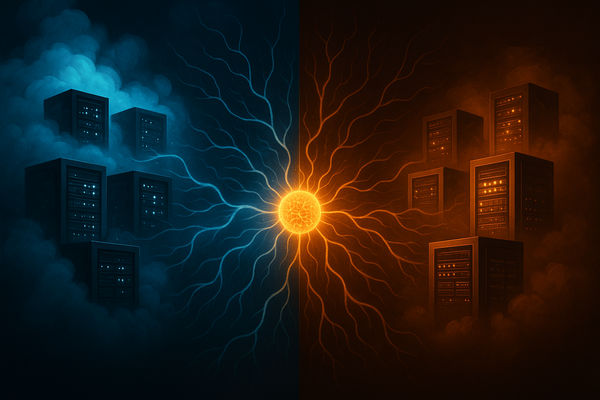
There is a quiet crisis forming inside the backend infrastructure of enterprise AI teams in mid-2026. It does not announce itself with a loud failure or a dramatic outage. Instead, it surfaces as a subtle, maddening inconsistency: two AI agents in the same pipeline reach different conclusions about the same

By Scott Miller
Monolithic AI Agent Orchestrator vs. Federated Agent Runtime Clusters: Which Multi-Agent Deployment Model Should Enterprise Backend Teams Choose in H2 2026?

AI Agents

Monolithic AI Agent Orchestrator vs. Federated Agent Runtime Clusters: Which Multi-Agent Deployment Model Should Enterprise Backend Teams Choose in H2 2026?

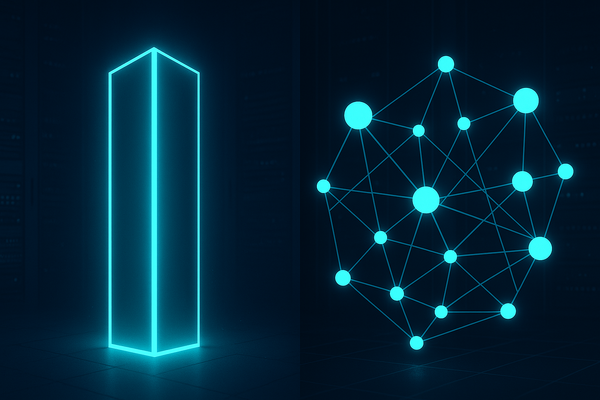
Inference infrastructure is fracturing. If you're an enterprise backend team managing AI workloads in the second half of 2026, you're no longer choosing between a handful of tidy cloud providers. You're navigating a sprawling patchwork of GPU-constrained regional clusters, sovereign AI compute mandates, model-specific

By Scott Miller
5 Dangerous Myths Enterprise Backend Teams Believe About AI Agent Idempotency That Are Silently Corrupting Shared State Across Multi-Agent Retry Storms in H2 2026

AI Agents

5 Dangerous Myths Enterprise Backend Teams Believe About AI Agent Idempotency That Are Silently Corrupting Shared State Across Multi-Agent Retry Storms in H2 2026

It starts quietly. A payment gets debited twice. An inventory record flips to zero and back. A downstream notification fires three times for a single customer event. Your on-call engineer blames a flaky network, patches a timeout, and closes the ticket. But the corruption keeps happening, and nobody can explain

By Scott Miller
7 Predictions for How Enterprise Backend Teams Must Prepare for the AI Agent Identity Federation Crisis as Workforce Agentic Systems Cross Organizational Boundaries in H2 2026

AI Agents

7 Predictions for How Enterprise Backend Teams Must Prepare for the AI Agent Identity Federation Crisis as Workforce Agentic Systems Cross Organizational Boundaries in H2 2026

Something quietly alarming is happening inside enterprise infrastructure right now. Agentic AI systems, once neatly contained within a single organization's perimeter, are beginning to reach across boundaries. They are calling external APIs, negotiating with partner-company agents, executing multi-step workflows that span cloud tenants, and making decisions that carry

By Scott Miller
The Silent Desync: How a Regional Bank's AI Agent Consensus Failure During a Fed Rate Decision Exposed the Hidden Dangers of Multi-Agent Clock Drift

AI Agents

The Silent Desync: How a Regional Bank's AI Agent Consensus Failure During a Fed Rate Decision Exposed the Hidden Dangers of Multi-Agent Clock Drift

At 2:01 PM Eastern Time on a Wednesday last March, the Federal Reserve published its rate decision. Within the same 180-second window, a mid-sized regional bank's multi-agent AI trading and risk system executed 47 conflicting internal actions, flagged its own positions as both compliant and non-compliant simultaneously,

By Scott Miller
Shared AI Agent Memory Store vs. Per-Agent Isolated State: Which Multi-Agent Architecture Should Enterprise Backend Teams Choose in H2 2026?

Multi-Agent Systems

Shared AI Agent Memory Store vs. Per-Agent Isolated State: Which Multi-Agent Architecture Should Enterprise Backend Teams Choose in H2 2026?

Multi-agent AI systems have moved from research curiosity to production backbone faster than most enterprise backend teams anticipated. By mid-2026, orchestration frameworks like LangGraph, AutoGen, and CrewAI are running in the critical paths of financial workflows, healthcare triage systems, and customer operations platforms at scale. And with that scale has

By Scott Miller