How AI Agent Multi-Tenant Isolation Actually Works at the Infrastructure Layer
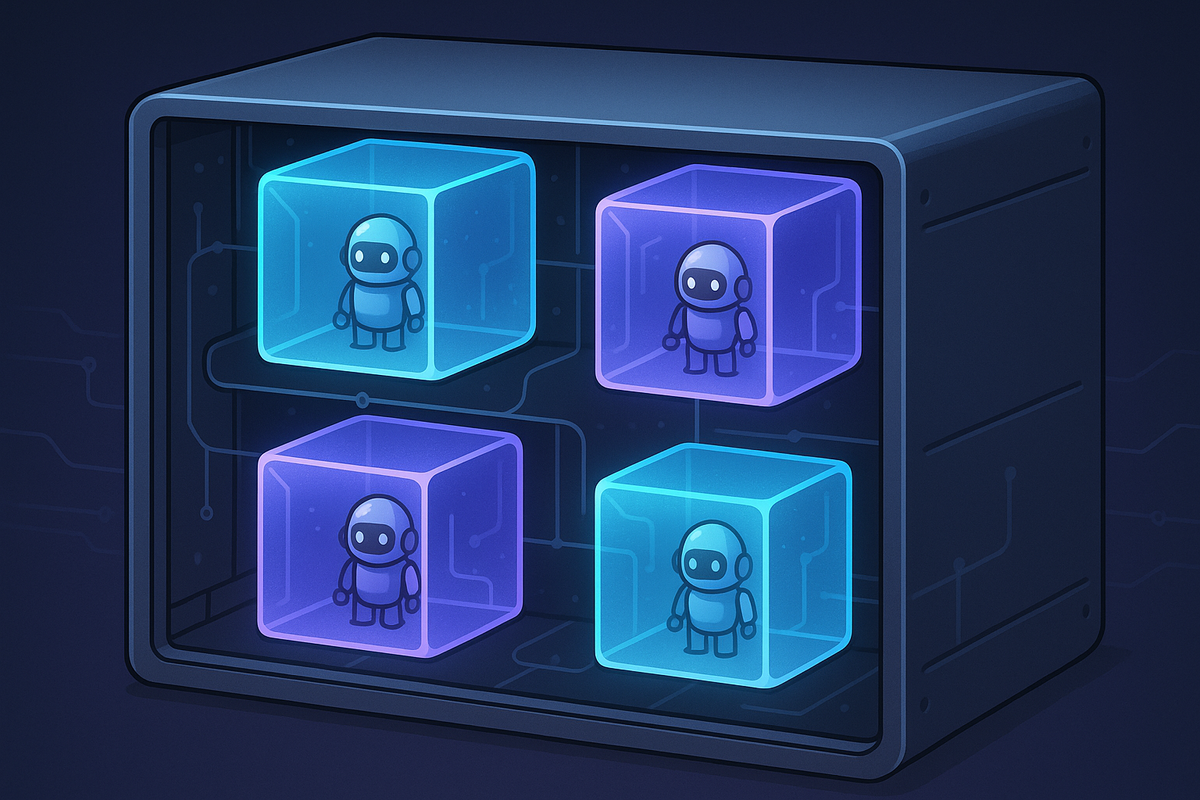
There is a quiet crisis building inside enterprise Kubernetes clusters right now. As organizations rush to deploy AI agents at scale in H2 2026, the shared-cluster model that worked perfectly well for stateless microservices is starting to show serious cracks. The reason is not a flaw in Kubernetes itself. The reason is that AI agents are fundamentally different workloads: they carry tenant-specific memory, call external APIs using scoped credentials, maintain persistent vector store connections, and emit telemetry that contains raw user prompts. When you pack multiple tenants' AI agents into the same cluster without surgical isolation, you are not just risking a noisy-neighbor CPU problem. You are risking a cross-tenant data liability event.
This post is for the backend platform engineers and DevSecOps architects who have been handed the mandate to make shared AI agent infrastructure safe before a compliance audit or, worse, an incident forces the conversation. We are going to go deep on three specific problem domains: namespace segregation, network policy enforcement, and secret scoping. Each section covers the threat model, the common misconfiguration, and the production-grade solution pattern. Let's get into it.
Why AI Agents Break the Standard Multi-Tenancy Assumptions
Classic multi-tenancy guidance for Kubernetes was written with web application workloads in mind. Those workloads are largely stateless, use short-lived connections, and do not autonomously initiate outbound calls to third-party services mid-execution. AI agents violate all three of those assumptions simultaneously.
Consider a typical enterprise AI agent in 2026. It might:
- Maintain a long-lived gRPC stream to an orchestration layer like LangGraph Cloud or a self-hosted Temporal workflow engine
- Issue autonomous tool calls to internal APIs, databases, or external SaaS platforms based on LLM reasoning, not deterministic code paths
- Read and write to a tenant-specific vector store partition (Weaviate, Qdrant, or pgvector) where embeddings may encode sensitive business data
- Cache intermediate reasoning state in shared Redis or Valkey instances using keys that are only logically, not cryptographically, separated
- Emit structured traces containing raw tool call inputs and outputs to a shared observability backend like OpenTelemetry Collector
The attack surface is not just the pod. It is the entire data flow graph of the agent's execution. Standard namespace isolation addresses maybe 20% of that surface area. The remaining 80% requires deliberate, layered controls at the network, secret, and storage layers.
Problem 1: Namespace Segregation and What It Actually Guarantees
The Misconception
The single most dangerous misconception in enterprise AI platform engineering right now is that namespace equals tenant boundary. It does not. Namespaces in Kubernetes are a logical grouping mechanism. They provide RBAC scope, resource quota scope, and name uniqueness. They do not, by themselves, prevent pod-to-pod communication, shared node kernel exploitation, or ClusterRole privilege escalation.
A pod in tenant-alpha namespace can, by default, send TCP traffic to a pod in tenant-beta namespace. That is not a bug. It is the default Kubernetes networking model. If your AI agent for Tenant Alpha can reach the Redis sidecar of Tenant Beta's agent, you have a cross-tenant data exposure waiting to happen, and no namespace label will stop it.
The Threat Model
For AI agent workloads specifically, namespace boundary failures manifest in three ways:
- ClusterRole Bleed: Platform teams often create ClusterRoles for convenience (for example, a single "agent-runner" ClusterRole that grants
getandliston ConfigMaps cluster-wide). An AI agent that can read ConfigMaps across all namespaces can exfiltrate another tenant's configuration, including endpoint URLs, model routing rules, and feature flags that encode business logic. - Shared Node Exploitation: If two tenants' agent pods land on the same node and one agent is compromised via a prompt injection attack that achieves code execution, the attacker has access to the node's
/procfilesystem, potentially reading memory from adjacent containers or accessing node-level credentials mounted by the kubelet. - Admission Webhook Scope Confusion: Mutating admission webhooks that inject sidecars (for example, Istio's Envoy proxy injector or a secrets management sidecar) often operate at the cluster level. A misconfigured webhook can inject the wrong sidecar configuration into a tenant's namespace, causing it to inherit another tenant's mTLS identity or secret store path.
The Production-Grade Solution Pattern
Strong namespace segregation for AI agent multi-tenancy requires four concrete controls working together:
1. Hierarchical Namespace Controller (HNC): Use the Kubernetes HNC (now stable and widely adopted in 2026) to create a namespace tree per tenant. A root namespace like tenant-alpha can have child namespaces for tenant-alpha-agents, tenant-alpha-datastores, and tenant-alpha-observability. RBAC policies, LimitRanges, and NetworkPolicies defined at the root propagate down automatically. This eliminates the configuration drift problem where a child namespace is accidentally left open.
2. Dedicated Node Pools with Node Affinity and Taints: For high-compliance tenants (healthcare, financial services), run agent pods on dedicated node pools using taints and tolerations. A taint of tenant=alpha:NoSchedule on a node pool ensures no other tenant's workload can land there without an explicit toleration. Combine this with node affinity rules on the agent Deployment spec to make the binding bidirectional.
3. Pod Security Standards at the Restricted Level: Enforce the restricted Pod Security Standard on all tenant agent namespaces. This blocks privilege escalation, requires non-root user execution, drops all Linux capabilities, and mandates read-only root filesystems. AI agent containers that need write access should mount a dedicated emptyDir or a bounded PersistentVolumeClaim, not write to the container root.
4. Audit Logging with Tenant Attribution: Configure the Kubernetes API server audit policy to log all resource access at the RequestResponse level for Secrets, ConfigMaps, and ServiceAccounts. Ship these logs to an immutable, tenant-attributed log store. When an incident occurs, you need to prove which pod accessed which resource and when.
Problem 2: Network Policy Enforcement for Agent-to-Agent and Agent-to-Tool Traffic
The Misconception
Most platform teams apply NetworkPolicies that restrict ingress to agent pods. They forget that AI agents are primarily egress workloads. An AI agent's threat surface is dominated by what it calls out to, not what calls into it. A NetworkPolicy that says "only the orchestration layer can reach this agent pod" does nothing to prevent that agent pod from reaching another tenant's internal API, a shared message broker, or an unintended external endpoint.
The Threat Model
AI agent egress creates three specific cross-tenant risks:
- Shared Message Broker Lateral Movement: If Tenant Alpha's agent and Tenant Beta's agent both publish to topics on a shared Kafka or NATS cluster, a misconfigured topic ACL (or no ACL at all) means one tenant's agent can subscribe to the other's event stream. This is particularly dangerous when agents emit tool call results to message queues, because those results often contain raw API responses with PII or proprietary data.
- DNS-Based Exfiltration: A compromised agent pod (via prompt injection achieving code execution) can use DNS queries to exfiltrate data if egress NetworkPolicies do not restrict DNS traffic. Standard Kubernetes NetworkPolicies cannot filter DNS at the query level. This requires a DNS-aware policy engine.
- Service Mesh Identity Spoofing: In clusters using Istio or Linkerd for mTLS, a pod's SPIFFE identity is derived from its ServiceAccount. If two tenants share a ServiceAccount name across namespaces and the AuthorizationPolicy is written against the service account name rather than the fully qualified SPIFFE URI (which includes namespace), a Tenant Beta pod can present a valid certificate that grants it Tenant Alpha's service mesh permissions.
The Production-Grade Solution Pattern
1. Default-Deny Egress as the Baseline: Every tenant namespace must start with a default-deny egress NetworkPolicy. This is the single most impactful change most teams are not making. The policy looks simple:
apiVersion: networking.k8s.io/v1
kind: NetworkPolicy
metadata:
  name: default-deny-egress
  namespace: tenant-alpha-agents
spec:
  podSelector: {}
  policyTypes:
  - Egress
From this baseline, you add explicit allow rules for each approved egress target: the tenant's own vector store namespace, the shared LLM gateway (via a specific ClusterIP and port), and the external DNS resolver. Everything else is denied at the kernel level by the CNI plugin.
2. Cilium Network Policies for L7 and DNS-Aware Enforcement: Standard Kubernetes NetworkPolicies operate at L3/L4. For AI agent workloads, you need L7 visibility. Cilium's CiliumNetworkPolicy CRD allows you to write egress rules that filter by DNS name, HTTP method, HTTP path, and even Kafka topic. This means you can write a policy that says: "This agent pod may only make HTTP POST requests to /v1/chat/completions on the LLM gateway, and may only publish to Kafka topics prefixed with tenant-alpha." That is a fundamentally different security posture than port-level filtering.
3. SPIFFE/SPIRE for Workload Identity Beyond the Cluster: For agent tool calls that leave the cluster entirely (calling external SaaS APIs, internal data platforms in other VPCs, etc.), use SPIRE to issue short-lived SVID certificates scoped to the specific tenant and agent role. The external service validates the SVID rather than a static API key. This means a compromised agent pod cannot use its credentials to call endpoints outside its authorized scope, because the SVID encodes the tenant and role in a cryptographically verifiable way.
4. Egress Gateway with Per-Tenant SNAT: Route all external egress through a dedicated Egress Gateway (Cilium's Egress Gateway feature or a dedicated NAT gateway per tenant VPC subnet). This gives you a fixed, auditable egress IP per tenant, which external partners and SaaS vendors can allowlist. It also means that if an agent pod attempts to reach an unauthorized external endpoint, the egress gateway can enforce policy and log the attempt with full tenant attribution before the packet leaves the cluster.
Problem 3: Secret Scoping in a World Where Every Agent Has Its Own Credentials
The Misconception
The naive approach to secret management in shared AI agent clusters is to store all credentials in a single Vault namespace (or a single AWS Secrets Manager path prefix) and use application-level logic to ensure each agent only fetches its own secrets. This is a trust boundary violation waiting to happen. Application-level secret access control is not a security boundary. It is a convention. Conventions break under prompt injection, dependency confusion attacks, and misconfigured environment variable injection.
The Threat Model
Secret scoping failures in AI agent infrastructure are especially severe because agents hold a uniquely sensitive credential set:
- LLM API keys (OpenAI, Anthropic, Google Gemini, or self-hosted model API tokens) that carry billing and rate limit implications across tenants
- Vector store connection strings that grant read access to a tenant's entire embedded knowledge base
- Tool call OAuth tokens for CRM systems, ERP platforms, and internal APIs that contain production business data
- Memory store credentials for Redis or Valkey instances where agent working memory (including in-flight user conversation context) is cached
If Tenant Alpha's agent pod can access Tenant Beta's Vault path, even read-only, the damage is not just credential theft. It is the ability to impersonate Tenant Beta's agent, drain their vector store, and exfiltrate their tool call history.
The Production-Grade Solution Pattern
1. Vault Namespaces Mapped 1:1 to Kubernetes Tenant Namespaces: HashiCorp Vault's namespace feature (available in Vault Enterprise, and now widely deployed at scale in 2026) allows you to create a fully isolated Vault namespace per tenant. Each Vault namespace has its own auth methods, secret engines, and policies. A Kubernetes auth method configured in vault-ns/tenant-alpha can only be used by pods in the tenant-alpha-agents Kubernetes namespace, and it can only issue tokens scoped to that Vault namespace. There is no path by which Tenant Alpha's ServiceAccount can authenticate to Tenant Beta's Vault namespace.
2. External Secrets Operator with Tenant-Scoped ClusterSecretStore: If you are using the External Secrets Operator (ESO) to sync secrets from Vault or AWS Secrets Manager into Kubernetes Secrets, configure a separate SecretStore (not ClusterSecretStore) in each tenant namespace. A ClusterSecretStore is accessible from any namespace and is a common source of cross-tenant secret access. Namespace-scoped SecretStore resources, bound to tenant-specific Vault roles or IAM roles, ensure that an ExternalSecret in tenant-alpha-agents can only pull from Tenant Alpha's Vault path.
3. Kubernetes Secrets Encryption with Per-Tenant KMS Keys: Enable etcd encryption for Kubernetes Secrets using the KMS provider plugin. In a true multi-tenant deployment, configure a separate KMS key per tenant namespace using envelope encryption. This means that even if an attacker gains read access to etcd directly (a node-level compromise scenario), they cannot decrypt Tenant Beta's secrets without Tenant Beta's KMS key. AWS KMS, Google Cloud KMS, and Azure Key Vault all support this pattern through their respective Kubernetes KMS provider plugins.
4. Short-Lived Dynamic Credentials via Vault Dynamic Secrets: For database credentials, message broker credentials, and API tokens that support OAuth 2.0 client credentials flow, use Vault's dynamic secrets engine to generate a unique, short-lived credential for each agent pod startup. The credential is scoped to that specific pod's identity (via SPIFFE SVID or Kubernetes ServiceAccount JWT) and expires when the pod terminates. This eliminates the long-lived credential rotation problem entirely and means a stolen credential from one agent pod has a bounded blast radius in both time and scope.
The Observability Trap: When Shared Telemetry Becomes a Data Leak
There is a fourth problem that most deep-dive articles miss, and it is the one that will bite teams first in H2 2026: shared observability infrastructure. When all tenant agents ship traces, logs, and metrics to a shared OpenTelemetry Collector and then into a shared Grafana or Jaeger backend, the tenant boundary disappears entirely at the observability layer.
A platform engineer with read access to the shared Grafana instance can see the raw span data from every tenant's agent execution. That span data includes tool call inputs and outputs, which in an AI agent context means it includes user prompts, retrieved document chunks, API response payloads, and intermediate reasoning steps. This is not a theoretical risk. It is a GDPR Article 32 violation and a SOC 2 Type II finding waiting to be written.
The solution is tenant-attributed observability with data-plane separation:
- Use OpenTelemetry Collector pipelines with a
filterprocessor androutingconnector to route each tenant's telemetry to a dedicated backend (separate Prometheus remote write endpoint, separate Loki log stream with tenant label enforcement, separate Tempo trace backend). - Enforce Grafana Organization or Team isolation so that tenant-specific dashboards and datasources are accessible only to that tenant's users and the platform team's break-glass accounts.
- Apply span attribute redaction at the collector level for fields that may contain PII or sensitive payload data (for example, redact
gen_ai.prompt.contentandgen_ai.completion.contentOpenTelemetry semantic convention attributes before they reach shared storage).
Putting It All Together: The Isolation Stack Checklist
Before your shared AI agent cluster handles production tenant data in H2 2026, run through this checklist. Each item maps to the problem domains covered above:
- Namespace Layer: HNC deployed and tenant namespace trees defined; Pod Security Standard set to
restrictedon all agent namespaces; ClusterRoles audited and replaced with namespace-scoped Roles wherever possible; dedicated node pools with taints for high-compliance tenants. - Network Layer: Default-deny egress NetworkPolicy applied to all tenant namespaces; Cilium deployed as CNI with L7 CiliumNetworkPolicy for agent egress; SPIFFE/SPIRE deployed for workload identity on external tool calls; per-tenant Egress Gateway configured with static SNAT IPs.
- Secret Layer: Vault namespaces mapped 1:1 to tenant namespaces; ESO configured with namespace-scoped
SecretStore(notClusterSecretStore); etcd encryption enabled with per-tenant KMS keys; dynamic secrets used for all database and broker credentials. - Observability Layer: OTel Collector routing configured per tenant; Grafana organization isolation enforced; PII-bearing span attributes redacted at the collector before reaching shared storage.
Conclusion: The Isolation Work Is Not Optional
The shared Kubernetes cluster is an economically rational choice for AI agent infrastructure. Running dedicated clusters per tenant at enterprise scale is prohibitively expensive, operationally complex, and often slower to provision than the business requires. The shared model works. But it works only when the isolation stack described above is in place, tested, and continuously audited.
The teams that will face cross-tenant data liability events in H2 2026 are not the teams running shared clusters. They are the teams running shared clusters while assuming that namespace separation, application-level secret access, and a single Grafana instance are sufficient controls. They are not.
The good news is that every control described in this post is available today using open-source or widely available enterprise tooling. Cilium, SPIRE, HNC, ESO, and Vault are all mature, production-proven projects. The implementation work is real, but it is tractable. The cost of not doing it, measured in breach notification letters, compliance findings, and lost enterprise contracts, is not.
Start with default-deny egress. Everything else builds from there.



