FAQ: Why Enterprise Backend Teams Are Discovering That AI Agent Workflow Versioning Gaps Cause Silent Behavioral Drift When Foundation Models Receive Mid-Deployment Updates
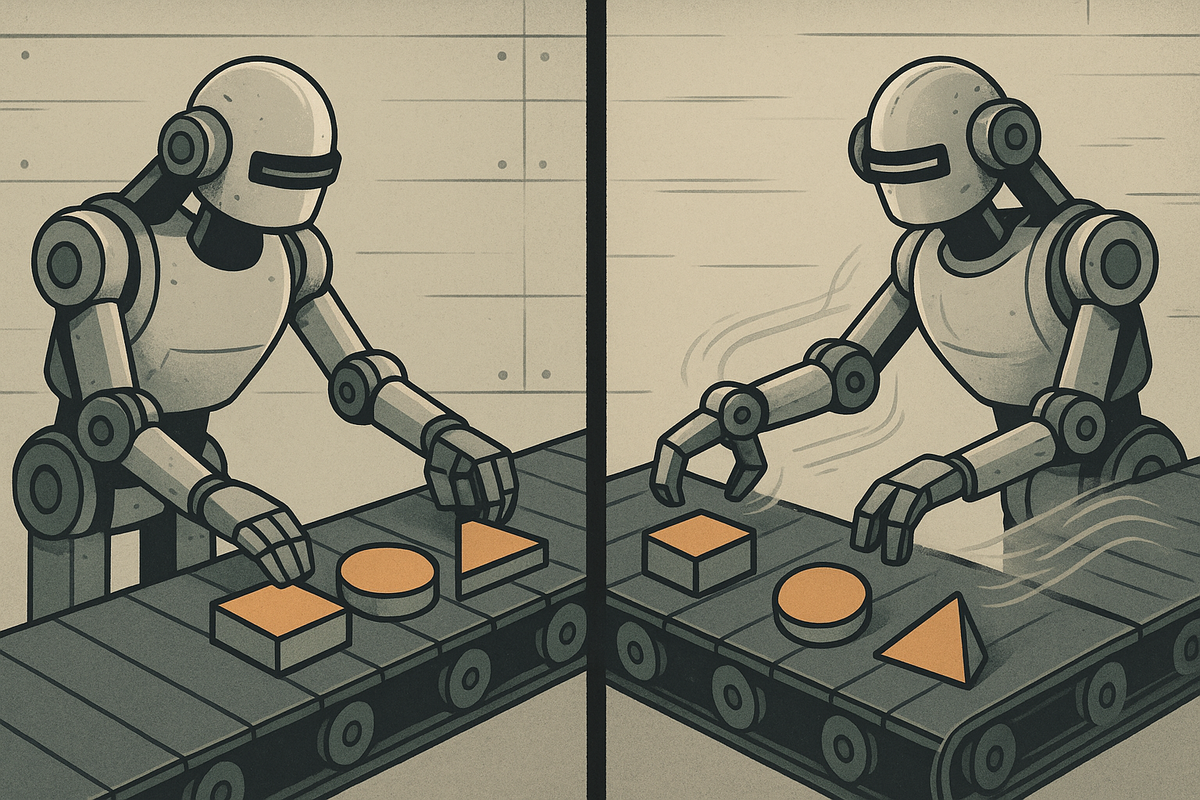
If your enterprise backend team has ever deployed a multi-agent pipeline, walked away confident, and then discovered weeks later that its outputs had quietly changed without a single line of your code being touched, you have already experienced silent behavioral drift. It is one of the most insidious and underreported failure modes in production AI systems in H2 2026, and it is happening at scale across industries ranging from financial services to healthcare to logistics.
This FAQ is written for backend engineers, MLOps architects, and platform leads who are responsible for keeping long-running agentic workflows reliable, auditable, and regression-free. We will break down exactly what is happening, why it is getting worse, and how to build a model version pinning strategy that actually holds up in production.
The Fundamentals: What Is Behavioral Drift in AI Agent Pipelines?
Q: What exactly is "silent behavioral drift" in the context of AI agent workflows?
Silent behavioral drift is the phenomenon where an AI agent or multi-agent pipeline produces measurably different outputs over time even though no one on your team changed the application code, the prompts, or the orchestration logic. The word "silent" is key: there is no exception thrown, no deployment event logged in your CI/CD system, and no alert fired. The pipeline simply starts behaving differently.
This drift is typically caused by one or more of the following:
- Foundation model updates pushed by the provider without a version bump in the API endpoint you are calling
- Changes to the model's RLHF alignment tuning that alter its default tone, refusal behavior, or structured output formatting
- Infrastructure-side routing changes at the provider level that silently redirect traffic to a newer model checkpoint
- Embedding model updates that shift vector space geometry and break downstream retrieval-augmented generation (RAG) components
Q: How is this different from ordinary software regression?
In traditional software, a regression is almost always traceable to a code change, a dependency update, or a configuration delta. Your version control system tells you who changed what and when. With foundation model APIs, the model itself is a dependency that lives entirely outside your repository. When OpenAI, Anthropic, Google, or Mistral updates the weights behind a model alias like gpt-4o, claude-opus-4, or gemini-2.5-pro, that update is not reflected in your package.json, your requirements.txt, or your Terraform state. Your observability stack has no native hook into it unless you have deliberately instrumented for it.
This creates a class of regression that is fundamentally harder to detect, reproduce, and roll back than anything most backend teams have dealt with before.
Q: How common is this problem in H2 2026?
Extremely common, and accelerating. The cadence of foundation model updates has increased dramatically. Major providers now ship alignment patches, capability updates, and safety tuning changes on cycles measured in weeks rather than quarters. In agentic architectures where a single pipeline may chain five to fifteen model calls, the compounding probability of at least one model in the chain having changed since your last full regression test is high. Teams running long-lived pipelines, such as overnight batch enrichment jobs, continuous document processing workflows, or always-on customer-facing agents, are disproportionately affected.
The Technical Root Causes
Q: Why do model providers update models without changing the version identifier in the API?
This is a legitimate product and business decision on the provider side, even if it creates operational pain for consumers. Providers maintain "floating" model aliases because:
- It allows them to deploy safety patches and alignment fixes rapidly without requiring every customer to update their integration
- It reduces the fragmentation burden of supporting dozens of frozen checkpoints indefinitely
- It aligns with the expectation that most users want "the best current version" without manual intervention
The problem is that enterprise production pipelines have the opposite need. They want determinism and auditability, not automatic improvement. The interests of consumer-grade users and enterprise backend systems are in direct conflict here, and most provider API designs have historically optimized for the former.
Q: What kinds of output changes actually happen when a model is updated mid-deployment?
The changes can be subtle or dramatic, and they rarely announce themselves. Common patterns observed in production include:
- JSON schema violations: A model that previously reliably returned a strict JSON object begins wrapping it in markdown code fences or adding explanatory preamble text, breaking downstream parsers
- Reasoning chain length changes: In chain-of-thought or scratchpad-style prompts, the model may produce significantly longer or shorter reasoning steps, causing token budget overruns or truncated context windows in subsequent agents
- Refusal rate shifts: Safety tuning updates can increase or decrease the rate at which a model declines to fulfill certain instructions, silently dropping tasks in an agentic loop
- Classification label drift: Models used as classifiers or routers within an orchestration graph may silently change the distribution of labels they assign, rerouting traffic to wrong downstream agents
- Tone and verbosity changes: Customer-facing agents may shift in formality, length, or assertiveness in ways that affect user satisfaction metrics without triggering any technical alert
- Embedding space shifts: When an embedding model is updated, previously indexed vectors become misaligned with new query vectors, degrading RAG retrieval quality without any error being raised
Q: Why are multi-agent pipelines specifically more vulnerable than single-model applications?
In a single-model application, drift in one model affects one output. In a multi-agent pipeline, drift is multiplicative and compounding. Consider a pipeline where Agent A classifies an incoming document, Agent B extracts structured fields, Agent C validates and enriches those fields, and Agent D generates a downstream action. If Agent B's underlying model receives an update that changes its JSON output format by even one key name, Agent C will fail silently or produce corrupted enrichment data, and Agent D will take a wrong action based on that corrupted state.
The further downstream the drift originates, the harder it is to trace. By the time a human reviewer notices that Agent D is producing bad outputs, the root cause in Agent B may have been operating silently for weeks, and every output in between is suspect.
Detection: How Do You Know If You Have a Drift Problem?
Q: What are the early warning signs that behavioral drift is occurring in a production pipeline?
Because drift is silent by definition, you need to look for indirect signals. Common early indicators include:
- Gradual metric degradation: Downstream business metrics such as classification accuracy, task completion rates, or user satisfaction scores that decline slowly over a period of days or weeks with no corresponding code change
- Increased parsing errors or schema validation failures in components that consume model outputs
- Token usage anomalies: A sudden increase in average tokens per request may indicate the model has become more verbose
- Retry and fallback rate increases in orchestration layers that have guard rails for malformed outputs
- Human review escalation spikes in workflows that include human-in-the-loop checkpoints
None of these signals are definitive on their own, which is exactly what makes drift so difficult to catch. The key is to establish baselines and track these metrics continuously against a stable reference period.
Q: What is a "golden output test suite" and why do teams need one?
A golden output test suite is a curated collection of representative inputs paired with expected outputs that represent the known-good behavior of your pipeline. Unlike unit tests that check code logic, golden output tests check model behavioral consistency. They should be run on a scheduled basis (daily or per-deployment) against your production pipeline, and any deviation beyond a defined tolerance threshold should trigger an alert.
Building a good golden suite requires discipline. You need inputs that cover edge cases, boundary conditions, and the full range of task types your pipeline handles. You also need a comparison strategy that accounts for acceptable variance (since LLM outputs are non-deterministic) while still catching meaningful behavioral shifts. Techniques include semantic similarity scoring, structured diff on JSON outputs, and classification agreement rates across a fixed prompt set.
The Solution: Building a Model Version Pinning Strategy
Q: What is model version pinning, and how does it work in practice?
Model version pinning is the practice of specifying a precise, immutable model checkpoint identifier in every API call your pipeline makes, rather than using a floating alias. Instead of calling gpt-4o, you call gpt-4o-2025-11-14 (a specific dated snapshot). Instead of claude-opus-4, you call claude-opus-4-20251022. This ensures that the model your pipeline calls today is byte-for-byte identical to the model it called on the day you validated your system.
In practice, pinning requires:
- Storing the pinned model identifier as a versioned configuration value in your infrastructure-as-code or secrets management system, not hardcoded in application source
- Treating a model version upgrade as a first-class deployment event with its own PR, review, and regression test gate
- Maintaining a model version changelog that documents when each agent in your pipeline was last validated against which checkpoint
Q: Which providers support pinned versioning in H2 2026, and what are the limitations?
Support for pinned versioning has improved significantly across major providers, though gaps remain:
- OpenAI: Provides dated snapshot identifiers for most production models. Snapshots are supported for a defined deprecation window (typically six to twelve months), after which you must migrate. The deprecation timeline is published in advance.
- Anthropic: Claude models use a dated versioning scheme. Anthropic has committed to maintaining pinned versions for enterprise API customers for defined support windows.
- Google (Gemini): Stable versioned endpoints are available alongside the latest-alias endpoints. The stable versions are updated on a slower cadence but are not fully frozen indefinitely.
- Open-source models via self-hosted inference: If you are running Llama, Mistral, or Qwen variants on your own infrastructure using frameworks like vLLM or SGLang, you have full control over the model checkpoint and can pin to a specific commit hash or artifact version. This is the most deterministic option available.
- Embedding models: This is the most underserved area. Many embedding API providers still do not offer stable pinned versions, which means your RAG index can silently become stale after a provider update. Self-hosting embedding models is strongly recommended for any pipeline where retrieval consistency is critical.
Q: How should we structure a model version pinning strategy across a large multi-agent system?
Think of your model version configuration as a manifest file, analogous to a package-lock.json or a Pipfile.lock. Every agent in your orchestration graph should declare its model dependency explicitly, and that manifest should be version-controlled alongside your application code. Here is a recommended structure:
- Per-agent model manifest: Each agent definition includes a
model_id, amodel_version, avalidated_attimestamp, and avalidated_byreference to the test run that confirmed the version is safe to use - Pipeline-level lock file: A top-level manifest that lists every model version in use across the entire pipeline, making it trivially easy to audit what is running in production at any given time
- Upgrade gating via CI/CD: Any proposed change to a model version in the manifest triggers an automated golden output regression test suite before the change can be merged
- Deprecation monitoring: An automated job that checks each pinned model version against provider deprecation announcements and creates tickets when a migration window is approaching
Q: What is "shadow evaluation" and how does it complement version pinning?
Shadow evaluation (also called shadow mode testing or parallel evaluation) is the practice of routing a percentage of production traffic simultaneously to both your pinned model version and a candidate newer version, logging both outputs without serving the candidate output to end users. This lets you measure behavioral differences between versions in real production conditions before committing to an upgrade.
Shadow evaluation is particularly valuable because it reveals drift patterns that your golden test suite may not cover. Real production inputs are always more diverse and surprising than any curated test set. By comparing outputs at scale before upgrading, you can make evidence-based decisions about whether a new model version improves or degrades your specific use case, rather than relying on the provider's general benchmark claims.
Governance and Organizational Considerations
Q: Who should own model version management in an enterprise backend team?
This is an organizational question that many teams have not yet resolved, and the ambiguity itself is a risk. In H2 2026, best practice is emerging around a dedicated AI Platform Engineering function (sometimes embedded within MLOps or Platform Engineering) that owns:
- The model version manifest and lock file
- The golden output test suite and its maintenance
- The deprecation monitoring and migration planning process
- The shadow evaluation infrastructure
Individual product teams own their agent logic and prompts. The AI Platform team owns the model version governance layer. This separation of concerns prevents the scenario where a developer casually updates a model alias in a config file without triggering any review process.
Q: How should model version changes be treated from a compliance and audit perspective?
In regulated industries, a model version change is a material change to a production system and should be treated accordingly. This means:
- Model version changes should be logged in your change management system with a ticket reference, a justification, and a link to the regression test results that approved the change
- For pipelines that make consequential decisions (credit scoring, medical triage, legal document analysis), model version changes may require a formal review and sign-off from a risk or compliance function
- Your audit trail should be able to answer the question: "For any output produced by this pipeline on any given date, what exact model version produced it?" This requires logging the model version alongside every inference call, not just at the configuration level
Q: What is the risk of staying on a pinned version too long?
Version pinning is not a set-and-forget strategy. Staying on an old model version too long carries its own risks:
- Provider deprecation: Pinned versions are eventually deprecated. If you are not monitoring deprecation timelines, you may face a forced emergency migration with no time for proper regression testing.
- Security and safety gaps: Older model checkpoints may lack safety patches that address newly discovered jailbreak or misuse vectors. In regulated environments, running a known-vulnerable model version may create compliance exposure.
- Capability gaps: Newer model versions often deliver genuine capability improvements. Teams that never upgrade may find their pipelines falling behind in accuracy or efficiency compared to what the current model could deliver.
The goal of version pinning is not to freeze forever; it is to make upgrades deliberate, tested, and auditable rather than silent and automatic.
Tooling and Implementation
Q: What tooling ecosystem supports model version governance in 2026?
The tooling landscape has matured considerably. Key categories to consider include:
- LLM observability platforms such as Langfuse, Arize Phoenix, and Weights and Biases Weave now support per-call model version logging and drift detection dashboards out of the box
- Agentic orchestration frameworks including LangGraph, CrewAI, and AutoGen have added model version manifest support in their configuration layers, allowing you to pin at the agent definition level
- Prompt management platforms like PromptLayer and Helicone provide version-linked prompt and model tracking, so you can correlate output changes with both prompt edits and model version changes simultaneously
- CI/CD integrations: Custom GitHub Actions and GitLab CI pipeline templates for golden output regression testing are increasingly available as open-source community resources and as commercial offerings from AI platform vendors
Q: What is the minimum viable version pinning setup for a team just getting started?
If you are starting from zero, here is a pragmatic minimum viable approach you can implement in a sprint:
- Audit your current model calls. Find every place in your codebase where a model is called and document whether it uses a floating alias or a pinned version.
- Replace all floating aliases with pinned versions. Use the specific dated snapshot identifiers available from your provider. Commit this change to version control.
- Add model version to your inference logs. Every log line or trace span for a model call should include the exact model version used. This is the foundation of your audit trail.
- Build a minimal golden test suite. Start with twenty to fifty representative input/output pairs that cover your most critical pipeline paths. Run this suite in CI against any configuration change.
- Set a calendar reminder for deprecation review. Check your provider's deprecation schedule monthly and plan upgrades at least sixty days before a version is sunset.
This is not the complete picture, but it is a meaningful improvement over the default state of most teams today and can be shipped quickly.
Conclusion
Silent behavioral drift is not a theoretical risk. It is a production reality that is quietly degrading the reliability of enterprise AI systems right now. The good news is that it is entirely solvable with the right engineering discipline. Model version pinning, golden output testing, shadow evaluation, and proper change governance are not exotic techniques; they are the natural extension of the software engineering practices your team already knows applied to a new class of external dependency.
The teams that will build the most reliable agentic systems in H2 2026 and beyond are not necessarily the ones using the most powerful models. They are the ones who treat every model version as a versioned artifact, every behavioral change as a deployment event, and every output regression as a first-class incident worth investigating. That discipline is the real competitive moat in production AI engineering today.
If your team is still relying on floating model aliases in production multi-agent pipelines, the question is not whether you will experience silent drift. The question is whether you will notice it before your users do.



