FAQ: Why Are Backend Engineers Suddenly Scrambling to Add Per-Tenant AI Agent Cost Attribution Dashboards in 2026 , And What Does a Correct Chargeback Architecture Actually Look Like Across Model Inference, Tool Execution, and Memory Retrieval?
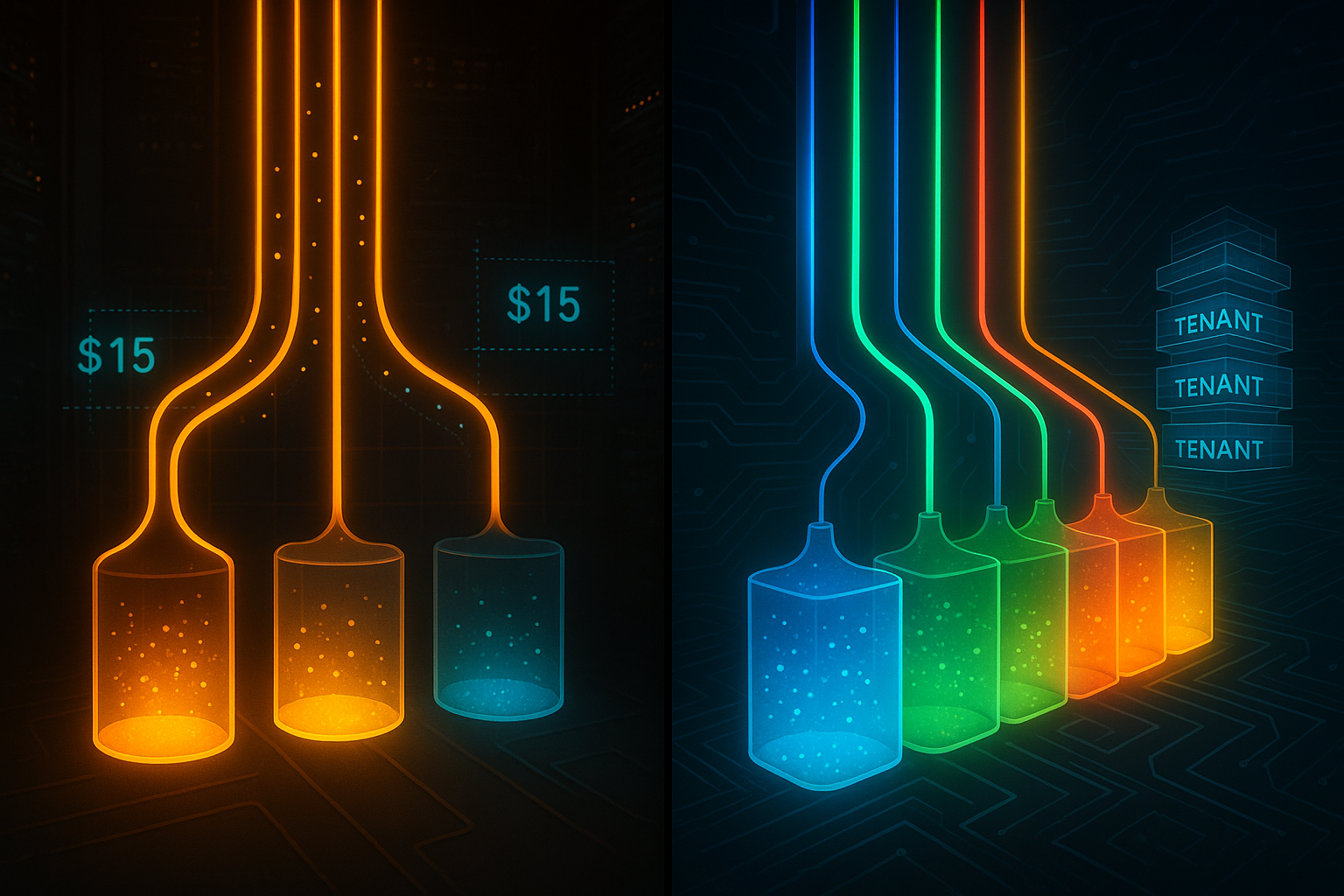
If you work on the backend of any SaaS product that has shipped an AI agent feature in the past year or two, you have probably heard some version of this conversation: "Wait, our AI costs tripled last month. Which tenant is responsible?" Silence follows. Nobody knows. The bill from the model provider is one giant number, and the internal tooling to break it down simply does not exist yet.
This is the defining infrastructure headache of 2026. AI agents are no longer a novelty , they are load-bearing product features. And as they scale, the financial opacity around them is becoming a genuine business risk. This FAQ breaks down exactly why the scramble is happening, what a correct chargeback architecture looks like, and how to instrument the three major cost surfaces: model inference, tool execution, and memory retrieval.
The "Why Now" Questions
Q: Why are backend engineers only dealing with this now? Weren't multi-tenant cost problems already solved for compute and storage?
Great question, and the honest answer is: yes, but AI agents broke the old assumptions in three specific ways.
- Non-deterministic cost per request. A traditional API call has a predictable cost envelope. An AI agent invocation does not. Depending on how many reasoning steps it takes, how many tools it calls, and how deep it digs into a vector memory store, a single agent "session" can cost anywhere from $0.002 to $2.00. That four-order-of-magnitude variance makes standard per-seat or per-request pricing models collapse.
- Compound cost surfaces. Compute and storage have one or two billing dimensions. AI agents have at least five: input tokens, output tokens, tool API calls, vector database reads, and (increasingly in 2026) structured reasoning trace storage. No existing cost-allocation framework was designed for this combination.
- Agentic loops amplify everything. When an agent retries, self-corrects, or spawns sub-agents, costs compound recursively. A tenant who triggers a poorly scoped task can inadvertently generate 40x the expected spend. Without attribution, you cannot even detect this until the invoice arrives.
Q: Is this really a widespread problem, or just an edge case for large enterprises?
It is deeply widespread, and it is hitting mid-market SaaS companies the hardest. Enterprise customers typically negotiated AI usage caps or dedicated inference capacity early. Startups running single-tenant deployments have no chargeback problem by definition. The pain zone is the mid-market multi-tenant SaaS company: dozens to hundreds of business customers sharing a pooled AI infrastructure, each with wildly different usage patterns, and a finance team that is now asking engineering to explain why the gross margin on the AI feature is negative.
In 2026, as agentic features have moved from beta to generally available across most SaaS verticals, this is no longer an edge case. It is the median situation for any engineering team that shipped an AI agent in the last 18 months.
Q: What is the business consequence of not having this attribution data?
Several painful ones, in roughly escalating order of severity:
- Margin blindness. You cannot price your product correctly if you do not know what it costs to serve each customer segment.
- Subsidization of heavy users. Without attribution, your lightest-touch customers are silently subsidizing your most aggressive power users. This is a churn risk when light users eventually see price increases driven by costs they did not generate.
- No abuse detection. Prompt injection attacks, runaway agent loops, and misconfigured automation workflows all show up as cost anomalies first. Without per-tenant attribution, your only signal is a monthly invoice.
- Investor and audit exposure. As AI costs become a material line item on income statements, auditors and investors are beginning to ask for cost-per-tenant breakdowns. "We don't track that" is no longer an acceptable answer.
The Architecture Questions
Q: What is the right mental model for a chargeback architecture in an AI agent system?
Think of it as a cost event stream, not a cost summary. The fundamental shift is moving from "aggregate and report" to "emit, attribute, and aggregate." Every action an agent takes should emit a structured cost event at the moment it happens, tagged with a tenant identifier. Aggregation and reporting are downstream concerns. The attribution must happen at the source.
The architecture has three layers:
- Instrumentation Layer: Wraps every cost-generating operation (inference calls, tool invocations, memory reads) and emits a structured event with a tenant ID, agent session ID, operation type, and a cost estimate or raw usage metric.
- Aggregation Layer: Consumes the event stream (typically via a message queue like Kafka or a purpose-built observability pipeline) and rolls up cost data by tenant, time window, agent type, and operation category.
- Attribution and Reporting Layer: Exposes the aggregated data to dashboards, billing systems, alerting rules, and (increasingly) per-tenant usage APIs that customers can query themselves.
Q: How do you propagate a tenant context through an agentic call graph, especially when sub-agents are involved?
This is the hardest implementation problem in the entire domain, and most teams get it wrong the first time. The correct approach borrows from distributed tracing: you establish a cost context object at the entry point of every agent invocation and propagate it through the entire call graph using a context carrier, similar to how OpenTelemetry propagates trace context.
The cost context object should carry at minimum:
tenant_id: The immutable identifier of the tenant who initiated the session.agent_session_id: A UUID scoped to the top-level agent invocation.cost_budget_remaining(optional but recommended): A soft cap that sub-agents can check before spawning further work.trace_id: Shared with your distributed tracing system so cost events and performance traces can be correlated.
The key discipline is that no cost-generating operation should be callable without a cost context in scope. This is enforced architecturally, not by convention. Use dependency injection, middleware, or a context-aware SDK wrapper to make it structurally impossible to call your inference client, tool executor, or memory retriever without a valid cost context attached.
Q: What does attribution look like specifically for model inference? Is it just token counting?
Token counting is necessary but not sufficient. Here is the full picture of what a correct inference cost event should capture:
- Input tokens: Including the system prompt, conversation history, and any retrieved context injected into the prompt. This last item is critical and often missed. Tokens added by RAG retrieval are an inference cost, but they originate from a memory retrieval operation. You need to track both.
- Output tokens: Including reasoning traces if you are using a chain-of-thought or extended thinking model. In 2026, many production deployments use models with explicit reasoning token budgets, and those tokens cost money.
- Model tier: Not all inference is priced equally. A call to a frontier reasoning model costs significantly more than a call to a smaller, faster model. Your cost event must include the model identifier so that aggregation can apply the correct per-token rate.
- Cache hit/miss: Prompt caching, now standard across most major model providers, dramatically changes the effective cost of repeated system prompts. A cache hit on a large system prompt might cost 10-20% of the full input token price. Your cost events must distinguish cached from uncached tokens to avoid systematic overestimation.
- Retry count: If your inference wrapper retries on rate limits or transient errors, those retried calls still cost money. Each attempt should emit its own cost event, all attributed to the same tenant and session.
Q: Tool execution is trickier because tools call external APIs. How do you attribute those costs?
Tool execution cost attribution has two distinct sub-problems: direct monetary cost and indirect compute cost.
Direct monetary cost applies when a tool call invokes a paid external API. A web search tool, a code execution sandbox, a data enrichment service, or a payment processing API all carry a per-call price. The correct approach is to maintain a tool cost registry: a configuration-driven map of tool names to their cost models (flat per-call, tiered, or estimated). When the tool executor runs a tool, it looks up the cost model, emits a cost event, and tags it with the tenant and session context.
Indirect compute cost applies to tools that run on your own infrastructure: code interpreters, browser automation instances, data transformation pipelines. These do not have an external invoice line, but they consume CPU, memory, and time. The correct approach here is to instrument these tool executors with resource usage metrics (CPU-seconds, memory-seconds, wall-clock time) and apply a standard internal cost rate. This is exactly how cloud providers handle compute chargeback, and the same model works here.
One architectural recommendation: wrap every tool in a cost-aware tool executor that handles context propagation, cost event emission, and budget enforcement uniformly, regardless of whether the tool is external or internal. This is far preferable to instrumenting each tool individually.
Q: Memory retrieval seems like it would be cheap. Why does it need its own attribution category?
This is a common misconception, and it is costing teams real money. Memory retrieval in agentic systems in 2026 is not just a vector database query. It is a compound operation with multiple cost surfaces:
- Vector database read units: Managed vector databases (whether hosted or cloud-native) charge per query, per dimension, or per index size. A tenant with a large private knowledge base who runs frequent agent sessions can generate surprisingly high vector DB costs.
- Embedding generation: If retrieved documents need to be re-embedded or if the query itself requires embedding, those are inference calls. They are typically cheap, but at scale they add up, and they are often invisible because they happen inside the retrieval pipeline rather than the main agent loop.
- Retrieved context injection into prompts: As mentioned earlier, the tokens retrieved from memory and injected into the LLM prompt are billed as input tokens. A retrieval pipeline that pulls 8,000 tokens of context per query is adding significant inference cost that is causally attributable to the memory retrieval operation, not the raw inference call.
- Reranking compute: Many production RAG pipelines in 2026 use a reranker model to improve retrieval precision. That reranker is itself a model inference call, and it needs to be attributed.
The practical recommendation is to treat memory retrieval as a first-class cost category in your attribution schema, not as a sub-item of inference. This gives you the granularity to answer questions like "which tenants are over-retrieving?" and "is our retrieval pipeline cost-efficient relative to the inference cost it generates?"
The Implementation Questions
Q: What does a cost event schema actually look like in practice?
Here is a production-ready cost event schema that covers all three cost surfaces:
{
  "event_id": "uuid-v4",
  "emitted_at": "ISO-8601 timestamp",
  "tenant_id": "string",
  "agent_session_id": "uuid-v4",
  "trace_id": "opentelemetry-trace-id",
  "cost_surface": "inference | tool_execution | memory_retrieval",
  "operation": {
    "type": "llm_completion | tool_call | vector_search | embedding | rerank",
    "model_id": "string (for inference/embedding/rerank)",
    "tool_name": "string (for tool_call)",
    "index_name": "string (for vector_search)"
  },
  "usage": {
    "input_tokens": "integer",
    "output_tokens": "integer",
    "cached_input_tokens": "integer",
    "reasoning_tokens": "integer",
    "tool_calls_count": "integer",
    "vector_read_units": "integer",
    "cpu_seconds": "float",
    "wall_clock_ms": "integer"
  },
  "cost_estimate_usd": "float",
  "cost_model_version": "string",
  "retry_attempt": "integer",
  "metadata": {
    "agent_type": "string",
    "feature_flag": "string",
    "environment": "production | staging"
  }
}
The cost_estimate_usd field is computed at emission time using a versioned cost model. This is important: you want the cost estimate baked into the event so that historical data remains accurate even when provider pricing changes. Store the raw usage metrics alongside the estimate so you can recompute if needed.
Q: Should cost attribution be synchronous or asynchronous?
Asynchronous, almost always. The last thing you want is for a cost event write failure to block an agent response. The correct pattern is:
- The cost-generating operation completes and returns its result to the agent.
- The instrumentation wrapper immediately enqueues a cost event to an in-process buffer.
- A background worker flushes the buffer to your event pipeline (Kafka, Kinesis, or a purpose-built observability ingest endpoint) on a short interval (1-5 seconds).
- The event pipeline delivers to your aggregation store (ClickHouse, BigQuery, or a time-series database like TimescaleDB are all good choices in 2026).
The tradeoff is that your real-time dashboard will have a small lag (typically under 30 seconds end-to-end), but this is entirely acceptable for cost attribution purposes. For hard budget enforcement (stopping a runaway agent before it spends $50), you need a separate synchronous budget-check mechanism, which is a different concern from attribution.
Q: How do you handle cost attribution for shared infrastructure, like a shared system prompt cache or a shared knowledge base?
Shared infrastructure is the most philosophically tricky part of multi-tenant cost attribution. There are two schools of thought:
Full attribution to the consumer: Every tenant who benefits from shared infrastructure pays the full cost of their consumption, as if the infrastructure were private. If tenant A and tenant B both query a shared knowledge base, each query is attributed at full price to the respective tenant. The shared infrastructure investment is treated as a platform cost absorbed by the product margin.
Proportional allocation: Shared infrastructure costs are pooled and distributed to tenants proportionally based on their share of total usage. This is more accurate but significantly more complex to implement and explain to customers.
The pragmatic recommendation for most teams: use full attribution for variable costs (per-query, per-token, per-call charges that scale with usage) and platform absorption for fixed costs (the base cost of maintaining the shared index, the reserved capacity for the cache layer). This gives tenants a fair picture of their marginal cost without requiring you to implement a complex cost-sharing algorithm.
Q: What should the dashboard actually show to engineering, finance, and customers?
Different audiences need different views of the same underlying data:
Engineering dashboard: Cost per agent session by type, P50/P95/P99 cost distribution per tenant, cost breakdown by surface (inference vs. tool vs. memory), anomaly alerts for sessions exceeding cost thresholds, and correlation with performance traces for debugging runaway costs.
Finance dashboard: Monthly cost by tenant, cost as a percentage of tenant ARR (the key margin health metric), trend lines, and projected costs based on current usage trajectory. This view should also show the blended cost per agent interaction so that pricing decisions can be made with real data.
Customer-facing usage dashboard: Aggregated AI usage in business-friendly units (agent sessions, tasks completed, documents processed) alongside a cost or credit consumption view if you are running a usage-based pricing model. Customers increasingly expect this level of transparency in 2026, and providing it proactively reduces billing disputes significantly.
The Harder Questions
Q: Is there an open standard or framework for AI agent cost attribution, or is everyone building this from scratch?
As of early 2026, there is no dominant open standard, but the ecosystem is converging around a few patterns. OpenTelemetry semantic conventions for generative AI (the gen_ai namespace) have become the de facto baseline for inference instrumentation, and most major LLM observability platforms now emit and consume these conventions. However, the gen_ai conventions were designed for observability and tracing, not cost attribution, so teams building chargeback systems are extending them with cost-specific attributes.
Several LLM observability platforms (in the OpenLLMetry and similar ecosystems) have added cost tracking features, but they typically focus on single-tenant developer tooling rather than multi-tenant chargeback architectures. The gap between "I can see my total LLM costs" and "I can attribute costs per tenant with full agentic call graph coverage" remains large, and most teams are bridging it with custom instrumentation built on top of these platforms.
Q: What is the single most common mistake teams make when building this?
Instrumenting at the wrong layer. The most common mistake is instrumenting at the API gateway or load balancer level, treating each incoming HTTP request as the unit of attribution. This works for simple LLM completion endpoints, but it completely breaks down for agentic systems where a single user-facing request triggers dozens of downstream cost-generating operations across inference, tools, and memory, potentially spread across multiple services and async workers.
The correct instrumentation layer is the agent execution runtime itself, specifically the points where the agent decides to call a model, invoke a tool, or query memory. This is lower in the stack, harder to instrument uniformly, but it is the only layer where the full cost picture is visible and where tenant context is reliably available.
Q: Where is this heading? Will this problem get easier or harder over the next year?
Both, in different directions. It will get easier instrumentally as agent frameworks mature and build cost attribution in as a first-class concern rather than an afterthought. The leading agent orchestration frameworks are already moving in this direction, and within the next 12 months it is reasonable to expect that cost context propagation and event emission will be built into the framework rather than requiring custom wrapping.
It will get harder economically because the cost surfaces are multiplying. Multi-modal agents (processing images, audio, and video in addition to text), long-horizon agents with persistent state, and agent-to-agent marketplaces where your agent pays to invoke another vendor's agent are all emerging cost surfaces that existing attribution schemas do not yet handle well.
The teams that build a flexible, event-driven attribution architecture now, rather than a hardcoded report generator, will be well positioned to extend it as these new surfaces emerge. The teams that wait will find themselves in the same position they are in today: staring at a large, inexplicable bill with no way to explain it.
Quick-Reference Summary
- Emit cost events at the source, not at the API gateway. Attribution must happen where the cost is generated.
- Propagate tenant context through the full agentic call graph, including sub-agents, using a context carrier pattern.
- Track all three cost surfaces independently: inference (with cache and reasoning token breakdown), tool execution (direct API costs plus internal compute), and memory retrieval (vector reads, embeddings, reranking, and injected context tokens).
- Use an asynchronous event pipeline for attribution data. Keep synchronous budget enforcement separate.
- Version your cost models so historical events remain accurate when provider pricing changes.
- Build three dashboard views: engineering (debugging), finance (margin), and customer-facing (transparency).
- Start with a flexible schema now. New cost surfaces (multi-modal, agent marketplaces) are coming, and a rigid system will need to be rebuilt.
The backend engineers scrambling to build this in 2026 are not behind the curve because they were negligent. They are dealing with a genuinely new infrastructure problem that did not exist at scale two years ago. The good news is that the core patterns, event-driven attribution, context propagation, and layered aggregation, are well-understood from adjacent domains like distributed tracing and cloud cost management. The work is real, but the path is clear.