Centralized vs. Federated AI Agent Tool Registries: Which Architecture Actually Reduces Cross-Tenant Blast Radius When a Shared Integration Fails?
Picture this: it's 2:47 AM and your on-call engineer gets paged. A third-party CRM integration that powers your AI agent platform has started returning malformed responses. Within minutes, you discover that every tenant on your platform is now getting broken tool calls, hallucinated outputs, and failed workflows. The blast radius is total. Every customer, every agent, every automated pipeline: down.
This scenario is no longer hypothetical. As multi-tenant AI agent platforms have matured through 2025 and into 2026, the question of how you register, govern, and isolate tool integrations has become one of the most consequential architectural decisions a platform team can make. And yet, most engineering teams are still treating it as an afterthought, bolting on tool registries as a flat, shared service long after their multi-tenancy model is already baked in.
This article breaks down the two dominant architectural philosophies: Centralized Per-Tenant Tool Registries and Federated Tool Ownership. We will examine how each model behaves under failure, how they scale, and which one actually delivers on the promise of cross-tenant blast radius containment when a shared integration goes sideways.
Why Tool Registry Architecture Matters More Than Ever in 2026
The explosion of agentic AI platforms has fundamentally changed the risk surface of SaaS infrastructure. In a traditional SaaS app, a broken third-party integration might corrupt a UI widget or fail a background job. In an AI agent platform, a broken tool call can cause an agent to:
- Hallucinate downstream data and propagate bad state through multi-step workflows
- Silently skip critical actions (like sending a notification or updating a record) with no user-visible error
- Trigger retry storms that cascade into rate-limit exhaustion across shared API credentials
- Corrupt memory stores or vector databases that persist across agent sessions
The tool registry, the component that maps agent capabilities to actual integrations, sits at the epicenter of all of this. It is the contract layer between what an agent thinks it can do and what the infrastructure can actually execute. How that registry is scoped, versioned, and isolated per tenant determines everything about your blast radius when something breaks.
Defining the Two Architectures
Architecture 1: Centralized Per-Tenant Tool Registry
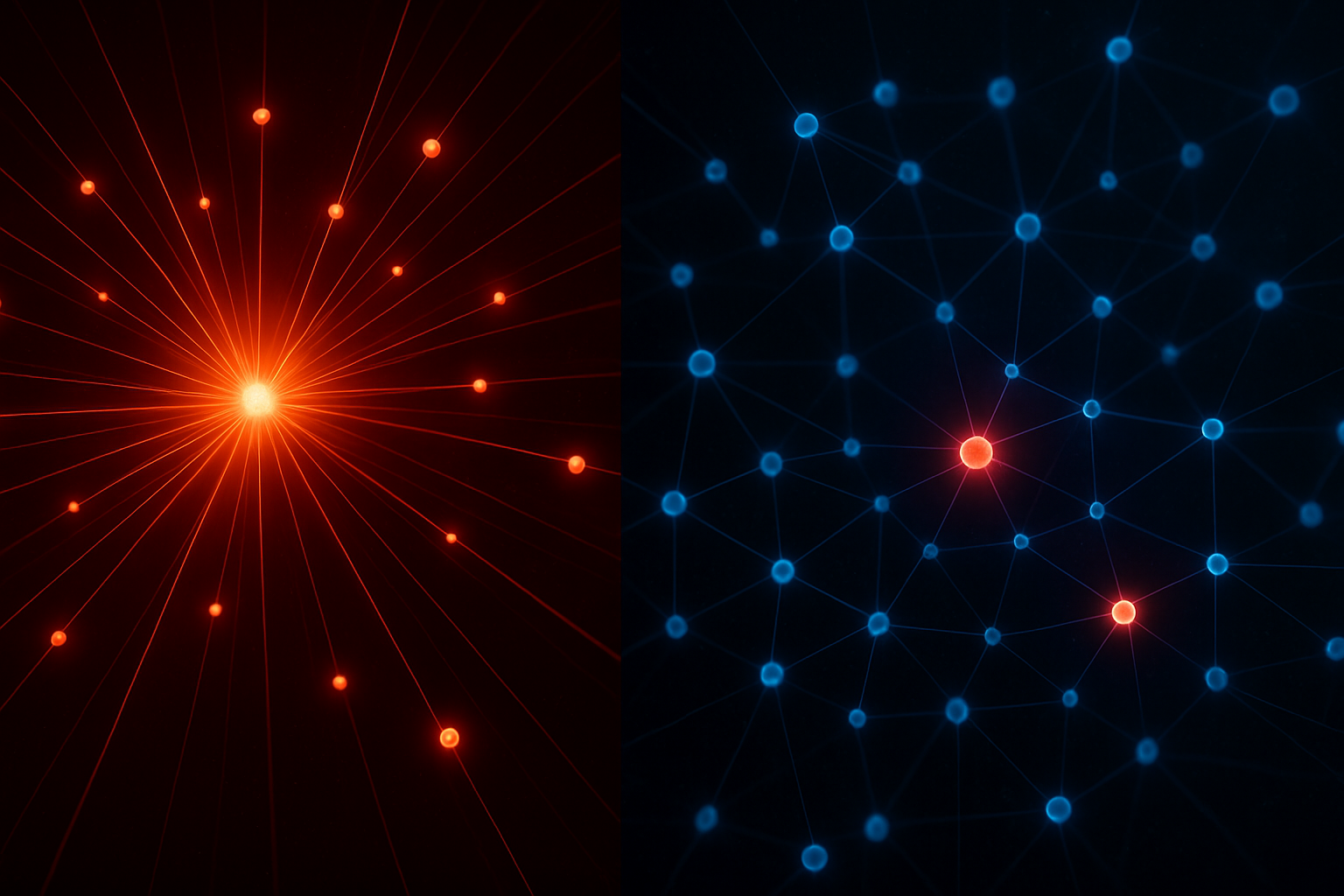
In the centralized model, a single platform-managed registry service owns all tool definitions, integration credentials, versioning, and health metadata. Tenants are granted views into this registry based on their subscription tier, permissions, or configuration. The registry itself is a shared system, but it maintains per-tenant namespacing, configuration overrides, and (ideally) per-tenant circuit breakers.
Think of it like a shared library with private reading rooms. The books (tool definitions) live in one place, but each tenant's agent only sees the shelf it has been granted access to. A centralized ops team manages the catalog, handles versioning, and pushes updates globally.
Key characteristics:
- Single source of truth for all tool schemas and integration contracts
- Platform team owns all integration credentials and secrets management
- Tenants configure tool behavior through parameters, not through modifying the tool definition itself
- Health monitoring and circuit breaking are implemented at the registry layer, centrally
- Tool updates and deprecations are managed via a central release pipeline
Architecture 2: Federated Tool Ownership
In the federated model, each tenant (or tenant group) owns its own tool registry instance. Tenants define, deploy, version, and maintain their own tool integrations. The platform provides a registry protocol and a discovery interface, but the actual tool definitions, credentials, and integration logic live within the tenant's own infrastructure boundary.
Think of it like a franchise model. The franchisor (your platform) sets the menu format and the health code standards. But each franchise (tenant) sources its own ingredients, hires its own cooks, and manages its own kitchen. If one kitchen burns down, the others keep serving customers.
Key characteristics:
- Each tenant manages its own tool definitions and integration credentials
- The platform provides a standardized tool schema protocol (often OpenAPI or a custom agent tool spec)
- Tool discovery may be centralized (a registry of registries), but resolution is federated
- Tenants can bring their own integrations without platform team involvement
- Failure in one tenant's tool registry does not affect other tenants by default
The Blast Radius Test: Simulating a Shared Integration Failure
Let's run both architectures through the same failure scenario to understand their real-world behavior. The scenario: a widely used Salesforce integration tool begins returning HTTP 500 errors due to an upstream API deprecation. The tool is used by 60% of tenants on the platform.
Centralized Registry Under Failure
In the centralized model, the Salesforce tool definition lives in the shared registry. All tenants pointing to that tool version are immediately affected. If the platform team has implemented per-tenant circuit breakers at the registry layer, the damage can be contained: the circuit opens for each tenant independently after a configurable failure threshold. Tenants that have not yet hit the threshold continue operating normally, but they are still at risk.
The critical vulnerability here is the shared credential pool. If the platform manages a single OAuth token or API key set for Salesforce (shared across tenants for cost efficiency), a single revocation, rate-limit hit, or token expiry affects everyone simultaneously. There is no isolation at the credential layer, only at the configuration layer.
Recovery in the centralized model is fast when it works: the platform team patches the tool definition once and all tenants benefit immediately. But the blast radius during the failure window is proportional to the number of tenants using that tool version, and in a centralized system, that number is typically very high.
Blast radius in centralized model: Wide but recoverable quickly. The failure is democratic (everyone is equally exposed) and the fix is also democratic (everyone recovers at once).
Federated Registry Under Failure
In the federated model, tenants own their own Salesforce tool definitions and credentials. When the upstream API deprecation hits, the impact is determined by which tenants have already updated their tool definitions to handle the new API version and which have not. Tenants who proactively maintained their integrations are unaffected. Tenants who relied on stale definitions break.
This is the double-edged sword of federation: the blast radius is naturally narrower per incident, but the aggregate maintenance burden is distributed across all tenants. In a platform with hundreds of enterprise tenants, this means hundreds of independent Salesforce integration owners who each need to discover, diagnose, and patch the same upstream breaking change. The platform team cannot push a single fix.
The federated model also introduces a new failure mode: registry discovery failures. If the central "registry of registries" that the platform uses to locate tenant-owned tool endpoints goes down, agents across all tenants lose the ability to resolve tools entirely, even if each individual tenant registry is healthy. This is a centralized single point of failure hiding inside a federated architecture.
Blast radius in federated model: Narrower per tenant, but wider in aggregate maintenance cost and with a hidden centralized failure point at the discovery layer.
Head-to-Head Comparison: 8 Critical Dimensions
1. Cross-Tenant Isolation
Centralized: Weak by default. Requires deliberate per-tenant circuit breakers, credential partitioning, and namespace isolation to achieve meaningful isolation. Most implementations skip at least one of these layers.
Federated: Strong by default. Tenant boundaries are architectural, not logical. A broken tool in Tenant A's registry simply does not exist in Tenant B's registry.
Winner: Federated
2. Operational Recovery Speed
Centralized: Excellent. One patch, one deployment, all tenants recover. The platform team has full control and visibility.
Federated: Poor at scale. Each tenant must independently discover the issue and apply a fix. Enterprise tenants with dedicated engineering teams recover quickly; smaller tenants may stay broken for days.
Winner: Centralized
3. Credential and Secret Isolation
Centralized: Risky. Shared credential pools are a common cost-cutting measure that eliminates the last line of defense between tenants. Even with per-tenant namespacing, a compromised credential in a shared pool can expose cross-tenant data.
Federated: Strong. Each tenant manages its own credentials. A compromised token affects only that tenant's integrations.
Winner: Federated
4. Tool Versioning and Governance
Centralized: Excellent. The platform team can enforce schema contracts, deprecation timelines, and compatibility guarantees across all tenants simultaneously. Security patches propagate instantly.
Federated: Fragmented. Tenants may run wildly different versions of the same integration. Auditing and compliance become nightmares. A tenant running a two-year-old tool definition with a known vulnerability is invisible to the platform team.
Winner: Centralized
5. Tenant Customization Flexibility
Centralized: Limited. Tenants can configure parameters but cannot fundamentally change how a tool works. Custom integrations require going through the platform team's release pipeline, which is slow and often gated by business justification.
Federated: Unlimited. Tenants can build, deploy, and iterate on their own tool integrations at their own pace. This is a major differentiator for enterprise tenants with complex, proprietary workflows.
Winner: Federated
6. Observability and Failure Attribution
Centralized: Excellent. All tool invocations flow through a single observability pipeline. Correlating failures across tenants, identifying systemic issues, and performing root cause analysis are all dramatically simpler.
Federated: Poor without significant investment. Each tenant's registry is a black box to the platform team. Cross-tenant failure correlation requires either standardized telemetry protocols or a central observability aggregation layer (which reintroduces centralization).
Winner: Centralized
7. Onboarding Complexity for New Tenants
Centralized: Low. New tenants get access to a pre-built library of vetted, tested tool integrations on day one. No integration engineering required.
Federated: High. New tenants must build or configure their own tool registry, manage their own credentials, and implement their own health monitoring. This is a significant barrier for smaller or less technical tenants.
Winner: Centralized
8. Regulatory and Compliance Posture
Centralized: Complex. The platform team becomes the de facto data processor for all tool invocations across all tenants. GDPR, SOC 2, HIPAA, and similar frameworks require the platform to demonstrate controls across every integration for every tenant.
Federated: Cleaner. Each tenant is responsible for its own integration compliance. The platform's compliance scope is limited to the registry protocol and discovery layer, not the integrations themselves.
Winner: Federated
The Hybrid Architecture: What Leading Platforms Are Actually Shipping in 2026
The binary framing of "centralized vs. federated" is useful for analysis, but the most resilient platforms in production today are running a tiered hybrid model that borrows the best properties of both architectures. Here is what that looks like in practice:
Tier 1: Platform-Managed Core Tools (Centralized)
A curated set of high-demand, heavily vetted integrations (Salesforce, Slack, Stripe, major LLM providers, etc.) lives in a centralized registry managed by the platform team. These tools are tested against strict schema contracts, versioned with semantic versioning, and covered by per-tenant circuit breakers with configurable thresholds. Credentials are always tenant-scoped, never shared across tenants, even if managed centrally.
Tier 2: Tenant-Extended Tools (Federated with Guardrails)
Tenants can register their own tool definitions against a platform-defined schema. These tools are hosted in tenant-owned infrastructure but must pass a schema validation handshake at registration time. The platform publishes a standardized health check protocol that tenant tool endpoints must implement, enabling centralized observability without centralized ownership.
Tier 3: Private Tenant Tools (Fully Federated)
Enterprise tenants with dedicated infrastructure can run fully private tool registries that the platform discovers via a well-known endpoint contract. These registries are completely opaque to the platform team. Failures in this tier are fully contained to the tenant, and the platform's SLA explicitly excludes these integrations.
This tiered model delivers a critical property: blast radius is proportional to trust tier. A failure in a Tier 1 integration has wide potential impact but is managed by the team with the most context and control. A failure in a Tier 3 integration affects exactly one tenant and is managed by the team closest to the integration.
Implementation Recommendations: Reducing Blast Radius in Either Model
Regardless of which architecture you choose, several practices dramatically reduce cross-tenant blast radius in 2026's agent-native infrastructure landscape:
Per-Tenant Circuit Breakers Are Non-Negotiable
Every tool invocation path must have an independent circuit breaker scoped to the tenant, not the tool. A circuit breaker at the tool level protects the integration but not your tenants from each other. Implement the circuit at the intersection of tenant ID and tool ID, with per-tenant configurable thresholds and fallback behaviors.
Credential Partitioning, Always
Never share API credentials across tenants, even in a centralized model. The cost savings from credential pooling are never worth the blast radius they create. Use per-tenant OAuth flows, per-tenant API key provisioning, and per-tenant secret namespacing in your secrets manager. This single practice eliminates the most dangerous class of cross-tenant blast radius: the credential compromise cascade.
Canary Tool Deployments
Treat tool definition updates like production code deployments. Roll out new tool versions to a small percentage of tenants first, monitor failure rates, and promote gradually. In a centralized model, this is table stakes. In a federated model, the platform can enforce this by requiring canary validation before a tenant tool definition is promoted to "stable" status.
Standardized Tool Health Contracts
Define a mandatory health check protocol that all tool integrations (centralized or federated) must implement. A simple HTTP endpoint that returns tool availability, latency percentiles, and upstream dependency status gives your observability layer the signal it needs to proactively route around failures before tenants even notice them.
Immutable Tool Versioning
Tool definitions should be immutable once published. Updates always produce a new version. Tenants pin to specific versions and migrate on their own schedule (within a deprecation window). This eliminates the "silent breaking change" failure mode where a tool update breaks agents without any version signal.
The Verdict: Which Architecture Wins on Blast Radius?
If your single optimization target is minimizing cross-tenant blast radius from a shared integration failure, federated tool ownership wins on paper. The architectural isolation is real and meaningful. A broken tool in one tenant's registry simply cannot affect another tenant's agents.
But this is the wrong way to frame the question for most platform teams. The total blast radius of a platform failure is not just the number of tenants affected in a single incident. It is the sum of all tenant-hours lost across all incidents over time. And federated architectures, by distributing maintenance burden and fragmenting observability, tend to produce more frequent, longer-duration failures at the individual tenant level, even if each failure is smaller in scope.
The centralized model, when implemented with rigorous per-tenant isolation primitives (scoped circuit breakers, partitioned credentials, canary deployments), delivers a better overall outcome: fewer total incidents, faster recovery, and a platform team that actually has the visibility and control to prevent failures before they propagate.
The real answer is not "centralized vs. federated." It is "centralized with federated escape hatches." Build a centralized core that your platform team controls and monitors with excellence. Give enterprise tenants the federated extension points they need for proprietary integrations. And enforce the health check contracts and schema protocols that let you maintain observability across both tiers.
The teams shipping the most resilient agentic platforms in 2026 are not the ones who chose the "right" architecture. They are the ones who understood that blast radius is a function of how well you implement isolation, not which side of the centralized/federated spectrum you sit on.
Final Thoughts
As AI agents take on increasingly consequential tasks, including managing financial workflows, orchestrating customer communications, and driving autonomous business decisions, the stakes of a cross-tenant blast radius event are no longer just an SLA violation. They are a trust violation. Enterprise customers choosing agentic platforms in 2026 are asking harder questions about isolation architecture than ever before, and they deserve honest answers.
Audit your tool registry architecture today. Map your credential sharing. Identify your centralized single points of failure hiding inside your "federated" design. And if you are building a new platform from scratch, start with the tiered hybrid model. Your future on-call engineer at 2:47 AM will thank you.