Scott Miller

Synchronous vs. Asynchronous Agentic Workflow Execution: Which Model Holds Up When Per-Tenant Task Queues Spike Beyond Foundation Model Throughput Limits
Agentic Workflows

Synchronous vs. Asynchronous Agentic Workflow Execution: Which Model Holds Up When Per-Tenant Task Queues Spike Beyond Foundation Model Throughput Limits

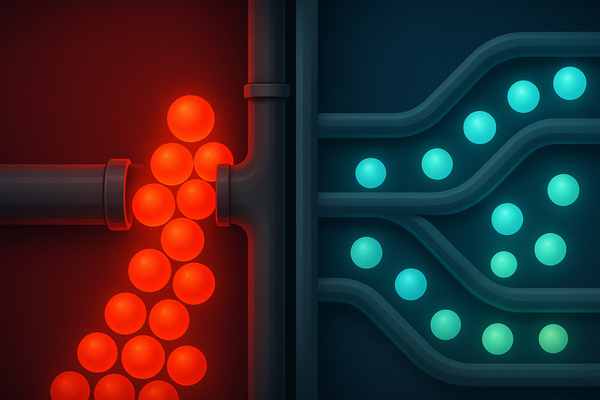
Here is a scenario that every platform engineering team running multi-tenant AI infrastructure has either already lived through or is about to: it's 9:07 AM on a Tuesday, three of your largest enterprise tenants simultaneously trigger high-volume agentic pipelines, and within 90 seconds your foundation model provider
10 min read
How One Platform Team Discovered Their Multi-Agent Workflow Checkpointing Strategy Was Silently Corrupting Long-Running Task State During Foundation Model Failovers ,  And Rebuilt Their Recovery Architecture From Scratch
multi-agent systems

How One Platform Team Discovered Their Multi-Agent Workflow Checkpointing Strategy Was Silently Corrupting Long-Running Task State During Foundation Model Failovers , And Rebuilt Their Recovery Architecture From Scratch

When the platform engineering team at a mid-sized fintech company (we will call them Meridian Financial Labs) first deployed their multi-agent orchestration layer in late 2024, everything looked fine on the surface. Pipelines completed. Dashboards were green. SLAs were being met. It was not until a routine audit of their
9 min read
7 Signs Your Agentic Workflow Orchestration Layer Is Becoming a Single Point of Failure as Multi-Step Task Complexity Scales in 2026
agentic AI

7 Signs Your Agentic Workflow Orchestration Layer Is Becoming a Single Point of Failure as Multi-Step Task Complexity Scales in 2026

Agentic AI systems have moved from experimental sandboxes to production-critical infrastructure at an astonishing pace. In 2026, engineering teams are no longer asking whether to deploy multi-step agentic workflows; they are asking how to keep them from collapsing under their own weight. The orchestration layer, the central nervous system that
8 min read
The Hidden Tax: How One FinTech Team Uncovered a Silent Cross-Subsidy in Their Shared AI Inference Budget and Rebuilt Their Cost Pipeline From Scratch
FinTech

The Hidden Tax: How One FinTech Team Uncovered a Silent Cross-Subsidy in Their Shared AI Inference Budget and Rebuilt Their Cost Pipeline From Scratch

In Q1 2026, the platform engineering team at a mid-market FinTech company we'll call Verdant Financial Technologies made an uncomfortable discovery. Their AI agent infrastructure, which powered everything from automated loan pre-screening to real-time fraud triage, was quietly bleeding margin on their smallest accounts while their largest tenants
8 min read
The 2026 Per-Tenant AI Agent Compliance Reckoning: Why Backend Engineers Are Facing Regulatory Blowback and Where Architecture Goes Next
AI Agents

The 2026 Per-Tenant AI Agent Compliance Reckoning: Why Backend Engineers Are Facing Regulatory Blowback and Where Architecture Goes Next

Something quietly broke in the enterprise software world sometime around late 2024, and the bill is coming due right now in 2026. Thousands of backend engineering teams shipped agentic AI features at breakneck speed, layering autonomous agents on top of multi-tenant SaaS platforms without ever seriously asking a critical question:
8 min read
How Per-Tenant AI Agent Rate Limiting Actually Works at the Foundation Model Provider Layer in 2026: A Deep Dive Into Quota Inheritance, Burst Throttling, and Why Your Tenant Isolation Strategy Breaks Down
AI Rate Limiting

How Per-Tenant AI Agent Rate Limiting Actually Works at the Foundation Model Provider Layer in 2026: A Deep Dive Into Quota Inheritance, Burst Throttling, and Why Your Tenant Isolation Strategy Breaks Down

You've built a beautifully isolated multi-tenant AI platform. Each tenant has their own logical boundary, their own usage dashboard, their own billing tier. Your internal architecture is clean. Your product managers are happy. And then, at 2:47 AM on a Tuesday, your on-call engineer gets paged because
12 min read
The Monetization Reckoning Is Here: Why AI's Shift to Revenue Mode Forces Backend Engineers to Reprice Agentic Capabilities They've Been Giving Away for Free
AI Monetization

The Monetization Reckoning Is Here: Why AI's Shift to Revenue Mode Forces Backend Engineers to Reprice Agentic Capabilities They've Been Giving Away for Free

For the past three years, backend engineers have been operating inside a very comfortable lie. The lie goes something like this: agentic capabilities are infrastructure, not product. You wire up a tool-calling loop, expose a few endpoints, stitch together some memory management logic, and call it a day. The AI
7 min read
5 Myths Backend Engineers Believe About Per-Tenant AI Agent Schema Versioning That Are Silently Breaking Long-Running Agentic Workflows Across Foundation Model Upgrades in 2026
AI Agents

5 Myths Backend Engineers Believe About Per-Tenant AI Agent Schema Versioning That Are Silently Breaking Long-Running Agentic Workflows Across Foundation Model Upgrades in 2026

It starts as a quiet anomaly. A tenant's long-running agentic workflow, one that had been reliably orchestrating document processing, tool calls, and memory retrieval for weeks, suddenly starts producing malformed outputs. No deployment happened. No configuration changed. The only thing that shifted was a silent foundation model upgrade
9 min read
How One Enterprise SaaS Team Discovered Their Per-Tenant AI Agent Prompt Injection Guardrails Were Silently Failing Across Shared Tool Registries
Prompt Injection

How One Enterprise SaaS Team Discovered Their Per-Tenant AI Agent Prompt Injection Guardrails Were Silently Failing Across Shared Tool Registries

In early 2026, a mid-sized enterprise SaaS company, which we'll call Orbis Systems (a composite anonymized case study based on real architectural patterns now widely documented in the AI security community), quietly shipped what their engineering team believed was a production-hardened, multi-tenant AI agent platform. Each customer tenant
10 min read
Why the Real Multi-Tenant AI Agent Crisis of 2026 Isn't Technical Debt ,  It's the Organizational Debt of Teams That Never Defined Who Actually Owns the Agentic Layer
AI Agents

Why the Real Multi-Tenant AI Agent Crisis of 2026 Isn't Technical Debt , It's the Organizational Debt of Teams That Never Defined Who Actually Owns the Agentic Layer

Everyone in enterprise software right now is talking about the same things: context windows, tool-calling reliability, memory persistence, and latency. The engineers are buried in YAML configs and vector store tuning. The architects are debating whether the orchestration layer should live in the API gateway or sit behind the service
9 min read
5 Ways Backend Engineers Are Misconfiguring Per-Tenant AI Agent Sandbox Isolation Boundaries and Exposing Cross-Tenant Tool Execution Vulnerabilities in 2026
AI security

5 Ways Backend Engineers Are Misconfiguring Per-Tenant AI Agent Sandbox Isolation Boundaries and Exposing Cross-Tenant Tool Execution Vulnerabilities in 2026

Multi-tenant AI agent platforms have become the backbone of enterprise SaaS in 2026. Whether you are building a customer support automation layer, a code generation assistant, or an autonomous workflow orchestrator, the odds are high that your backend is serving AI agents to dozens, hundreds, or even thousands of tenants
8 min read